
FPV Analoq Video Siqnal Scrambler Modulu və Video Məxfiliyinin Qorunması üçün Scrambling
Giriş
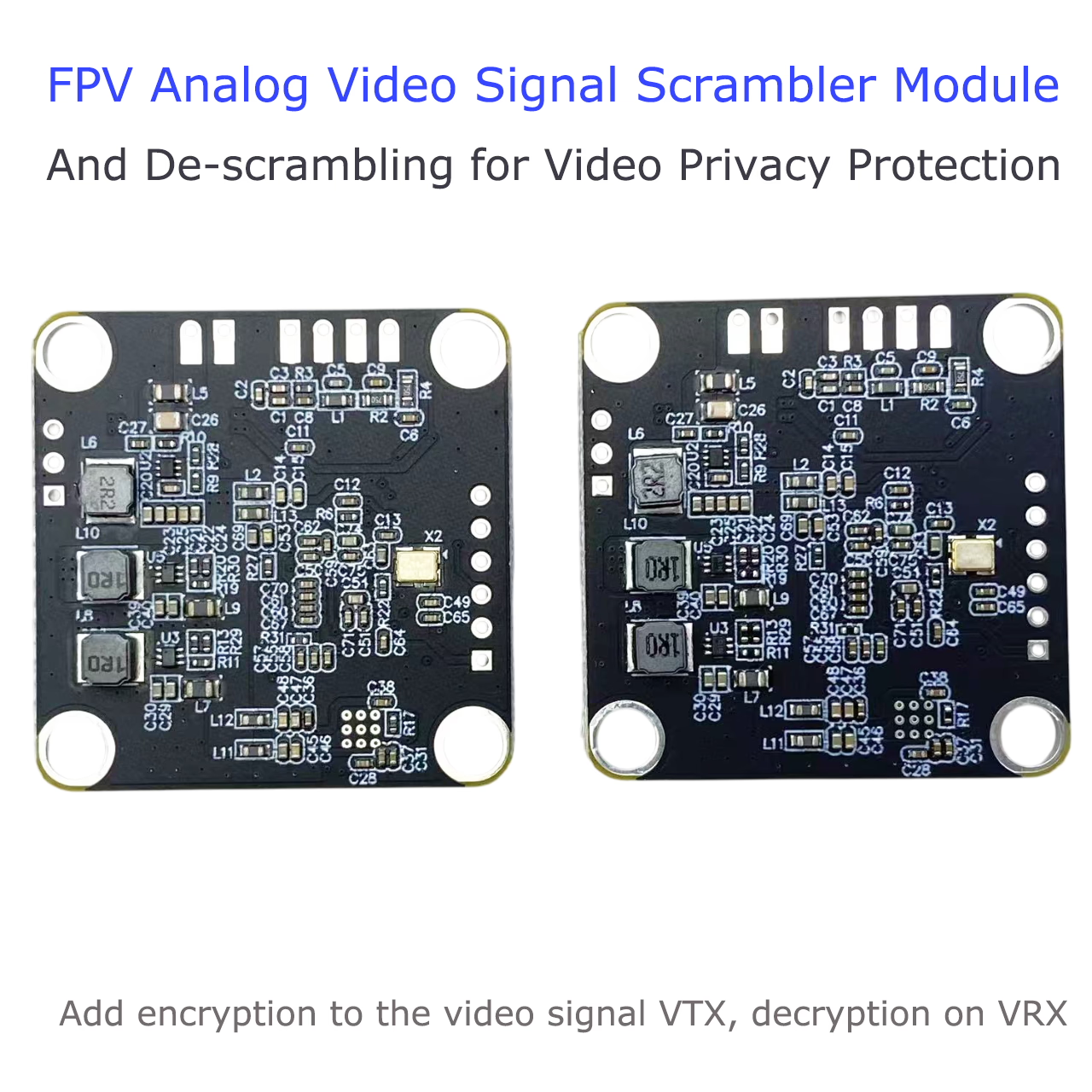
An FPV Analog Video Scrambler Module is a device designed to encrypt or scramble the analog video signal transmitted from a drone or FPV (First-Person View) kamera to the ground receiver. Its main purpose is to prevent unauthorized interception or eavesdropping on the video feed. Here’s a breakdown of its key features and uses:
-
Signal Scrambling: It modifies the analog video signal in a way that makes it unintelligible to anyone without the corresponding descrambler.
-
FPV Applications: Commonly used in drones, İa, or RC vehicles for secure live video streaming during races, müşahidə, or professional operations.
-
Uyğunluq: Works with standard FPV analog video transmitters (VTX) and receivers (VRX), usually requiring a matched descrambler on the receiving end.
-
Mülahizələr:
-
Prevents signal hijacking or spying.
-
Ensures privacy for sensitive aerial video operations.
-
Can be compact and integrated into the drone’s FPV system.
-
-
Əməliyyat: Most modules are plug-and-play; the camera output is connected to the scrambler, which then feeds the scrambled signal to the VTX for transmission.
Bir sözlə, it’s like a “lock for your video feed”, ensuring that only authorized users with the correct descrambler can view the FPV video.
-
FPV Analog Video Scrambler and Descrambler Module for Drone Security
-
Mini FPV Analog Video Encryption Module for FPV Racing and Drone Cameras
-
High-Performance FPV Analog Video Scrambler Module for Secure Transmission
-
Drone FPV Analog Video Scrambler Module with Real-Time Encryption
-
FPV Analog Video Scrambler Module for Wireless Video Security and Anti-Piracy
-
Portable FPV Analog Video Encryption and Scrambling Module for FPV Systems
-
FPV Analog Video Signal Scrambler Module for Drones and UAVs
-
Compact FPV Analog Video Scrambler Module with Easy Integration
-
FPV Analog Video Encryption Module for Long-Range Drone Video Transmission
-
Professional FPV Analog Video Scrambler and Anti-Hacking Module for FPV Cameras
Principle
The principle of an FPV analog video scrambler module is based on modifying the original analog video signal in a way that makes it unintelligible to unauthorized receivers, then restoring it at the receiver side using a matching descrambler. Here’s a detailed explanation:
-
Signal Input: The FPV camera generates a standard analog video signal (typically NTSC or PAL). This signal is fed into the scrambler module.
-
Scrambling Process:
-
The module alters the timing, phase, or amplitude of the video signal.
-
Common techniques include line inversion, sync signal modification, or frequency hopping.
-
These changes make the video appear as noise or distorted if received by a normal FPV receiver.
-
-
Keçmə: The scrambled signal is then sent through the analog VTX (video ötürücü) over RF to the ground receiver.
-
Descrambling: At the receiving end, a matching descrambler reverses the scrambling process, restoring the video to its original, clear form.
-
Security Principle: Only the receiver with the correct descrambling configuration can correctly decode the signal, preventing eavesdropping or unauthorized monitoring.
In essence, the module works like a “real-time analog cipher” for your video signal, securing FPV transmissions without converting them to digital.
Scrambling Methods
FPV analog video scrambler modules typically use several scrambling methods to make the transmitted analog video signal unintelligible to unauthorized receivers. Here are the most common techniques:
-
Line Inversion / Polarity Reversal
-
Alternates the polarity of individual video lines.
-
Unauthorized receivers see a flickering or inverted image.
-
-
Sync Signal Modification / Suppression
-
Alters or removes horizontal or vertical synchronization pulses.
-
Without proper sync, a standard receiver cannot properly display the video.
-
-
Frequency Shifting / Carrier Hopping
-
Slightly shifts the video carrier frequency or rapidly hops it according to a pattern.
-
Only a receiver synchronized to the frequency pattern can decode the signal.
-
-
Video Signal Swapping / Pixel Scrambling
-
Reorders or swaps lines or sections of the video signal.
-
Creates a scrambled image that only a matched descrambler can reconstruct.
-
-
Combination Methods
-
Many advanced scramblers combine two or more methods, E.G., line inversion with sync modification, for stronger security.
-
-
Optional Audio Scrambling
-
Some modules also scramble the audio channel using simple modulation or inversion to prevent unauthorized listening.
-
Key point: These methods are implemented real vaxtda without converting the analog video to digital, making them lightweight, aşağı gecikdirici, and ideal for FPV applications.
Suallar
Q: Can your analog video scrambler protect my video from being intercepted or scanned by others?
A: Bəli. Our analog video scrambler ensures that only authorized receivers can view your video feed. Even if someone else is tuned to the same frequency, their screen will display scrambled or unintelligible images. To view the video correctly, the receiver (VRX) must be set to the same feed number as the transmitter. If the feed numbers do not match, the video remains protected, and unauthorized viewers cannot see your content. This system provides a secure and simple way to prevent interception of your analog video stream.




isdb-t.com –
I have been using the FPV analog video scrambler module on my drone system, and I am extremely satisfied with its performance. The module effectively secures my live video feed, preventing unauthorized access or interference. Installation was straightforward, and it seamlessly integrates with my existing FPV transmitter and receiver setup. Even during long-range flights, the video remains stable and clear for authorized viewers, while completely scrambled for anyone without the matching descrambler. The build quality feels solid and reliable, and the low-latency operation ensures smooth real-time FPV control. Ümumilikdə, this scrambler module provides excellent security and peace of mind for professional drone operations.
bluestacks –
Interesting analysis! Seeing more platforms like BlueStacks cater specifically to the PH market is great. Easy deposit options (GCash, PayMaya!) are key. edir bluestacks legit for fast withdrawals? Good to know about RTP filtering too! 👍