
Today a client asks me to introduce a FPV AHD camera wireless video transmitter and receiver. He said that he had an AHD camera for fpv. Can you recommend transmitter and receiver for AHD camera?
For AHD camera wireless video transmitter and receiver, I recommended the below model.
https://ivcan.com/p/wireless-video-transmitter-and-receiver-for-camera/
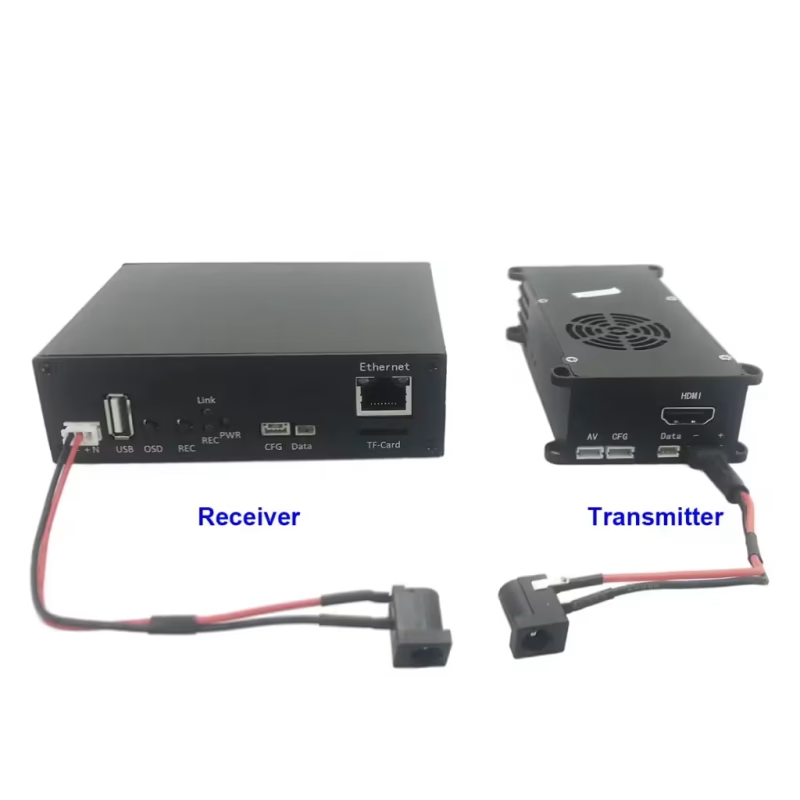
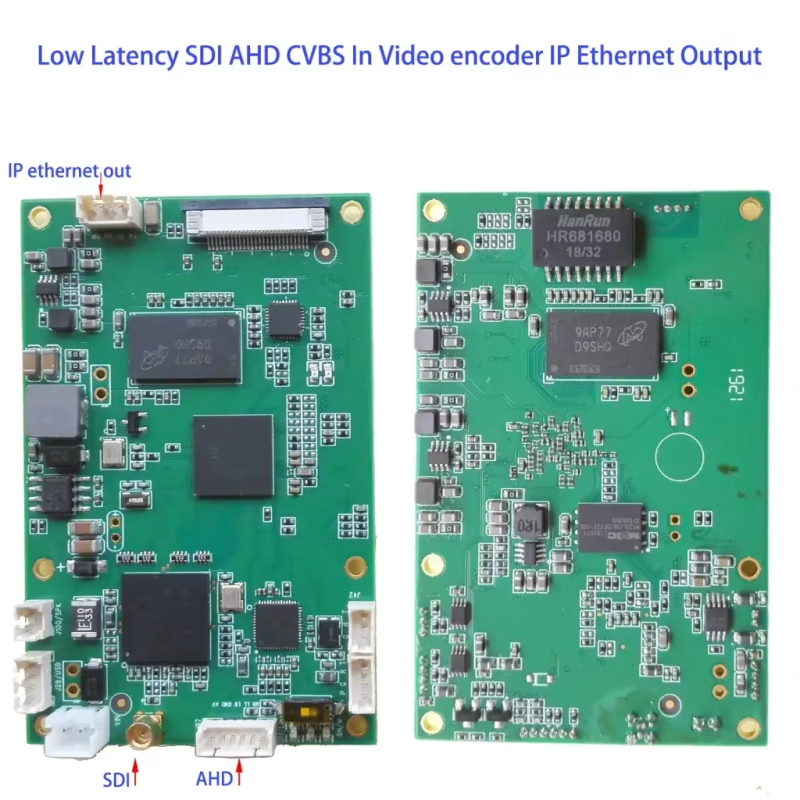
Vcan1926 is an HDMI and CVBS video input wireless video transmitter and receiver. We will change the encoder board from HDMI to AHD video input. The below picture is about the AHD to IP video encoder converter board details.
With the continuous development of drone technology, drones have become indispensable tools for photography, film production and security industries. Však, how to transmit high -definition pictures in the process of flying efficiently has always been a challenge facing many drone operators. Traditional transmission systems may be limited by problems such as distance, delay or signal instability, which leads to a decline in picture quality and affects the flight experience and shooting effects. Dnes, we want to introduce a wireless video transmitter and receiver that supports an AHD camera video input. It will greatly improve your aerial experience and allow you to enjoy high -quality and real -time video transmission.
What is the wireless video transmitter and receiver entered in the AHD camera video input?
AHD (Analogové vysoké rozlišení) fotoaparát, as a high -definition analog camera, is widely used in the fields of security monitoring and drone navigation with its high resolution and strong anti -interference capabilities. The wireless video transmitter and receiver supports the AHD camera video input. The video signal collected by the AHD camera can be transmitted wirelessly, and the screen is sent to the ground monitor or FPV glasses in real time.
This wireless video transmission system includes two main components: transmitters and receivers. The launcher is installed on the drone, connecting the AHD camera, and converting the video signal captured by the camera into a wireless signal and sending it. The receiver is located on the ground, receiving and decoding the signal, and transmitting the video to the display device. Whether it is a professional aerial shot or a casual FPV flight, this system can provide a stable and clear picture and a smooth flight experience.
Core features and advantages
1. HD image quality: Video transmitters and receivers that support AHD cameras can provide high -definition video transmission. Many systems support the resolution of 720P or 1080P, so that you can get clear and delicate pictures during the flight to avoid traditional simulation video signals blurred or blurred or blurred or blurred or the quality distortion.
2. Nízká latence: Low latency is a key factor in flight operations, especially in fast flight or complex environment, any delay may affect the accuracy of flight control. The AHD wireless video transmission system provides extremely low latency, usually within 100ms, ensuring that the pilot can see the video screen in real time and make a rapid response.
3. Stable signal transmission: This system adopts advanced wireless technology, which can effectively reduce interference and provide stable signal transmission. Even in a complex wireless environment, the system can maintain high -quality screen output to avoid frequent drops or screens.
4. Long -distance transmission: High -quality wireless video transmitters and receiver systems support a long transmission distance. The transmission distance of most systems can reach several kilometers, allowing pilots to maintain smooth videos within long distances and perform aerial photography or monitoring in a wider area.
5. Light design: Although the high -definition video signals need to be processed, these systems still adopt a compact and light design, which will not bring too much burden to the drone. They are usually lighter and can ensure the flying performance and battery life of drones.
How to work?
The working principle of this system is relatively simple. First of all, after the AHD camera on the drone captured the video screen, the video transmitter converted the analog signal to a radio wave and broadcast it through a specific frequency. After receiving a wireless signal on the ground, the ground receiver decodes and outputs it to the display device, such as LCD displays or FPV glasses.
Modern wireless video systems usually work in the 5.8GHz band, which has good anti -interference ability and long transmission distance. Through reasonable frequency adjustment and signal processing, the stability and clarity of video signals during flight can be ensured.
AHD wireless video system application scenarios
1. UAV air auction and film and television production: For photographers and filmmakers engaged in aerial photography, real -time high -definition video transmission is crucial. The video transmission system using the AHD camera can ensure that every lens is accurately captured during the flight. Whether it is landscape shooting or a dynamic lens, you can get high -quality screen feedback.
2. FPV flight: FPV (FIRST-PERSON View) flight enthusiasts pay great attention to video delay and signal stability. The AHD wireless video system provides high-definition and low-delay real-time pictures, allowing pilots , Even complete complex racing tasks.
3. Security surveillance: When drone is used for security monitoring, a stable high -definition video transmission system is particularly important. The AHD wireless video transmitter and receiver can transmit the monitoring screen of the HD camera carried by the drone to the ground in real time to help security personnel perform remote monitoring and emergency response efficiently.
4. Industrial inspection: UAVs are often used in high -risk areas such as bridges, power facilities, and chimneys. Through the AHD wireless video system, ground operators can obtain high -definition and real -time inspection screens to better evaluate the status of the equipment and ensure work safety.
How to choose the right AHD wireless video transmission system?
When choosing a suitable AHD wireless video launcher and receiver, the user needs to consider the following factors:
- Přenosová vzdálenost: Select the appropriate transmission distance according to the use scenario. Long -distance transmission is suitable for aerial photography or monitoring in a broad area, and short distance is more suitable for FPV flight.
- Kompatibilita: Make sure the selected system is compatible with the drone and AHD camera.
- Zpoždění: For high -precision flight or dynamic shooting, low latency is very important. Choosing a system with lower latency can improve flight stability.
- Anti -interference ability: Make sure the system can maintain stable signal transmission in a complex electromagnetic environment.
- Weight and volume: The load and flight performance of the drone is the key. Choosing lightweight equipment can ensure the mobility and battery life of the flight.
Závěr
With the continuous progress of drone technology, wireless video transmitters and receivers equipped with AHD cameras are becoming an ideal choice in the fields of aerial photography, FPV flight, and security monitoring. This system not only provides high -definition and stable image transmission, but also greatly enhances the pilot’s operating experience during the flight. Whether in creation, competition, and professional work, it can bring unparalleled performance.
If you want to improve the quality of UAV navigation or enhance the FPV flight experience, choosing a wireless video system that supports the AHD camera input is undoubtedly a wise decision. Let you enjoy a clear and smooth real -time picture at high altitude, and to capture every wonderful moment.
Položit otázku
Vaše zpráva byla odeslána