

გადაიყვანეთ ვიდეო UVC IP RTSP-ში, ანალოგური CVBS HDMI AHD SDI ვიდეო შეყვანა, Ethernet RTSP UDP ვიდეო ენკოდერის დეკოდერი

UVC cameras (USB video class) are USB-powered cameras that incorporate a standard video streaming functionality – connecting seamlessly with the host machines. Our VCAN1746 supports converting USB cameras to RTSP / UDP streams.
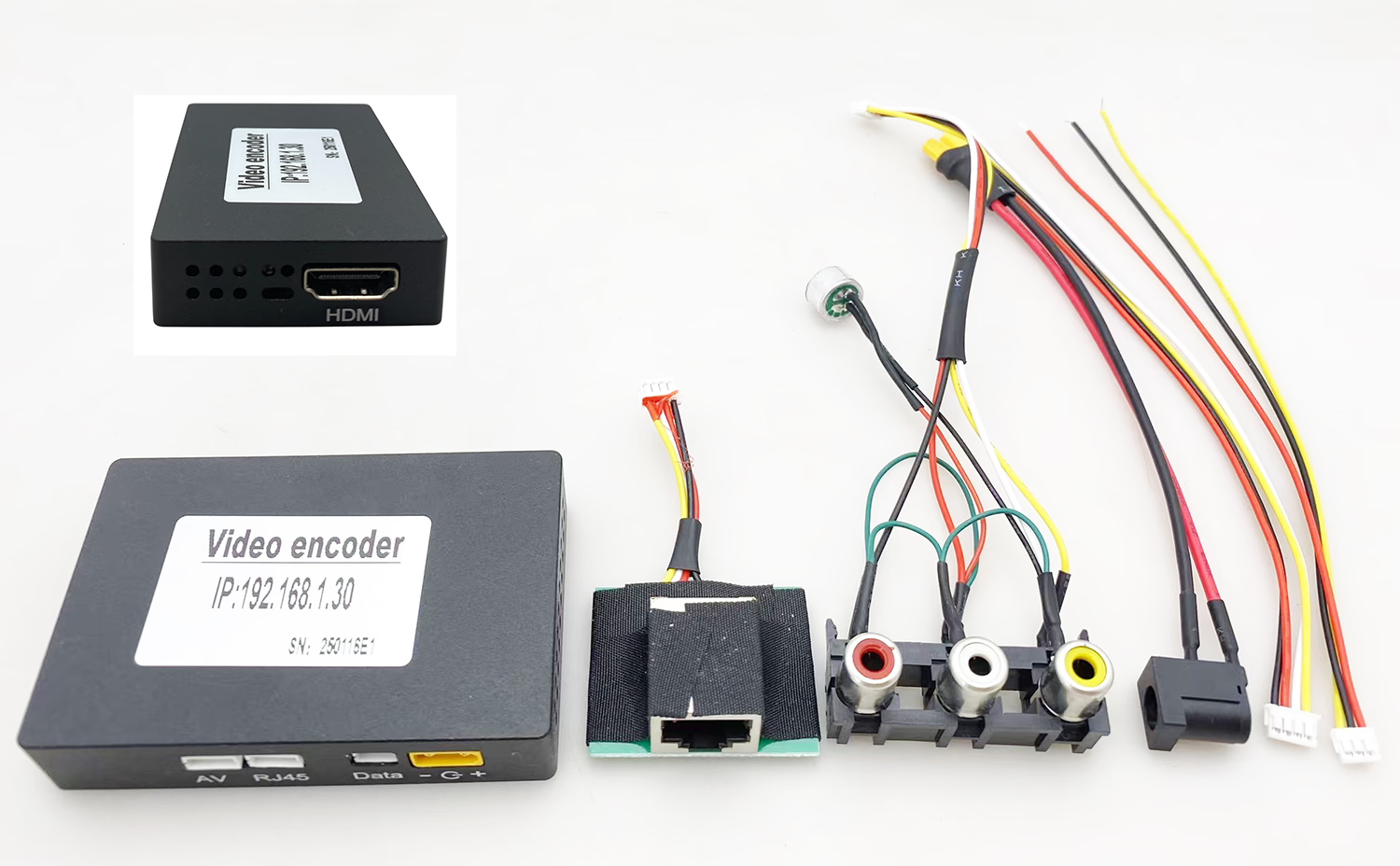
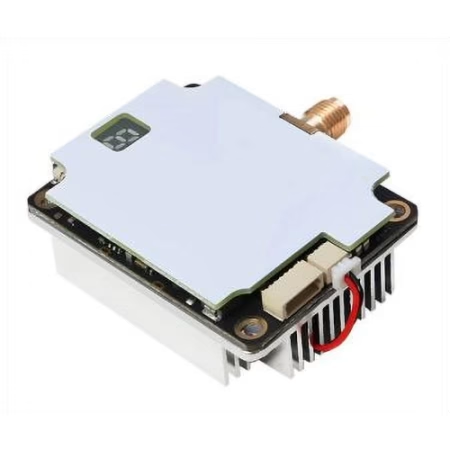
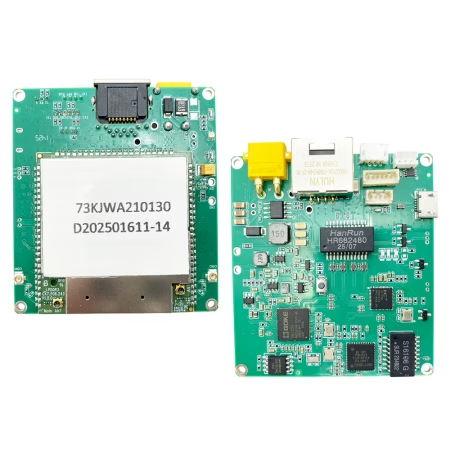
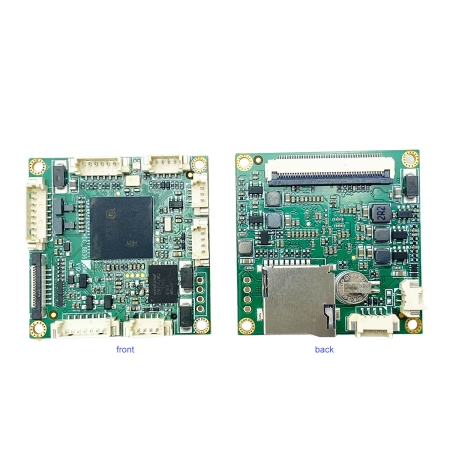
There are two video encoder boards. One supports Analog CVBS+HDMI+USB (UVC) camera video input. Other board supports Analog CVBS + CVBS+AHD+HD-SDI video input.

ხშირად დასმული კითხვები
Q: Does the CVBS board accept AHD to TVI format?
ა: One of our analog CVBS video encoder board support AHD camera video input. It supports IP ether video streaming and plays at RST Player or UDP player. (Support VLC Player).
Q: I need 2-channel HD-SDI video to Ethernet with the lowest latency.
Also, I need a 2-channel analog PAL video to Ethernet converter. H264/H265.
I need 3 მოდელები:
1) 2 CVBS input
2) two HD-SDI input
3) 1 CVBS and 1 hd-SDI input
Can both videos be transmitted on an Ethernet cable simultaneously? How much is the video latency?
ა: Support CVBS+HDMI two video encoders and play on the PC via two video streaming. (mainstream and sub-stream). video latency:
- CVBS input to our encoder board—–our decoder board with HDMI output, the delay is 60~90ms
- HDMI input to our encoder board—–our decoder board with HDMI output, the delay is 90~130ms
- HDMI 720P input our encoder board——–our decoder board with HDMI output, the delay between 80~100ms
- HDMI 1080P input our encoder board——–our decoder board with HDMI output, the delay between 100~130ms
Q: Are you sure your boards can transmit both videos simultaneously to a PC?
ა: დიახ.
Q: If I want to transfer videos to a PC, do I need to buy both an encoder and a decoder?
ა: if you transfer video to a computer, then no need to buy a decoder (use the computer as a video encoder). if you just use a monitor, then it needs a decoder.
Q: I want to write software with tracking capability on PC not only to play video. Then only a video encoder is enough?
ა: დიახ, if you use a computer as a video encoder and display the video stream on the computer monitor, then you no need to buy an extra video encoder.
Q: What is the board size?
ა: The Video Encoder board size is 72.5x48mm;
Q: Your video decoder can convert network video to CVBS PAL output or SDI video. უფლება?
ა: დიახ, it is the function of our video decoder board.

Q: Does your video decoder have CVBS PAL output? Or does it have only HDMI output?
ა: Our video decoder has CVBS PAL and HDMI both output. We also can offer you HDMI to HD-SDI convertor board if you need it.
Q: Does your video encoder support CVBS PAL video as its input?
ა: Our video encoder board supports CVBS PAL+HDMI Video inputs or CVBS PAL + AHD / SDI video inputs. (two versions)
Q: I have a RS422 bi-directional data. Your video encoder and decoder can send and receive this data on Ethernet, too.
ა: Our video encoder and video decoder both support RS242 or TTL data port. RS442 Requires an adapter board.
Q: We want to use a two-way transformation with network cable. The distance between the encoder and the decoder is about 100m.
ა: RS232 supports 2-way transmission.
Q: I have two serial packets to send and receive continuously. It is the command to a pan tilt and replies to a pan tilt. Such as pan-tilt position and speed and current and camera status.
ა: Our equipment supports transparent transmission. We will send and receive whatever data you give us.
Q: How much is the operating temperature range of your boards?
ა: -40~+80 degrees.
Q: Could you produce this encoder with two separate AV inputs, each with its own RTSP address?
ა:ამჟამად, we have encoding board hardware with two video inputs, HDMI და CVBS, or SDI and CVBS, or AHD and CVBS, all of which support two video streams, at the same IP address, on different port numbers, playing at the same time. We can also produce a custom two-way CVBS video input encoder board for you, but the minimum order is 100 units.

With Metal box

UVC to RTSP Converter Board: Low Latency Video Streaming Solution
In today’s digital landscape, the demand for efficient video streaming solutions is ever-increasing. Whether for surveillance, მაუწყებლობა, or live streaming, converting video signals from various sources into an RTSP (Real-Time Streaming Protocol) format is essential. One of the most effective ways to achieve this is through a UVC (USB Video Class) to RTSP converter board. This blog explores the features and benefits of using such a board, particularly its low latency capabilities, support for HDMI and CVBS inputs, and compatibility with popular RTSP players like VLC.
What is a UVC to RTSP Converter Board?
A UVC to-RTSP converter board is a specialized hardware device designed to convert video signals from USB cameras (UVC compliant) into an RTSP stream. These boards typically support multiple video input formats, including HDMI and CVBS (Composite Video Baseband Signal), allowing users to connect various types of cameras.
ძირითადი თვისებები
- Დაბალი შეყოვნება:
- One of the standout features of these converter boards is their ability to provide low latency video streaming. The latency can be as low as 60-90 milliseconds for CVBS inputs and 90-130 milliseconds for HDMI inputs. This makes them ideal for applications requiring real-time video processing, such as security surveillance and live broadcasting.
- Multiple Input Options:
- The boards support various input formats:
- USB Video Sources: Connect any UVC-compliant USB camera.
- HDMI Input: Allows high-definition video sources to be integrated seamlessly.
- CVBS Input: Supports legacy analog cameras, making it versatile across different setups.
- The boards support various input formats:
- Ethernet IP Output:
- The converted video stream is output via Ethernet, allowing easy integration into existing network infrastructures. This feature enables multiple devices to access the stream simultaneously over a local area network (LAN).
- Compatibility with RTSP Players:
- Users can view the streamed content using popular RTSP players like VLC Media Player. This compatibility ensures that users can easily access and manage their video streams without needing specialized software.
How It Works
The operation of a UVC to RTSP converter board is straightforward:
- Connect Your Camera: Plug your USB camera into the board’s USB port or connect an HDMI/CVBS camera.
- Network Setup: Connect the board to your local network via Ethernet.
- Stream Configuration: Configure the stream settings (რეზოლუცია, bitrate, და ა.შ.) using the provided management interface or software.
- Accessing the Stream: Open VLC or another RTSP-compatible player and enter the stream URL provided by the converter board.
შოკგამძლე და შოკგამძლე
The versatility of UVC to RTSP converter boards makes them suitable for various applications:
- Surveillance Systems: Stream live footage from security cameras directly to monitoring stations.
- Live Streaming: Use with HDMI cameras for high-quality broadcasts on platforms like YouTube or Twitch.
- Video Conferencing: Integrate with existing conferencing systems for enhanced video quality.
- Industrial Applications: Monitor processes with real-time video feeds from factory floors or remote locations.
დასკვნა
UVC to RTSP converter boards offer an efficient and flexible solution for converting video signals into a widely accepted streaming format. With their low latency, support for multiple input types, Ethernet output, and compatibility with standard RTSP players like VLC, these boards are indispensable tools in modern video streaming applications. Whether you’re setting up a surveillance system or planning a live broadcast, investing in a UVC to RTSP converter board can significantly enhance your video streaming capabilities.







isdb-t.com_buyer –
This all-in-one video encoder/decoder is the ultimate Swiss Army knife for our heterogeneous security and broadcast systems! It seamlessly converts any source – from legacy Analog CVBS to modern HDMI, AHD, SDI, and even USB webcams (UVC) – into crisp, low-latency IP streams via RTSP/UDP. The Ethernet output integrates flawlessly with our NVR and VMS software, eliminating a tangled mess of single-purpose converters. Setup was surprisingly simple via the web interface, and the dual encode/decode capability lets us both digitize analog feeds and decode network streams to analog monitors. It has saved us countless hours and thousands in hardware costs by future-proofing our entire installation. An indispensable tool for any integrator dealing with mixed video formats!