
Video kodlayıcı düşük gecikme
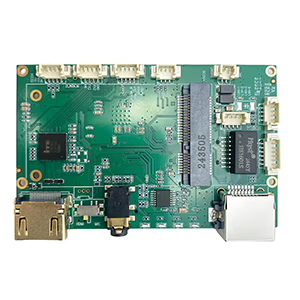
Enkoder Modülleri Kartları
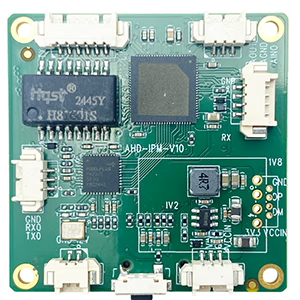
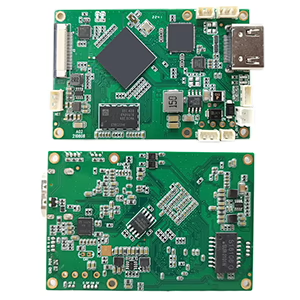
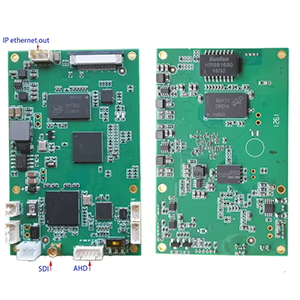
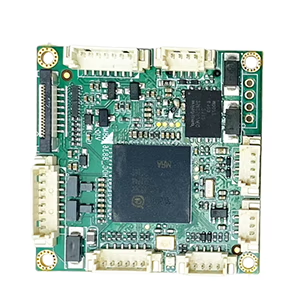

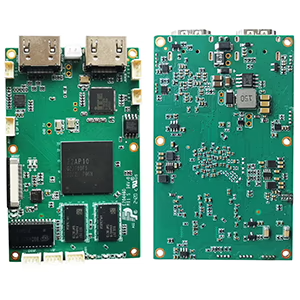
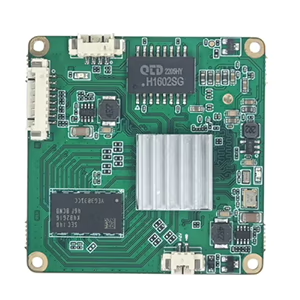
Dekoder Modülleri Kartları
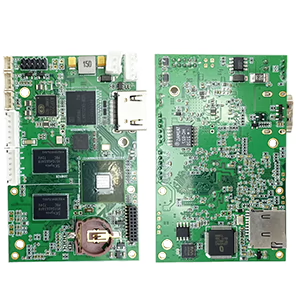

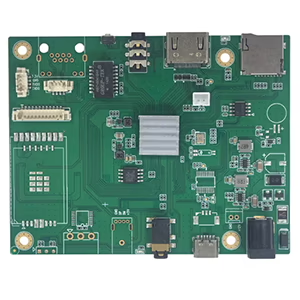
Özelleştirmeye Uygun

Low Latency Mode is an optimized setting in video encoders designed to reduce latency during encoding and decoding, allowing video to be transmitted and played back as quickly as possible. This model is particularly useful for real-time applications such as video conferencing, game streaming, and live streaming.
Main uses
- Video Konferansı: Ensure that the conversation between participants has minimal delay, making communication more natural and fluid.
- Game Streaming: Provides instant response, enabling players to have a more on-premise gaming experience in the cloud.
- Live streaming: Ensure that viewers can watch live content in near real-time, reducing latency in interaction between viewers and streamers.
- Uzaktan kumanda & Remote Desktop: Provides instant feedback to make remote operation more efficient and intuitive.
merit
- Minimized Latency: Reduces the latency introduced during encoding and decoding, allowing video to be transmitted in near real-time.
- Improved interactivity: Suitable for applications that require high interactivity, such as video conferencing and online gaming, to make communication more fluid.
- Enhance the user experience: Make users feel more immediate, especially in scenarios that require quick feedback, such as remote control and live streaming.
shortcoming
- Reduced encoding efficiency: Low-latency modes often reduce the number of in-frame references used by the encoder, which can lead to reduced compression efficiency and increased bandwidth requirements.
- Possible degradation of image quality: Due to the reduced number of reference frames, the encoder may not be able to achieve the same balance of compression quality as in standard mode, resulting in a slight degradation in image quality.
- Higher compute resource requirements: To achieve low latency, encoders may require higher compute resources to process video streams, which can increase the load on the device.
Technology that enables a low-latency mode
- Reduced buffering: Reduces the size of the buffers used in the encoding and decoding process, reducing processing time.
- Intra-Frame Encoding: Increase the proportion of intra-frame encoding to reduce the dependence on the pre- and post-frames, thereby reducing latency.
- Fast Pattern Decision: Use a faster coding pattern decision algorithm to reduce coding time.
- Appropriate inter-frame prediction: Limit the scope of inter-frame prediction to reduce computational complexity and processing time.
Bir soru sor
Yanıtınız için teşekkür ederiz. ✨