
Daar is duidelike verskille tussen Digitale video-uitsaai (DVB) en Geïntegreerde dienste digitale uitsaai (ISDB). Die DVB-T & ISDB-T-uitsaaiformate word in verskillende dele van die wêreld gebruik. Die “T” in “DVB-T” en “ISDB-T” staan vir “Terrestriële,” en dit wys 'n meer internasionale vorm van elke oorspronklike uitsaaistelsel aan. Daar is ook 'n paar DVB-S en ISDB-S, Die “S” staan vir “satelliet”.

DVB is 'n wyd gebruikte stelsel wat sekere standaarde aanvaar om programmering uit te voer. Dit is 'n stel riglyne wat deur die DVB-projek opgestel is, wat 'n raad is wat uit internasionale lede bestaan. Die organisasie is Europees gebaseer, maar DVB word in lande regoor die wêreld gebruik. DVB bied dataverspreiding op verskeie maniere, soos satelliet, kabel, aardse televisie, en mikrogolwe.

ISDB is 'n veel minder wydverspreide alternatief vir DVB. Dit is in Japan ontwikkel en gebou vir gebruik in daardie land. Dit word gebruik deur Japan se analoog radio- en televisiestelsels sowel as al sy digitale televisie- en radiostelsels. ISDB-T kan gebruik word om hoë-definisie televisieprogramme uit te saai en inligting te vertoon vanaf 'n mobiele toestel soos 'n selfoon genaamd One-Segs op dieselfde tyd.

DVB-T & ISDB-T
Terwyl DVB oorspronklik gebou is vir gebruik in Europa, dit kan regoor die wêreld met die DVB-T gebruik word. Lande wat DVB gebruik, sluit Suid-Afrika in, Kenia, Iran, Israel, Nieu-Seeland, en Maleisië. Tjek DVB-T aangenome lande.
ISDB-T is in Japan geskep in 2003, maar dit het nie die land verlaat voordat Brasilië dit begin gebruik het nie 2007. ISDB-T het teen middel 2011 ten volle internasionaal geword, Nou ISDB-T aangenome lande, 6M bandwydte lande, Japan, Brasilië, Peru, Argentinië, Filippyne, Chili, Venezuela, Ecuador, Paraguay, Costa Rica, Bolivia, Nicaragua, Uruguay, Belize, Honduras, Guatemala, El Salvador, Sri Lanka 8M bandwydte lande, Botswana, Maldives

Verskille
Die DVB-T-stelsel bied 6, 7, en 8 MHz ontvangers, wat beteken dat hulle teen drie snelhede kan uitsaai. ISDB-T bied nie ontvangers met 7 vermoëns. Dit is die enigste groot verskil tussen DVB-T en ISDB-T, egter, want beide gebruik gekodeerde ortogonale frekwensiedeling-multipleksing (COFDM) modulasie tegnologie. Hierdie faktor maak dat beide van hulle 'n soortgelyke prestasie lewer.
Kies dus DVB-T ISDB-T wat beter is? Kies asseblief die korrekte digitale TV-boks volgens watter digitale TV-stelsel jou land gekoop het. As jy enige vrae het, jy kan Kontak Ons vir jou te bevestig.
As 'n professionele digitale TV-vervaardiger in China, ISDB-T.com sal jou baie keuses bied.
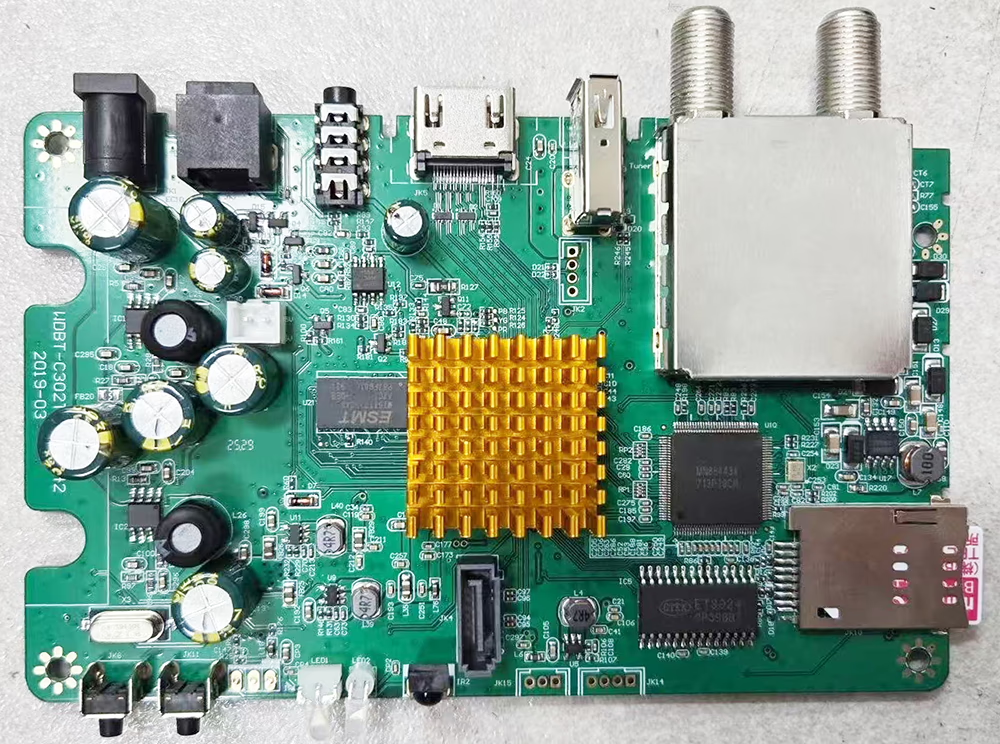
DVB-T vs ISDB-T: Key Differences and an In-Depth Look at ISDB-T Digital TV Technology
Digital terrestrial television standards allow broadcasters to deliver high-quality video, klank, and data services over the air. Among the most widely used systems are DVB-T (Digital Video Broadcasting – Terrestrial) en ISDB-T (Geïntegreerde dienste Digitale uitsaai - Terrestriële).
Both technologies are designed to transmit digital TV signals through terrestrial broadcast networks, but they were developed in different regions and have different technical features and deployment histories.
In hierdie artikel, we explore the differences between DVB-T and ISDB-T, and also take a deeper look at ISDB-T technology, its features, advantages, and global adoption.
What is DVB-T?
DVB-T (Digital Video Broadcasting – Terrestrial) is a digital broadcasting standard developed by the DVB Project, an international consortium of broadcasters, manufacturers, and network operators.
Originally designed for Europe, DVB-T has become one of the most widely used digital terrestrial TV standards worldwide.
Key characteristics of DVB-T
- ondersteun 6 MHz, 7 MHz, en 8 MHz bandwidth channels
- Gebruike COFDM (Coded Orthogonal Frequency Division Multiplexing) modulasie
- ondersteun QPSK, 16QAM, and 64QAM constellations
- Enables Single Frequency Network (SFN) uitsaai
- Ontwerp vir HDTV, SDTV, and digital radio services
DVB-T is used in many countries across Europe, Africa, Asia, and Oceania.
Popular related keywords:
- DVB-T digital TV
- DVB-T receiver
- DVB-T set-top box
- DVB-T terrestrial broadcasting
Wat is ISDB-T?
ISDB-T (Geïntegreerde dienste Digitale uitsaai - Terrestriële) is a digital broadcasting system developed in Japan. It was designed to support high-definition television, mobile broadcasting, and data services within a single broadcast channel.
The standard was launched in Japan in the early 2000s and later adopted by many countries in Latin America and Asia.
ISDB-T is widely known for its buigsaamheid, robustness, and support for mobile television services.
Key features of ISDB-T
- Gebruike COFDM modulation
- ondersteun mobile and portable reception
- Enables simultaneous HD and mobile broadcasting
- Includes Emergency Warning System (EWS)
- Allows data broadcasting and interactive services
One of the most distinctive features of ISDB-T is its segmented transmission system, which divides a broadcast channel into smaller segments for different services.
Important SEO keywords:
- ISDB-T digital TV
- ISDB-T-ontvanger
- ISDB-T set-top box
- ISDB-T broadcasting system
- ISDB-T tuner
- ISDB-T modulator
ISDB-T Segmented Transmission Technology
Unlike most digital TV standards, ISDB-T divides each 6 MHz channel into 13 segmente.
This segmentation allows broadcasters to transmit multiple services simultaneously.
Typical configuration:
- 12 segmente – used for HD or SD television (Full-Seg)
- 1 segment – used for mobile TV (One-Seg)
One-Seg Mobile TV
One-Seg is a mobile broadcasting service designed for:
- Slimfone
- Portable TVs
- USB TV tuners
- Car TV receivers
The One-Seg service allows viewers to watch live TV on mobile devices using just one segment of the broadcast channel.
Benefits of One-Seg:
- Low bandwidth consumption
- Reliable reception while moving
- Ideal for smartphones and portable devices
This feature makes ISDB-T particularly strong for mobile broadcasting, something DVB-T originally did not emphasize.
ISDB-T Technical Advantages
ISDB-T includes several improvements designed to improve reception quality and network efficiency.
1. Time Interleaving
ISDB-T uses time interleaving, which improves signal robustness in noisy environments and enhances reception for mobile or indoor devices.
2. Mobile and Portable Reception
The segmented transmission architecture enables reliable reception in:
- Moving vehicles
- Slimfone
- Portable televisions
- USB digital TV receivers
3. Emergency Warning System (EWS)
ISDB-T includes a built-in Emergency Warning System, which can automatically broadcast disaster alerts such as:
- Earthquakes
- Tsunamis
- Weather warnings
The system can automatically switch TVs on to display emergency information.
4. Efficient Frequency Usage
ISDB-T supports Single Frequency Networks (SFN), allowing multiple transmitters to operate on the same frequency.
Benefits include:
- Lower transmitter power
- Better coverage
- Efficient spectrum usage
ISDB-T Global Adoption
Although ISDB-T originated in Japan, it has expanded significantly across the world.
Countries using ISDB-T or ISDB-Tb (Brasiliaanse weergawe) insluit:
Asia
- Japan
- Filippyne
- Sri Lanka
- Maldives
Latin America
- Brasilië
- Argentinië
- Chili
- Peru
- Ecuador
- Venezuela
- Paraguay
- Uruguay
- Bolivia
- Costa Rica
- Nicaragua
- Honduras
- Guatemala
- El Salvador
- Belize
Africa
- Botswana
Brazil played an important role in spreading the standard internationally by creating the ISDB-Tb variant, optimized for Latin American broadcasting.
Common SEO keywords:
- ISDB-T-lande
- ISDB-Tb standard
- ISDB-T Latin America
- ISDB-T Brazil digital TV
DVB-T vs ISDB-T: Key Differences
| Funksie | DVB-T | ISDB-T |
|---|---|---|
| Oorsprong | Europe | Japan |
| Channel Bandwidth | 6 / 7 / 8 MHz | Mainly 6 MHz |
| Modulasie | COFDM | COFDM |
| Mobile TV | Limited in original DVB-T | Built-in (One-Seg) |
| Segmented transmission | Geen | Ja (13 segmente) |
| Emergency alert system | Not standard | Built-in EWS |
| Adoption regions | Europe, Africa, Asia | Japan, Latin America, Asia |
Both systems deliver similar performance because they rely on COFDM modulation, which ensures strong signal resistance to interference.
Choosing the Right Digital TV Standard
When selecting a digital TV receiver or set-top box, it is important to choose the correct standard used in your country.
Examples:
- Countries using DVB-T require a DVB-T set-top box
- Countries using ISDB-T require an ISDB-T receiver or tuner
Using the wrong receiver will prevent your TV from decoding the broadcast signal.
Common product keywords:
- ISDB-T digital TV box
- ISDB-T tuner for TV
- ISDB-T car TV receiver
- ISDB-T USB TV stick
- ISDB-T-moduleerder
Konklusie
Both DVB-T and ISDB-T are important digital terrestrial broadcasting standards used around the world. While DVB-T is more widely adopted globally, ISDB-T offers unique advantages such as segmented broadcasting, mobile TV support, and built-in emergency alert systems.
With the rise of mobile viewing, portable receivers, and smart broadcasting services, ISDB-T remains a powerful and flexible solution for modern digital television networks.
If you are looking for ISDB-T receivers, ISDB-T set-top boxes, or ISDB-T modulators, be sure to choose a device compatible with the digital broadcasting system used in your country.


1 Seg ISDB-T AM FM
3 duim sak ISDB-t radio Draagbare ISDB LCD TV met een segment digitale TV, mini Pocket TV vir Japan


1 Seg ISDB-T AM FM


HDMI-enkodeerder na ISDB-T RF


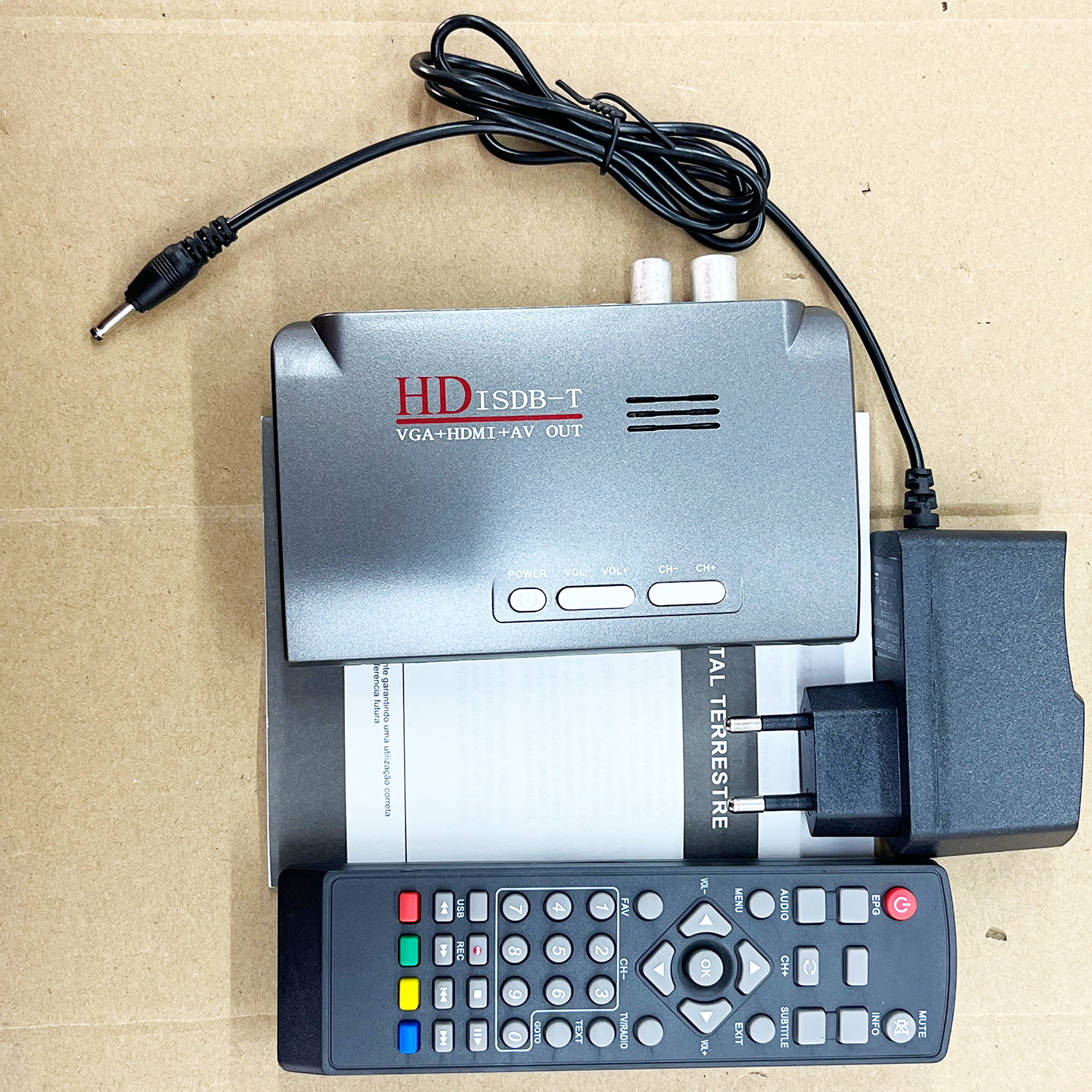


ISDB-T Antenna
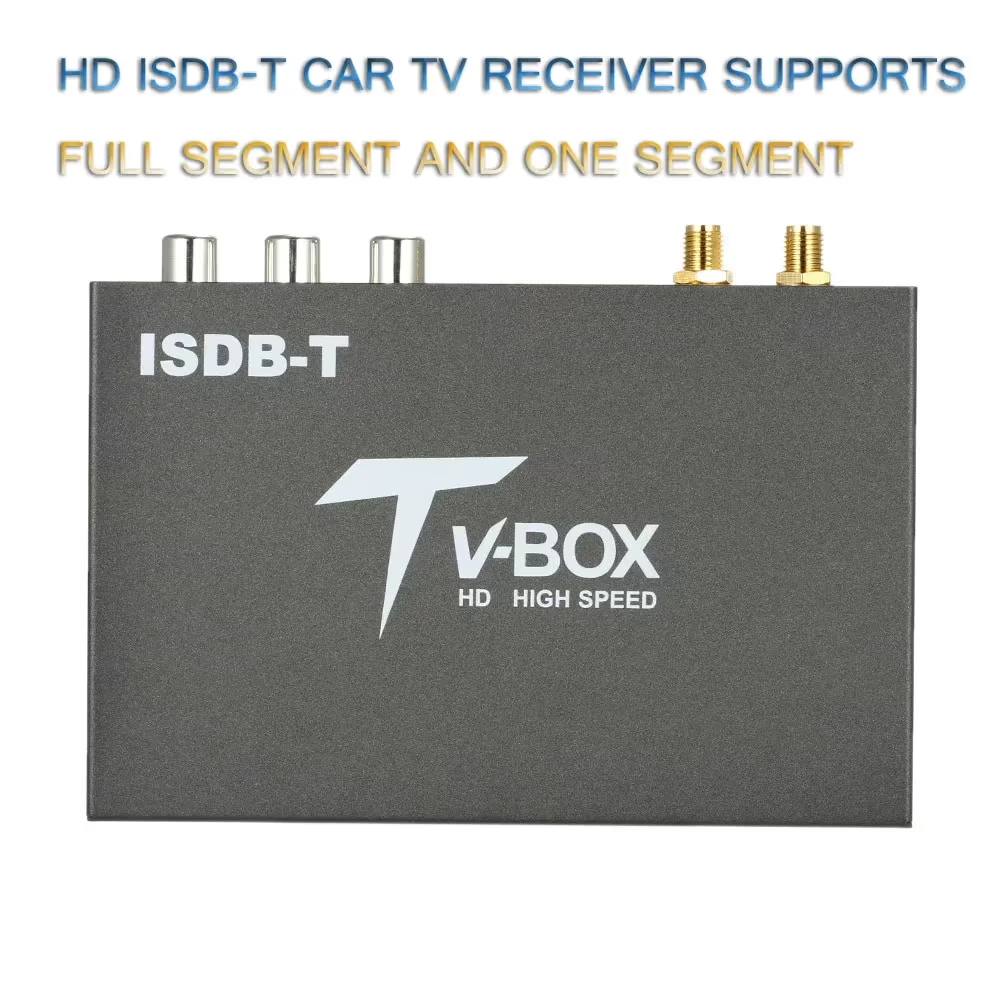


ISDB-T
HD FTA ISDB-T ontvanger TV-tuner Aard vir Brazilië Argentinië Chili Venezuela Costa Rica Filippyne
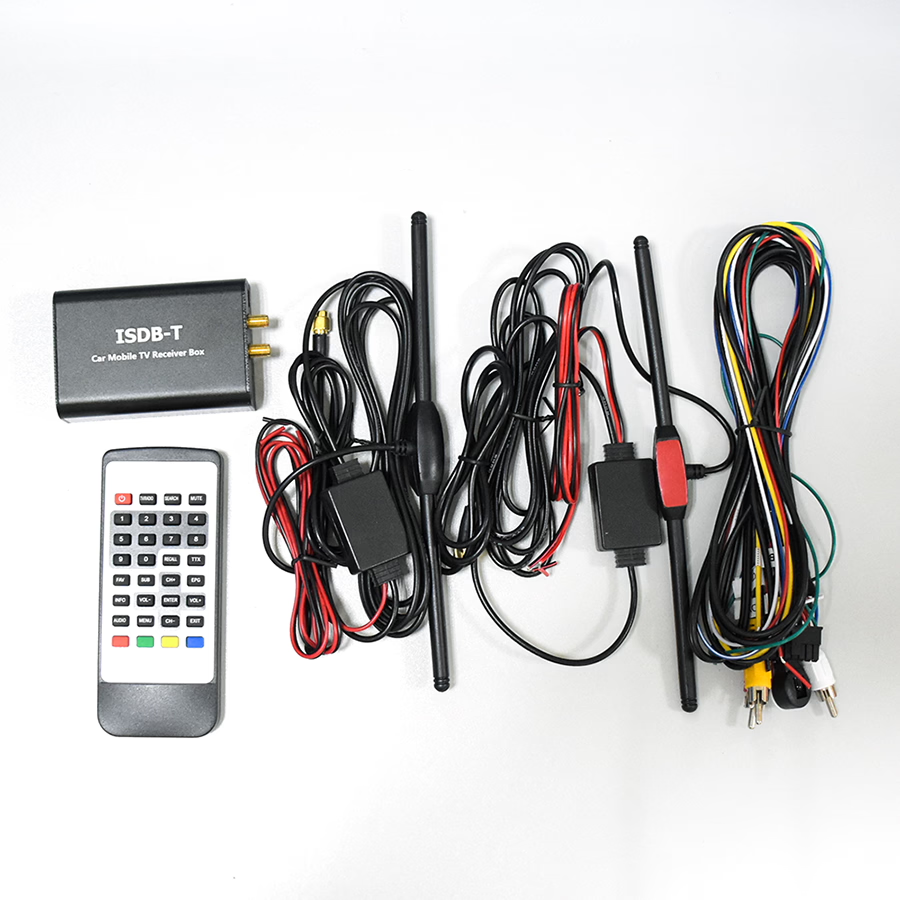


ISDB-T vir die huis
ISDB-T BS CS Japan Japannese drie-band set-top box PVR TV PCB bord
Vra 'n Vraag
U boodskap is gestuur