
Ang mga natatanging pagkakaiba ay umiiral sa pagitan ng Digital Video Broadcasting (DVB) at Mga Serbisyo ng Integrated Digital Broadcasting (ISDB). Mga DVB-T & ANG ISDB-TB-T pagsasahimpapawid format ay ginagamit sa iba't ibang bahagi ng mundo. Ang “T” sa “DVB-T” at “ISDB-T” stands para sa “Terrestrial,” at ito ay nagtatalaga ng isang mas internasyonal na anyo ng bawat orihinal na broadcasting system. Mayroon ding ilang mga DVB-S at ISDB-S, Ang “S” stands para sa “Satelite”.

DVB ay isang malawak na ginagamit na sistema na tumatanggap ng ilang mga pamantayan upang magpatakbo ng programming. Ito ay isang hanay ng mga patnubay na itinakda ng DVB Project, na kung saan ay isang board na binubuo ng mga internasyonal na miyembro. Ang organisasyon ay European-based, ngunit DVB ay ginagamit sa mga bansa sa buong mundo. DVB ay nag-aalok ng data pamamahagi sa ilang mga paraan, tulad ng satellite, cable, telebisyon sa terestriyal, at mga microwave.

ISDB ay isang mas malawakang alternatibo sa DVB. Binuo ito sa Japan at itinayo para gamitin sa bansang iyon. Ito ay ginagamit ng analohiya ng Radyo at telebisyon sistema pati na rin ang lahat ng kanyang mga digital telebisyon at radyo sistema. ANG ISDB-T ay maaaring gamitin upang i-broadcast ang mataas na kahulugan ng telebisyon at magdispley ng impormasyon mula sa isang mobile device tulad ng isang cellphone na tinatawag na One-Segs sa parehong oras.

DVB-T & ISDB-T
Habang DVB ay orihinal na binuo para gamitin sa Europa, maaari itong gamitin sa buong mundo sa DVB-T. Mga bansang gumagamit ng DVB isama south Africa, Kenya, Iran, Israel, New Zealand, at Malaysia. Suriin ang DVB-T pinagtibay na mga bansa.
ANG ISDB-T ay nilikha sa Japan noong 2003, ngunit hindi ito umalis sa bansa hanggang sa unang gamitin ito ng Brazil noong 2007. ISDB-T ay naging ganap na internasyonal sa pamamagitan ng kalagitnaan ng 2011, Ngayon na Mga bansang pinagtibay ng ISDB T, 6M bandwidth mga bansa, Japan, Brazil, Peru, Argentina, Pilipinas, Chile, Venezuela, Ecuador, Paraguay, Costa Rica, Bolivia, Nicaragua, Uruguay, Belize, Honduras, Guatemala, El Salvador, Sri Lanka 8M bandwidth mga bansa, Botswana, Maldives

Mga Pagkakaiba
Ang sistema ng DVB-T ay nag-aalok ng 6, 7, at 8 Tumanggap ng MHz, na nangangahulugang maaari silang mag broadcast sa tatlong bilis. ANG ISDB-T ay hindi nag-aalok ng mga tumatanggap ng tatanggap na may 7 mga kakayahan. Iyon ay ang tanging pangunahing pagkakaiba sa pagitan ng DVB-T at ISDB-T, gayunpaman, dahil parehong gumagamit ng coded orthogonal frequency division multiplexing (COFDM) teknolohiya ng modulasyon. Ang kadahilanang iyon ay gumagawa ng parehong mga ito gumawa ng isang katulad na pagganap.
Kaya piliin ang DVB-T ISDB-T kung alin ang mas mahusay? Piliin lamang ang tamang digital TV box ayon sa kung aling digital TV system ang binili ng iyong bansa. Kung mayroon kang anumang mga katanungan, pwede ka na makipag-ugnay sa amin para ma confirm para sa inyo.
Bilang isang propesyonal na digital TV producer sa Tsina, ISDB-T.com ay mag aalok sa iyo ng maraming mga pagpipilian.
DVB-T vs ISDB-T: Key Differences and an In-Depth Look at ISDB-T Digital TV Technology
Digital terrestrial television standards allow broadcasters to deliver high-quality video, audio, and data services over the air. Among the most widely used systems are DVB-T (Digital Video Broadcasting – Terrestrial) at ISDB-T (Pinagsanib na Serbisyo Digital Broadcasting – Terrestrial).
Both technologies are designed to transmit digital TV signals through terrestrial broadcast networks, but they were developed in different regions and have different technical features and deployment histories.
Sa artikulong ito, we explore the differences between DVB-T and ISDB-T, and also take a deeper look at ISDB-T technology, its features, advantages, and global adoption.
What is DVB-T?
DVB-T (Digital Video Broadcasting – Terrestrial) is a digital broadcasting standard developed by the DVB Project, an international consortium of broadcasters, manufacturers, and network operators.
Originally designed for Europe, DVB-T has become one of the most widely used digital terrestrial TV standards worldwide.
Key characteristics of DVB-T
- Mga Suporta 6 MHz, 7 MHz, at 8 MHz bandwidth channels
- Gamit COFDM (Naka-code na Orthogonal Frequency Division Multiplexing) modulasyon
- Mga Suporta QPSK, 16QAM, and 64QAM constellations
- Enables Single Frequency Network (SFN) pagsasahimpapawid
- Designed for HDTV, SDTV, and digital radio services
DVB-T is used in many countries across Europe, Africa, Asia, and Oceania.
Popular related keywords:
- DVB-T digital TV
- DVB-T receiver
- DVB-T set-top box
- DVB-T terrestrial broadcasting
Ano ang ISDB-T?
ISDB-T (Pinagsanib na Serbisyo Digital Broadcasting – Terrestrial) is a digital broadcasting system developed in Japan. It was designed to support high-definition television, mobile broadcasting, and data services within a single broadcast channel.
The standard was launched in Japan in the early 2000s and later adopted by many countries in Latin America and Asia.
ISDB-T is widely known for its kakayahang umangkop, robustness, and support for mobile television services.
Key features of ISDB-T
- Gamit COFDM modulasyon
- Mga Suporta mobile and portable reception
- Enables simultaneous HD and mobile broadcasting
- Includes Emergency Warning System (EWS)
- Allows data broadcasting and interactive services
One of the most distinctive features of ISDB-T is its segmented transmission system, which divides a broadcast channel into smaller segments for different services.
Important SEO keywords:
- ISDB-T digital TV
- Tatanggap ng ISDB-T
- ISDB-T set-top box
- ISDB-T broadcasting system
- ISDB-T tuner
- ISDB-T modulator
ISDB-T Segmented Transmission Technology
Unlike most digital TV standards, ISDB-T divides each 6 MHz channel into 13 mga segment.
This segmentation allows broadcasters to transmit multiple services simultaneously.
Typical configuration:
- 12 mga segment – used for HD or SD television (Buong-Seg)
- 1 segment – used for mobile TV (Isang-Seg)
One-Seg Mobile TV
Isang-Seg is a mobile broadcasting service designed for:
- Smartphones
- Portable TVs
- USB TV tuners
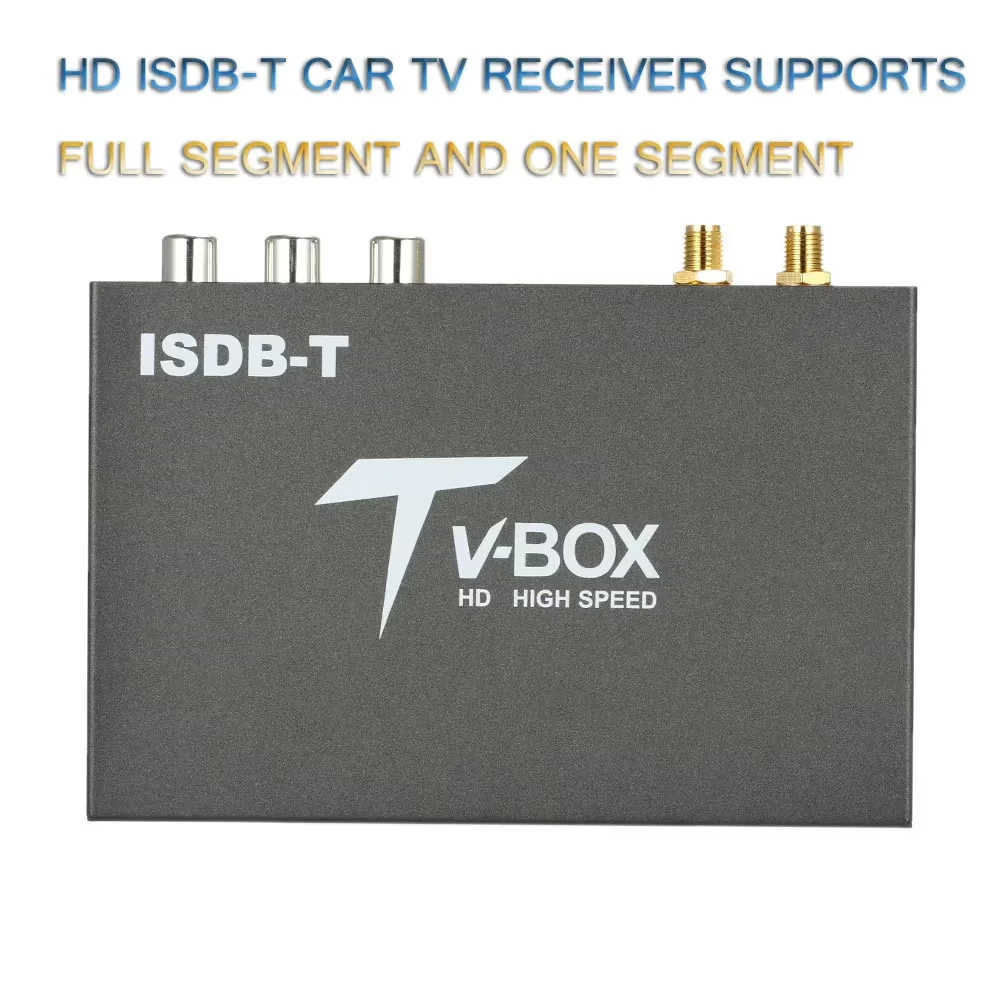
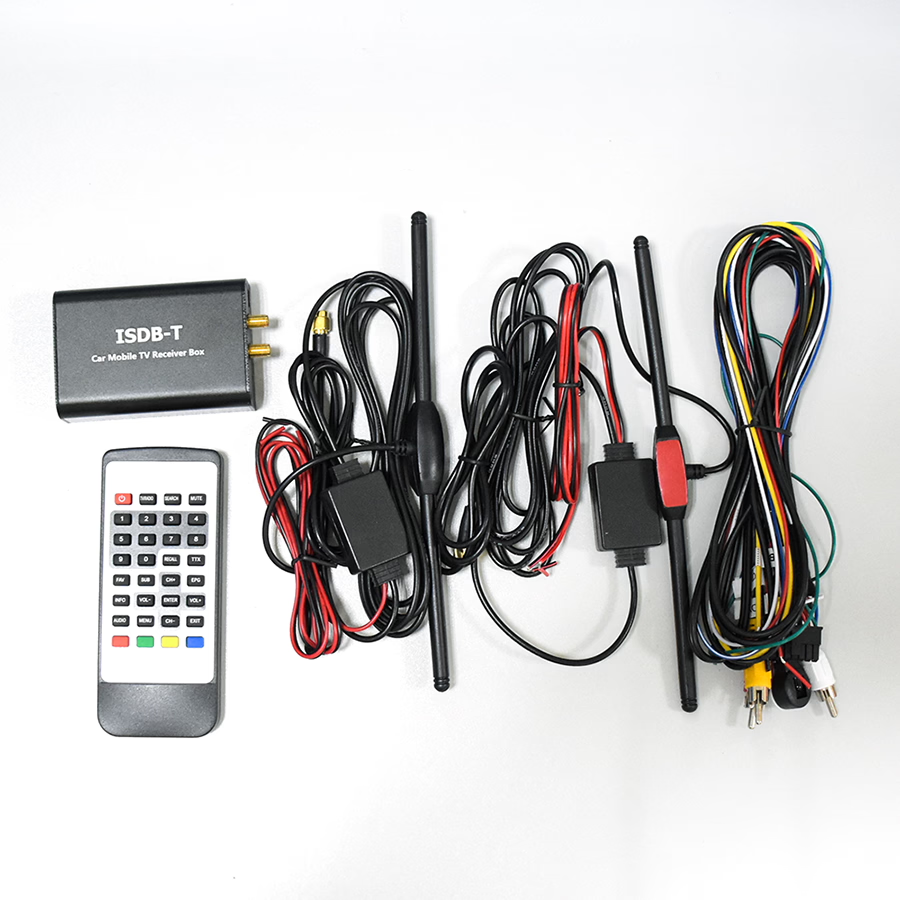
- Car TV receivers
The One-Seg service allows viewers to watch live TV on mobile devices using just one segment of the broadcast channel.
Benefits of One-Seg:
- Low bandwidth consumption
- Reliable reception while moving
- Ideal for smartphones and portable devices
This feature makes ISDB-T particularly strong for mobile broadcasting, something DVB-T originally did not emphasize.
ISDB-T Technical Advantages
ISDB-T includes several improvements designed to improve reception quality and network efficiency.
1. Time Interleaving
ISDB-T uses time interleaving, which improves signal robustness in noisy environments and enhances reception for mobile or indoor devices.
2. Mobile and Portable Reception
The segmented transmission architecture enables reliable reception in:
- Moving vehicles
- Smartphones
- Portable televisions
- USB digital TV receivers
3. Emergency Warning System (EWS)
ISDB-T includes a built-in Emergency Warning System, which can automatically broadcast disaster alerts such as:
- Earthquakes
- Tsunamis
- Weather warnings
The system can automatically switch TVs on to display emergency information.
4. Efficient Frequency Usage
ISDB-T supports Single Frequency Networks (SFN), allowing multiple transmitters to operate on the same frequency.
Benefits include:
- Lower transmitter power
- Better coverage
- Efficient spectrum usage
ISDB-T Global Adoption
Although ISDB-T originated in Japan, it has expanded significantly across the world.
Countries using ISDB-T or ISDB-Tb (Bersyon ng Brazil) include:
Asia
- Japan
- Pilipinas
- Sri Lanka
- Maldives
Latin America
- Brazil
- Argentina
- Chile
- Peru
- Ecuador
- Venezuela
- Paraguay
- Uruguay
- Bolivia
- Costa Rica
- Nicaragua
- Honduras
- Guatemala
- El Salvador
- Belize
Africa
- Botswana
Brazil played an important role in spreading the standard internationally by creating the ISDB-Tb variant, optimized for Latin American broadcasting.
Common SEO keywords:
- Mga bansa ng ISDB-T
- ISDB-Tb standard
- ISDB-T Latin America
- ISDB-T Brazil digital TV
DVB-T vs ISDB-T: Key Differences
| Tampok | DVB-T | ISDB-T |
|---|---|---|
| Pinagmulan | Europe | Japan |
| Channel Bandwidth | 6 / 7 / 8 MHz | Mainly 6 MHz |
| Modulasyon | COFDM | COFDM |
| Mobile TV | Limited in original DVB-T | Built-in (Isang-Seg) |
| Segmented transmission | Hindi | Oo (13 mga segment) |
| Emergency alert system | Not standard | Built-in EWS |
| Adoption regions | Europe, Africa, Asia | Japan, Latin America, Asia |
Both systems deliver similar performance because they rely on COFDM modulasyon, which ensures strong signal resistance to interference.
Choosing the Right Digital TV Standard
When selecting a digital TV receiver or set-top box, it is important to choose the correct standard used in your country.
Examples:
- Countries using DVB-T require a DVB-T set-top box
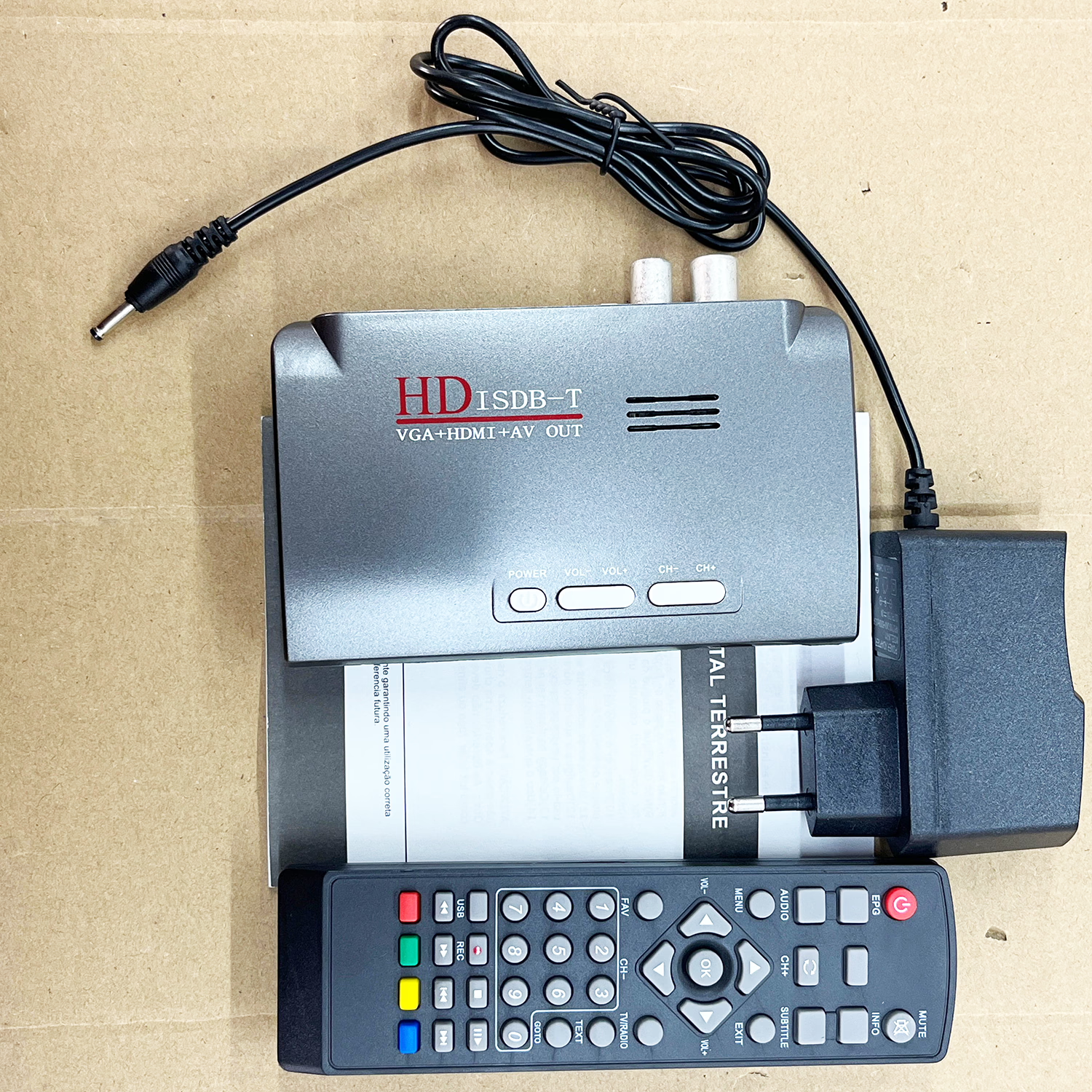
- Countries using ISDB-T require an ISDB-T receiver or tuner
Using the wrong receiver will prevent your TV from decoding the broadcast signal.
Common product keywords:
- ISDB-T digital TV box
- ISDB-T tuner for TV
- ISDB-T car TV receiver
- ISDB-T USB TV stick
- ISDB-T Modulator Encoder
Konklusyon
Both DVB-T and ISDB-T are important digital terrestrial broadcasting standards used around the world. While DVB-T is more widely adopted globally, ISDB-T offers unique advantages such as segmented broadcasting, mobile TV support, and built-in emergency alert systems.
With the rise of mobile viewing, portable receivers, and smart broadcasting services, ISDB-T remains a powerful and flexible solution for modern digital television networks.
If you are looking for ISDB-T receivers, ISDB-T set-top boxes, or ISDB-T modulators, be sure to choose a device compatible with the digital broadcasting system used in your country.


1 Seg ISDB-T AM FM


HDMI Encoder sa ISDB-TF
Digital Encoder Modulator HD-MI compatible extender over Coaxial ISDB-TV RF Modulator MJZSEE V2020I








ISDB-T para sa Tahanan
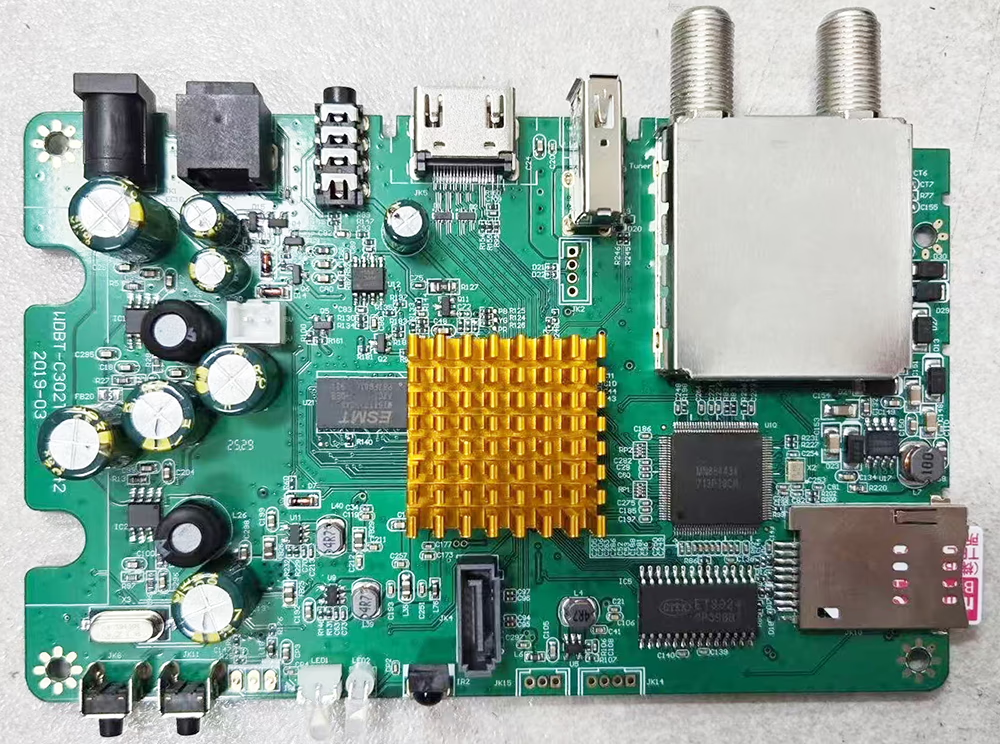
ISDB-T BS CS Japan Japanese Three-Band Set-Top Box PVR TV PCB Board
Magtanong
Ipinadala ang iyong mensahe