
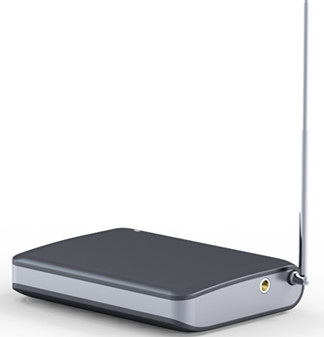
ISDB-T ülkesi aşağıda(ISDB-T kullanan ülkeler ve bölgeler )
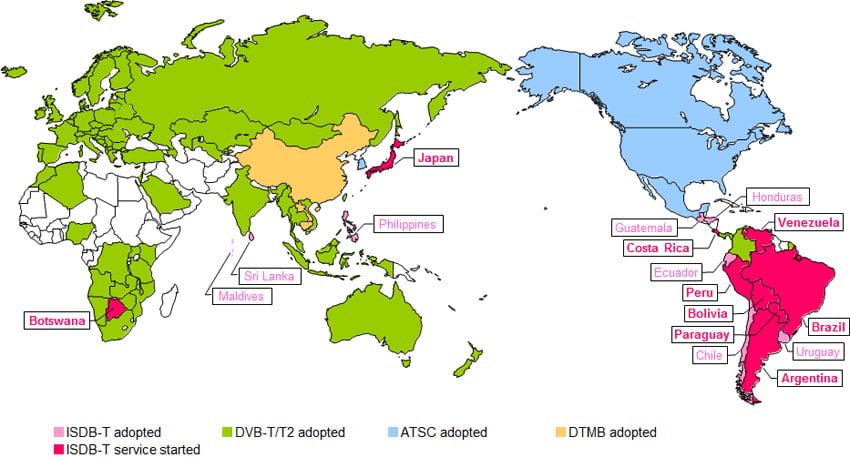
| SBTVD/ISDB-T/ISDB-T International'ı kullanan ülkeler ve bölgeler | ||
|---|---|---|
| Amerika | Asya | Afrika |
| Brezilya | Japonya | Botsvana |
| Peru | Filipinler | |
| Arjantin | Maldivler | |
| Şili | Sri Lanka | |
| Venezuela | ||
| Ekvador | ||
| Paraguay | ||
| Kosta Rika | ||
| Bolivya | ||
| Nikaragua | ||
| Uruguay | ||
| Belize | ||
| Honduras | ||
| Guatemala | ||
ISDB‑T nedir?? (Entegre Hizmetler Dijital Yayıncılığı – Karasal)
ISDB‑T bir dijital karasal televizyon yayın standardı başlangıçta geliştirildi Japonya. Yüksek kaliteli Dijital TV sunmak üzere tasarlanmıştır (DTT) standart tanımlı sinyaller (SD), yüksek çözünürlüklü (HD), mobil yayın (1- kendisi), ve kablosuz veri hizmetleri. Yaşlılardan farklı olarak analog TV, ISDB‑T gelişmiş görüntü/ses kalitesi sağlar, spektrumun daha verimli kullanılması, etkileşimli hizmetler için esneklik ve esneklik.
Standart kullanımlar OFDM modülasyonu, destekler mobil resepsiyon, ve tek bir frekans kanalında birden fazla program akışını yönetebilir; bu da onu çok verimli hale getirir ve yeni nesil yayın kullanımı için geleceğe hazır hale getirir.
Ülkeler & ISDB‑T Standardını Kullanan Bölgeler
İşte bir kapsamlı liste ISDB‑T'yi benimseyen ülkelerin sayısı (gibi varyantlar dahil ISDB‑T Uluslararası / SBTVD):
Asya
- Japonya — Orijinal ISDB‑T standardı; dijital hizmet şu tarihte başladı: 2003.
- Filipinler — ISDB‑T'yi resmi olarak kabul etti ve dijital TV'yi devreye aldı.
- Maldivler — ISDB‑T kabul edildi, Tsunami erken uyarı entegrasyonuyla dikkat çekti.
- Sri Lanka — ISDB‑T Uluslararası standardının resmi olarak benimsenmesi.
Amerika (Latin Amerika / Karayipler)
Birçok ülke seçti ISDB‑T / ISDB‑T Uluslararası (SBTVD olarak da bilinir) mobil ve esnek özellikleri nedeniyle:
- Brezilya — ISDB‑T International'ı kabul etti 2006.
- Peru — Karar 2009; hizmet başladı 2010.
- Arjantin — Şu tarihten itibaren kabul edilen ve başlatılan hizmetler 2010.
- Şili - Kabul edildi 2009; düzenli yayınlar sürüyor.
- Venezuela — Evlat edinme 2009; dağıtımlar bundan sonra genişletildi.
- Ekvador — Kabul edildi ve deneme yayınları başladı 2013.
- Kosta Rika — ISDB‑T'yi kabul etti 2010; resmi yayınlar başladı 2014.
- Paraguay — ISDB-T'yi kabul eden hükümet kararnamesi 2010.
- Bolivya — Kabul edildi ve testlere başlandı 2011.
- Uruguay — Dijital TV'nin benimsenmesi ve kullanıma sunulması.
- Guatemala — Dijital standardı onayladı.
- Honduras — ISDB‑T International kabul edildi.
- El Salvador — Standartların benimsenmesi 2017.
Afrika
- Botsvana — ISDB-T yayınlarını benimseyen ve başlatan ilk Afrika ülkesi 2013.
Küresel Benimseme Zaman Çizelgesi
Pek çok Latin Amerika ülkesi arasında ISDB‑T'yi benimsedi 2009–2011, ortak hedefler tarafından yönlendirilen:
✔ Daha iyi dijital TV kalitesi
✔ Geniş mobil alım desteği (1bölüm)
✔ Etkileşim ve veri yayın yetenekleri
✔ Bölgesel pazarlar arasında uyumlaştırma
Örneğin:
| Ülke | ISDB‑T kabul edildi | Hizmet Başladı |
|---|---|---|
| Japonya | O zamandan beri orijinal 2003 | 2003 |
| Brezilya | 2006 | 2007 |
| Peru | 2009 | 2010 |
| Arjantin | 2009 | 2010 |
| Şili | 2009 | ~2017 |
| Kosta Rika | 2010 | 2014 |
| Botsvana | 2013 | 2013 |
| (ISDB‑T benimseme zaman çizelgesinden veriler) |
⚠ Not: Dağıtım aşamaları, altyapı hedeflerine ve düzenleyici programlara bağlı olarak ülkeye göre değişir.
ISDB‑T Teknik Özellikleri
1SEG — Mobil Yayın Özelliği
ISDB-T'nin öne çıkan özelliklerinden biri 1SÖYLEMEK — standart dahilinde cep telefonlarına izin veren bir mod, taşınabilir cihazlar, ve araba alıcıları alacak TV sinyallerini yayınlamak. Bu mobil yayın yeteneği, örneğin birçok ülkenin nedenlerinden biridir.. Brezilya ve Japonya ISDB-T'nin benimsenmesini teşvik etti.
Neden Bazı Ülkeler ISDB-T'yi Seçiyor?
İşte bazıları yayıncıların nedenleri & düzenleyiciler ISDB‑T dijital TV standardını seçiyor:
🔹 Çok yollu direnç: Kentsel ortamlarda daha iyi performans
🔹 Mobil yayın desteği: Dahili 1SEG ile
🔹 Esnek bant genişliği yönetimi: Hem HD hem de SD kanallar için iyi
🔹 Etkileşimli hizmetler ara yazılımı (Ginga) uygulamalar ve gelişmiş görüntüleme deneyimleri için (özellikle Latin Amerika'da)
🔹 Bölgesel uyum: Birçok komşu aynı standardı paylaşıyor, ölçek ekonomilerini mümkün kılmak
Diğer Dijital TV Standartlarıyla Karşılaştırma
| Standart | Ortak Bölgeler | Notlar |
|---|---|---|
| ISDB‑T / ISDB‑T Uluslararası | Japonya, Latin Amerika, Asya'nın bazı kısımları & Afrika | Güçlü mobil özellikler, 1SEG desteği |
| DVB‑T / DVB‑T2 | Avrupa, biraz Asya & Afrika | Yüksek spektral verimlilik, AB'de yaygın olarak kullanılıyor |
| ATSC / ATSC 3.0 | Amerika, Kanada, Güney Kore | Farklı modülasyon ve ekosistem |
Her standardın güçlü yönleri vardır; ancak ISDB-T'nin esnekliği ve mobil yetenekleri, gelişmekte olan ve mobil ileri pazarlarda benimsenmesinin ana nedenleridir..
Son Düşünceler
Bugün, ISDB‑T ve bunun gibi uluslararası çeşitleri SBTVD / ISDB‑T Uluslararası küresel dünyanın bir parçası dijital TV ekosistemi, hükümetlerin eski analog TV'den verimli TV'ye geçişine yardımcı olmak, modern Dijital Karasal Televizyon (DTT). Standardın küresel ayak izi — Japonya ve Filipinler'den Latin Amerika'nın çoğuna ve hatta Afrika'nın bazı bölgelerine kadar — yayın teknolojisi üzerindeki uyarlanabilirliğini ve etkisini kanıtlıyor.
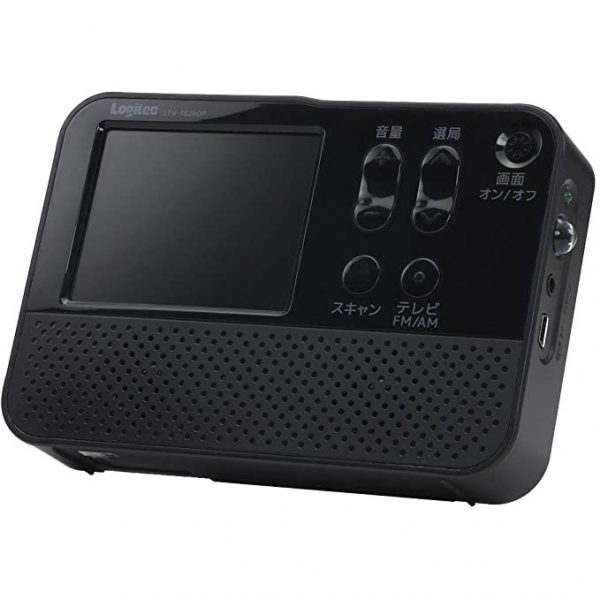


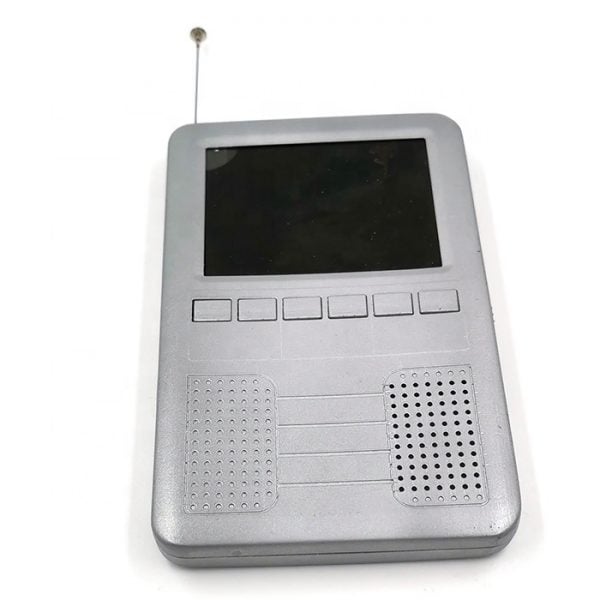
1 Seg ISDB-T AM FM
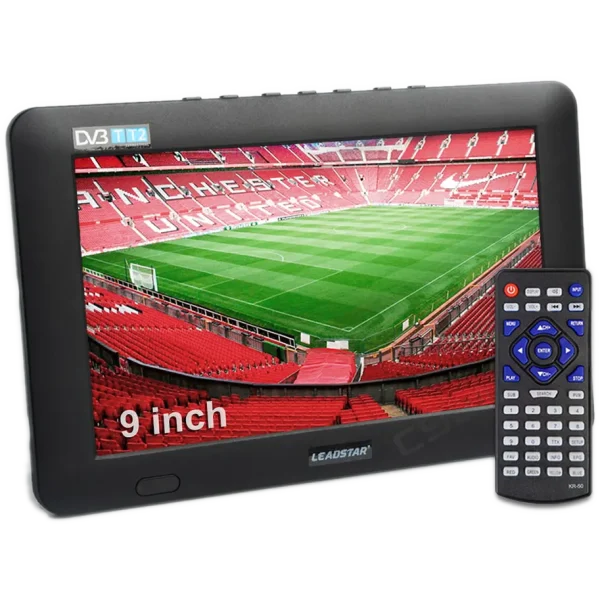
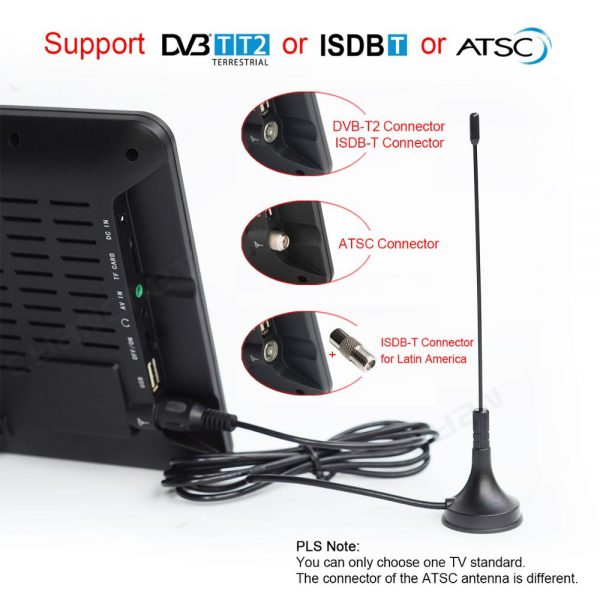

1 Seg ISDB-T AM FM

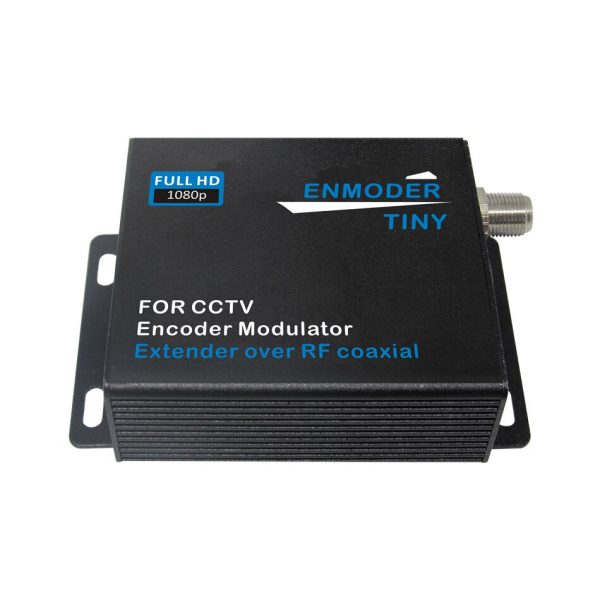
ISDB-T RF'ye HDMI Kodlayıcı
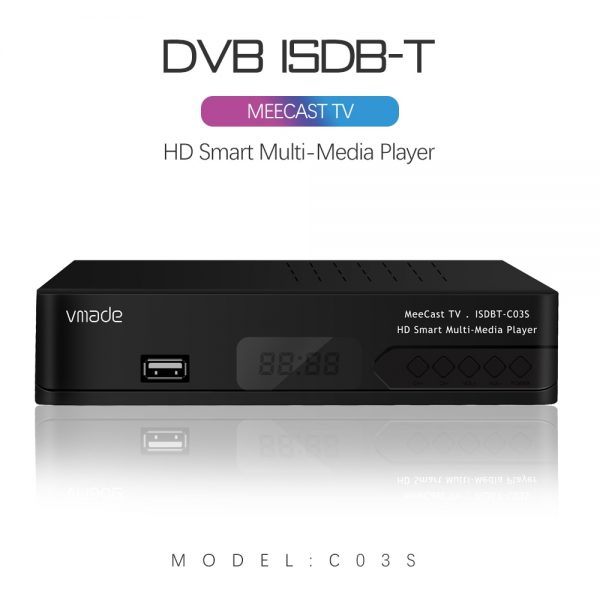
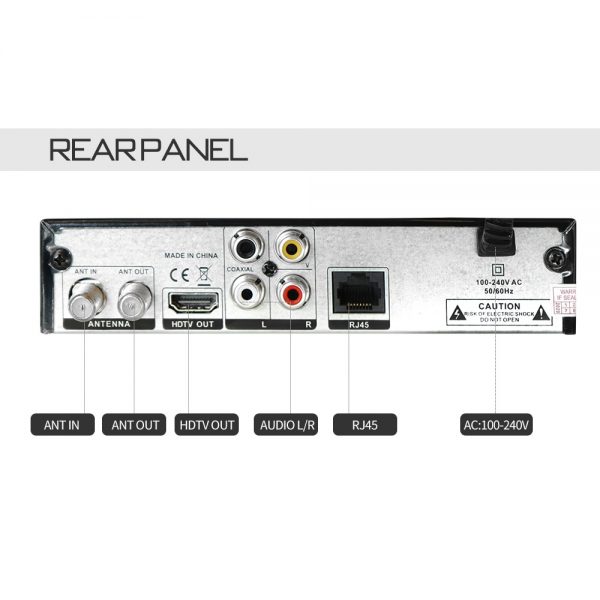
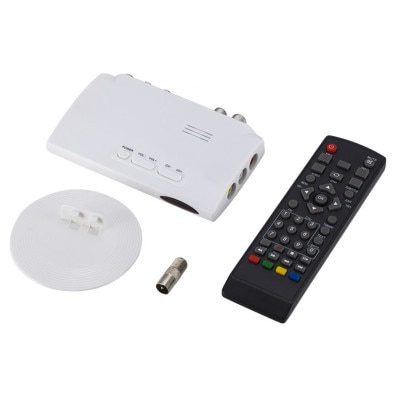
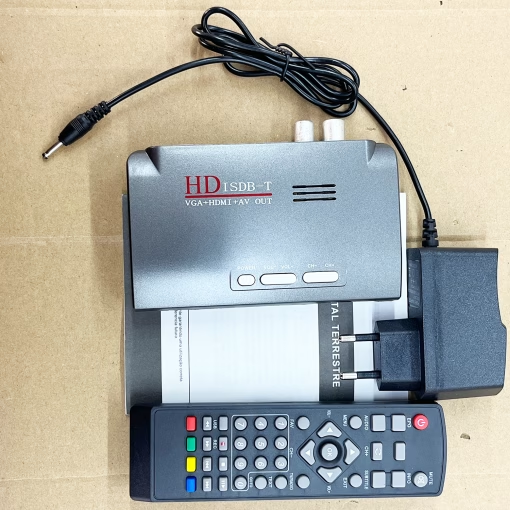
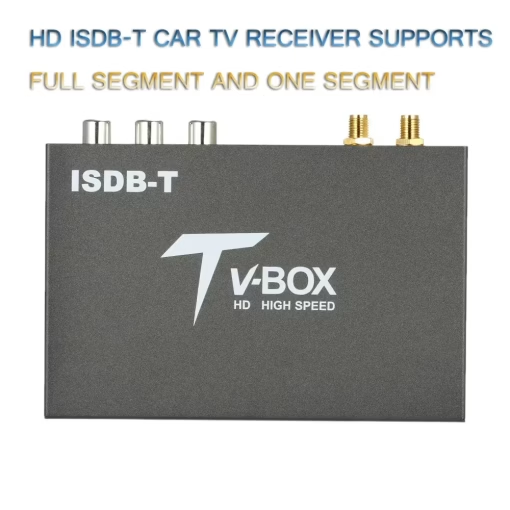
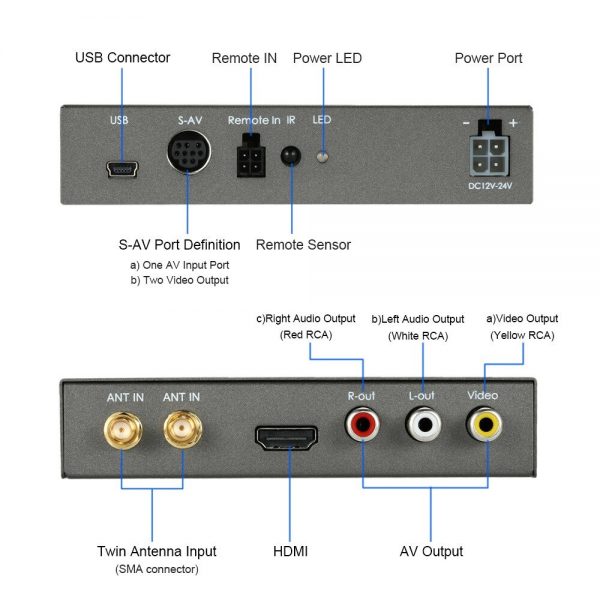
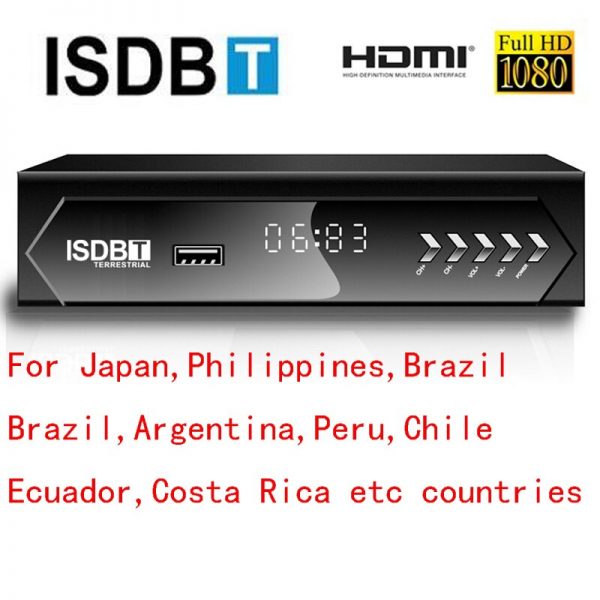
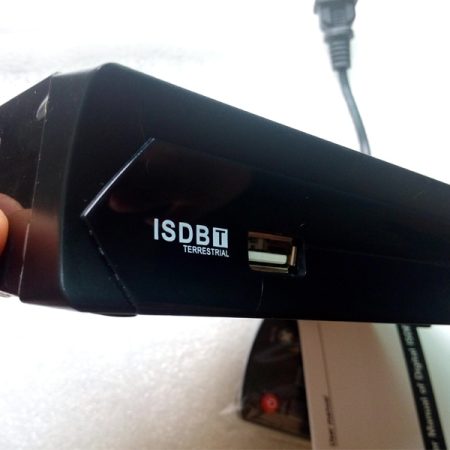
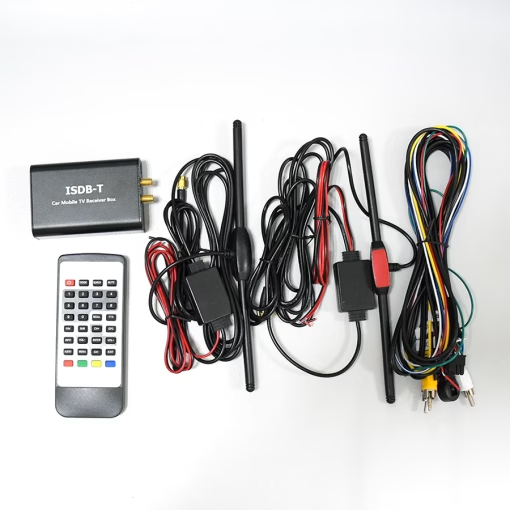

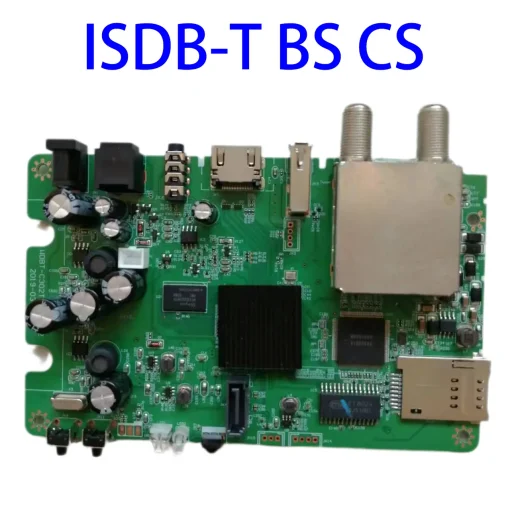
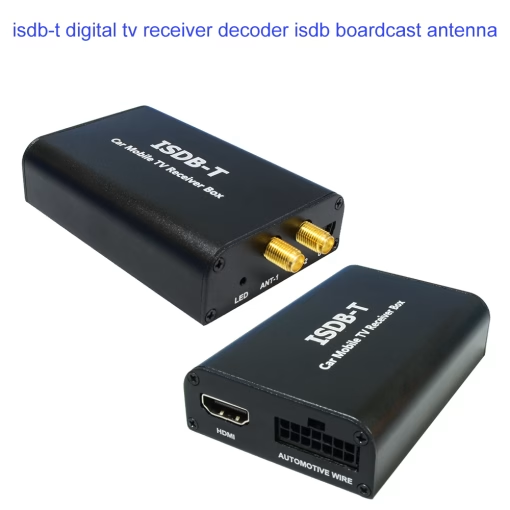
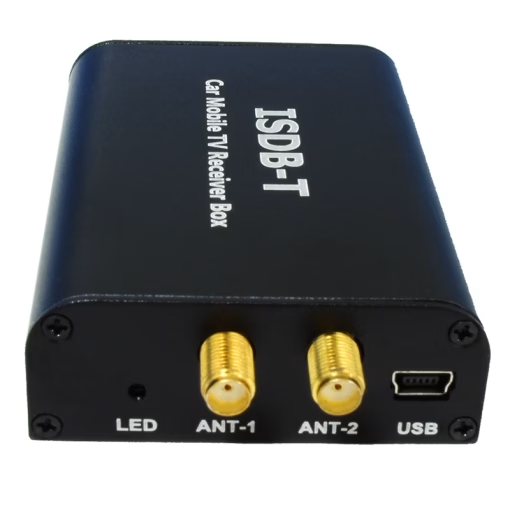
Araba için ISDB-T
Soru Sor
Yanıtınız için teşekkür ederiz. ✨