

Isdb-t Land op ënnen(Länner a Lännereien mat ISDB-T )

| Länner a Lännereien mat SBTVD / ISDB-T / ISDB-T International | ||
|---|---|---|
| Amerika | Asien | Afrika |
| Brasilien | Japan | Botswana |
| Peru | Philippinnen | |
| Argentinien | Malediven | |
| Chile | Sri Lanka | |
| Venezuela | ||
| Ecuador | ||
| Paraguay | ||
| Costa Rica | ||
| Bolivien | ||
| Nicaragua | ||
| Uruguay | ||
| Belize | ||
| Honduras | ||
| Guatemala | ||
What is ISDB‑T? (Integréiert Servicer Digital Broadcasting - Terrestresch)
ISDB‑T ass a digital terrestrial television broadcasting standard ursprénglech entwéckelt an Japan. It’s designed to deliver high‑quality Digital TV (DTT) signals including standard definition (SD), high definition (HD), mobile broadcast (1‑seg), an daten Servicer iwwer d'Loft. Unlike older analog Fernseh, ISDB‑T provides improved image/audio quality, more efficient use of spectrum, and flexibility for interactive services.
The standard uses OFDM modulation, ënnerstëtzt mobil Empfang, and can handle multiple program streams within one frequency channel — making it very efficient and future‑ready for next‑gen broadcast use.
Länner & Territories Using the ISDB‑T Standard
Here’s a comprehensive list of countries that have adopted ISDB‑T (including variants like ISDB‑T International / SBTVD):
Asien
- Japan — Original ISDB‑T standard; digital service started in 2003.
- Philippinnen — Officially adopted ISDB‑T and deployed digital TV.
- Malediven — Adopted ISDB‑T, noted for tsunami early warning integration.
- Sri Lanka — Formal adoption of the ISDB‑T International standard.
Amerika (Latäinamerika / Caribbean)
Many countries chose ISDB‑T / ISDB‑T International (also called SBTVD) due to its mobile and flexible features:
- Brasilien — Adopted ISDB‑T International in 2006.
- Peru — Decision in 2009; service began in 2010.
- Argentinien — Adopted and launched services starting in 2010.
- Chile — Adopted in 2009; regular broadcasts underway.
- Venezuela — Adoption in 2009; deployments expanded thereafter.
- Ecuador — Adopted and trial broadcasts started in 2013.
- Costa Rica — Adopted ISDB‑T in 2010; official broadcasts began 2014.
- Paraguay — Government decree adopting ISDB‑T in 2010.
- Bolivien — Adopted and began tests in 2011.
- Uruguay — Adoption and rollout of digital TV.
- Guatemala — Approved the digital standard.
- Honduras — Adopted ISDB‑T International.
- De Retter — Standard adoption in 2017.
Afrika
- Botswana — First African country to adopt and start ISDB‑T broadcasts in 2013.
Global Adoption Timeline
Many Latin American countries adopted ISDB‑T between 2009–2011, driven by shared goals:
✔ Better digital TV quality
✔ Broad mobile reception support (1Segment)
✔ Interactivity and data broadcast capabilities
✔ Harmonization across regional markets
Zum Beispill:
| Landunance | Adopted ISDB‑T | Service Began |
|---|---|---|
| Japan | Original since 2003 | 2003 |
| Brasilien | 2006 | 2007 |
| Peru | 2009 | 2010 |
| Argentinien | 2009 | 2010 |
| Chile | 2009 | ~2017 |
| Costa Rica | 2010 | 2014 |
| Botswana | 2013 | 2013 |
| (Data from ISDB‑T adoption timeline) |
⚠ Note: Deployment phases vary by country depending on infrastructure goals and regulatory schedules.
ISDB‑T Technical Highlights
1SEG — Mobile Broadcast Feature
One of ISDB‑T’s standout features is 1SEG — a mode within the standard that allows mobile phones, portable devices, and car receivers to receive broadcast TV signals. This mobile broadcast capability is one reason many countries e.g. Brazil and Japan pushed ISDB‑T adoption.
Why Some Countries Choose ISDB‑T
Here are some reasons broadcasters & regulators select the ISDB‑T digital TV standard:
🔹 Multipath resistance: Better performance in urban environments
🔹 Mobile broadcast support: With 1SEG built‑in
🔹 Flexible bandwidth handling: Good for both HD and SD channels
🔹 Interactive services middleware (Ginga) for apps and enhanced viewer experiences (especially in Latin America)
🔹 Regional alignment: Many neighbours share the same standard, enabling economies of scale
Comparison With Other Digital TV Standards
| Standard | Common Regions | Notizen |
|---|---|---|
| ISDB‑T / ISDB‑T International | Japan, Latäinamerika, Deeler vun Asien & Afrika | Strong mobile features, 1SEG support |
| DVB‑T / DVB‑T2 | Europa, some Asia & Afrika | High spectral efficiency, widely used in EU |
| ATSC / ATSC 3.0 | USA, Kanada, South Korea | Different modulation and ecosystem |
Each standard has strengths — but ISDB‑T’s flexibility and mobile capabilities are major reasons for its adoption in developing and mobile‑forward markets.
Finale Gedanken
Haut, ISDB‑T and its international variants like SBTVD / ISDB‑T International are part of the global digital TV ecosystem, helping governments transition from legacy analog TV to efficient, modern Digital Terrestrial Television (DTT). The standard’s global footprint — from Japan and the Philippines to most of Latin America and even parts of Africa — proves its adaptability and impact on broadcast technology.


1 Seg ISDB-T AM FM


HDMI Encoder zu ISDB-T RF


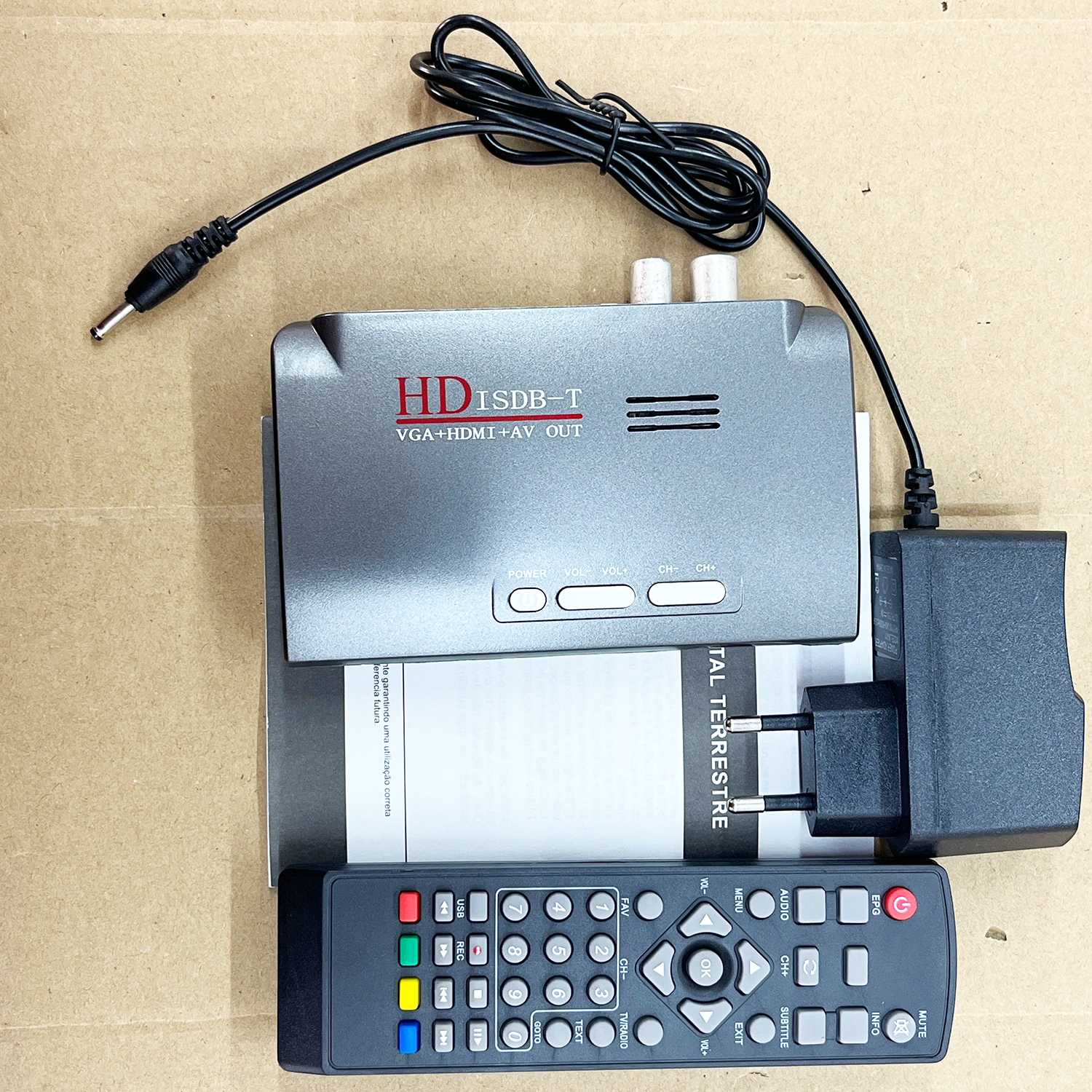
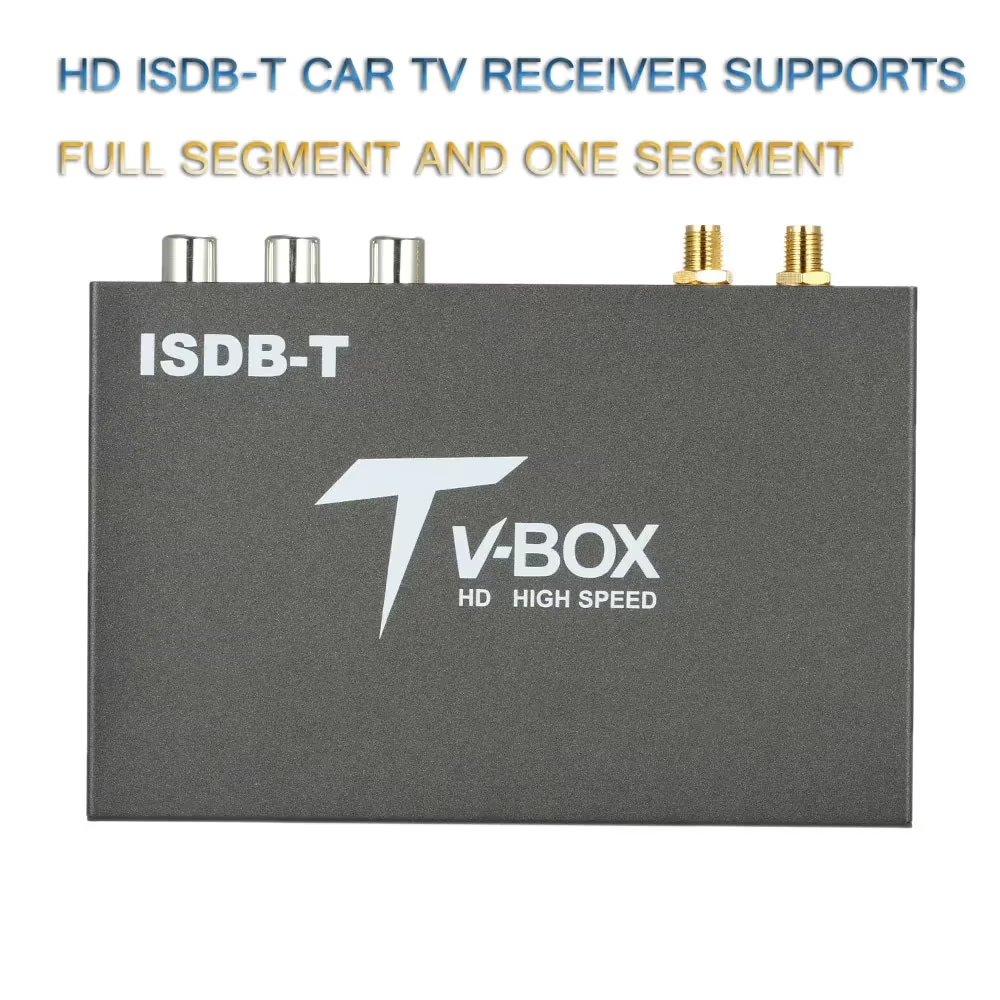

ISDB-T
HD Auto ISDB-T Digital TV 2 Antenn Dekorder Empfänger héichgeschwindege Vollsegment dalden Itenena


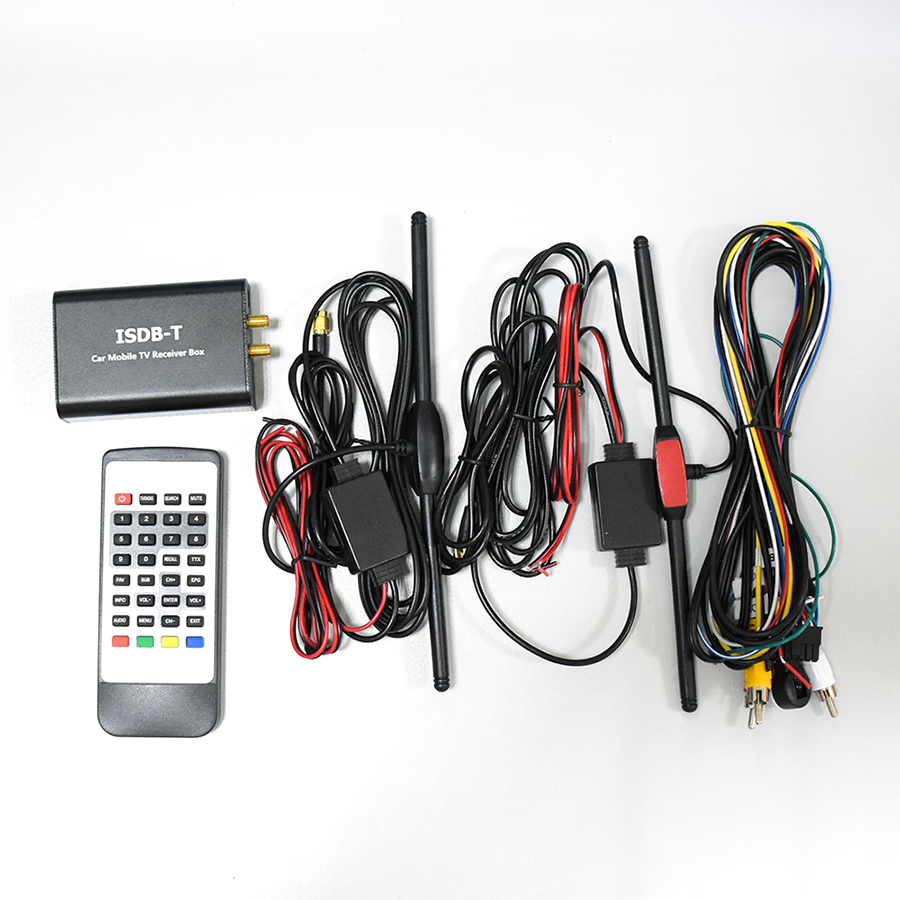


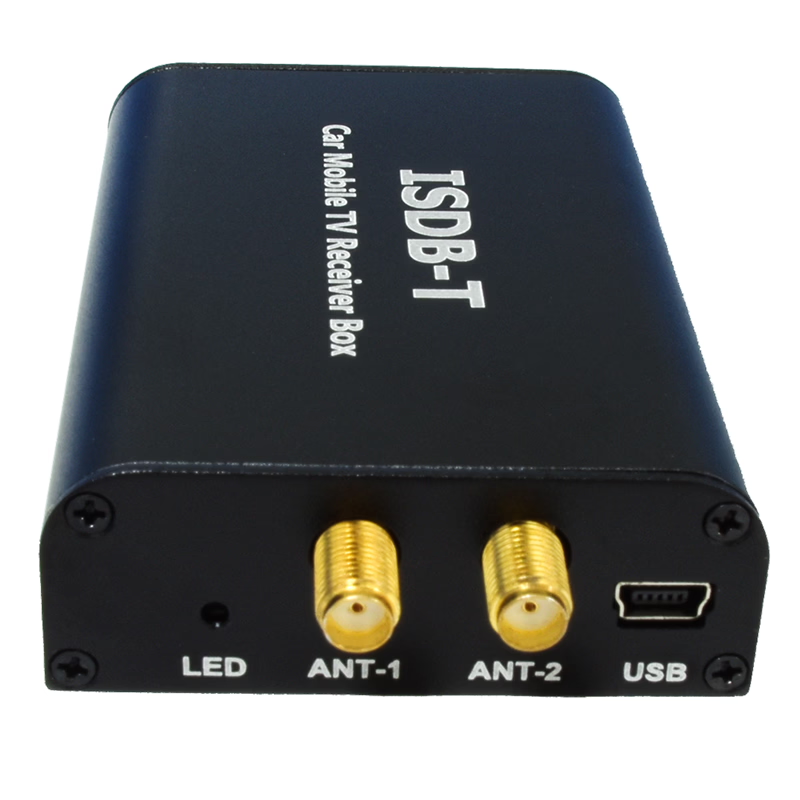
ISDB-T fir Auto
isdb-t digital TV Empfänger Dekorder Isdb Cancich Antenna Mini
Eng Fro stellen
Äre Message gouf ofgeschéckt