

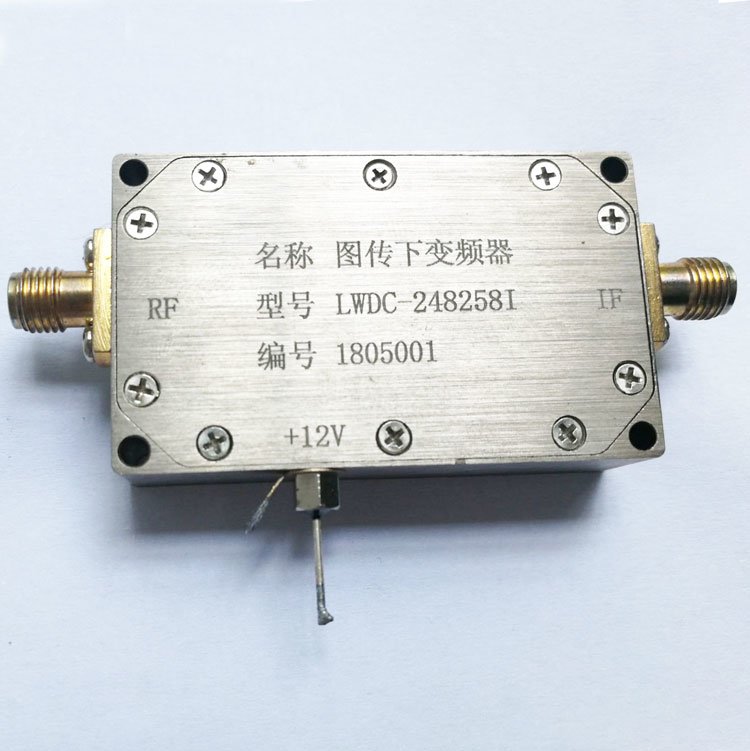


Conversor descendente digital
Conversor descendente digital COFDM Frequência de transferência 2.4G a 600Mhz baixa

Pontos de venda
- Frequências de entrada de 24000 para 600 MHz (Menor 1800 MHz)
- Alta largura de banda
- Baixo ruído de fase
- Estabilidade de alta frequência

Especificação
Faixa de frequência RF: 2400 Mhz
Faixa de frequência SE: 600 Mhz
Perda de retorno:-12 dB
Precisão de frequência: ±10 ppm
Rejeição de imagem: 60 dBc
Planicidade: ±0,5dB (8Largura de banda em MHz)
Ganho de conversão: 25 dB
Ruído de Fase (dBc/Hz)
dBc/Hz@1KHz ≤-80
dBc/Hz@10KHz ≤-90
dBc/Hz@100KHz ≤-100
Tensão de alimentação: 10~15V
Corrente de energia: 100 mA
Faixa de temperatura operacional: +25 ℃

Porta
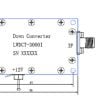
ENTRADA RF: SMA-50K
SE FORA: SMA-50K
Potência +12V: Grudar
GND: Terminal de solda
Observação
- O conversor não precisa adicionar um amplificador de baixo ruído no back-end.
- Teste real: teste de circuito fechado sob a frequência de 2,4 GHz/largura de banda de 4 MHz, a sensibilidade de recepção pode chegar a -105dBm.
- A frequência de entrada suporta 1 ~ 3 GHz. (Podemos apoiar personalizar).
- A frequência de saída suporta 300 ~ 700 MHz. (Podemos apoiar personalizar).
Perguntas frequentes
Pergunta: Minha faixa de frequência de entrada precisaria ser de 2,0 GHz a 2,7 GHz, conversão descendente de 200 MHz para 900 MHz. O ganho de conversão seria idealmente de 30db e não 25db. Isso seria fácil para você fazer?
Responder: Sim, podemos personalizar para você.


O que é DDC
No processamento de sinal digital, um conversor digital descendente (CDD) converte um digitalizado, sinal de banda limitada para um sinal de frequência mais baixa com uma taxa de amostragem mais baixa, a fim de simplificar os estágios de rádio subsequentes. O processo preserva todas as informações do sinal original, menos aquelas que são perdidas devido a erros de arredondamento nos processos matemáticos.. Os sinais de entrada e saída podem ser amostras reais ou complexas. Freqüentemente, o DDC converte a frequência de rádio bruta ou frequência intermediária em um sinal de banda base complexo.
Arquitetura
Um DDC consiste em três subcomponentes: um sintetizador digital direto (DDS), um filtro passa-baixa (LPF), e um downsampler (que pode ser integrado no filtro passa-baixa). O DDS gera uma senóide complexa na frequência intermediária (SE). A multiplicação da frequência intermediária pelo sinal de entrada cria imagens centradas na soma e na diferença de frequência (que segue das propriedades de mudança de frequência da transformada de Fourier). Os filtros passa-baixo passam a diferença (ou seja. banda base) frequência enquanto rejeita a imagem da soma da frequência, resultando em uma representação complexa de banda base do sinal original. Assumindo uma escolha criteriosa da largura de banda IF e LPF, o sinal de banda base complexo é matematicamente equivalente ao sinal original. Em sua nova forma, pode ser facilmente reduzido e é mais conveniente para muitos algoritmos DSP. Qualquer filtro passa-baixa adequado pode ser usado, incluindo FIR, Filtros IIR e CIC. A escolha mais comum é um filtro FIR para baixas quantidades de dizimação (menos de dez) ou um filtro CIC seguido por um filtro FIR para taxas de redução da resolução maiores.
Variações no DDC
Diversas variações do DDC são úteis, incluindo muitos que inserem um sinal de feedback no DDS. Estes incluem:
- Loops bloqueados de fase de recuperação de portadora direcionada por decisão nos quais I e Q são comparados com o ponto de constelação ideal mais próximo de um sinal PSK, e o sinal de erro resultante é filtrado e realimentado no DDS
- Um loop Costas no qual I e Q são multiplicados e filtrados passa-baixo como parte de um loop de recuperação de portadora BPSK/QPSK
Implementação
Os DDCs são mais comumente implementados em lógica em matrizes de portas programáveis em campo ou em circuitos integrados específicos de aplicação.. Embora implementações de software também sejam possíveis, operações no DDS, multiplicadores e estágios de entrada dos filtros passa-baixa funcionam na taxa de amostragem dos dados de entrada. Esses dados são comumente obtidos diretamente de conversores analógicos para digitais (ADCs) amostragem em dezenas ou centenas de MHz. CORDICs são uma alternativa ao uso de multiplicadores na implementação de down converters digitais.
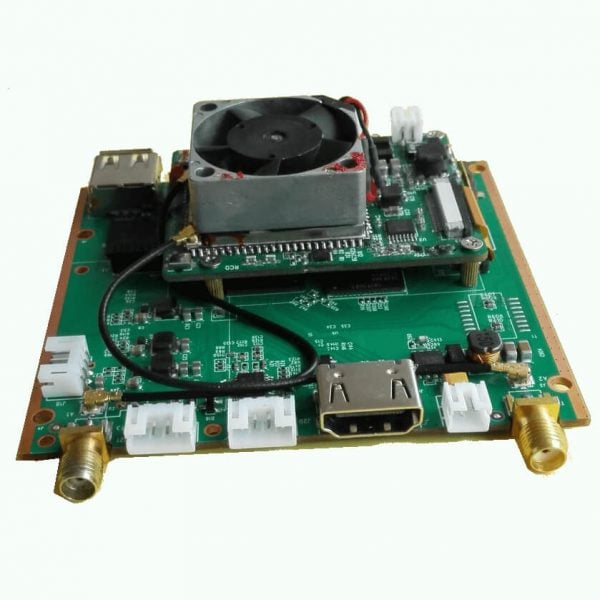
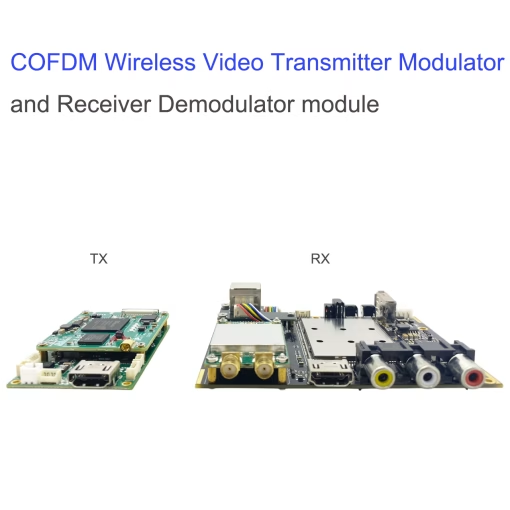
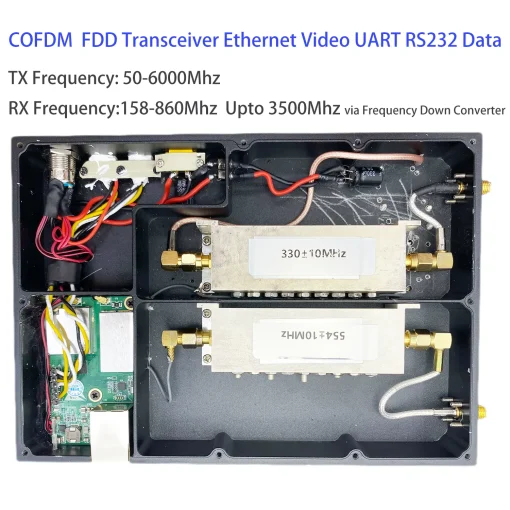
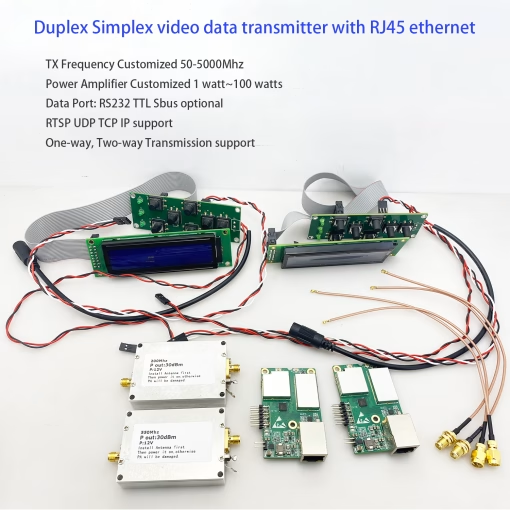
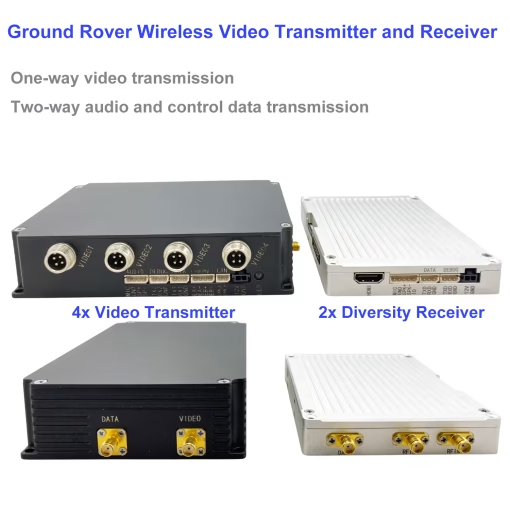
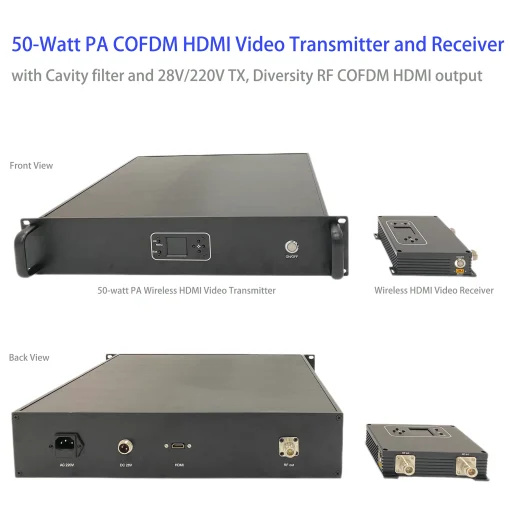
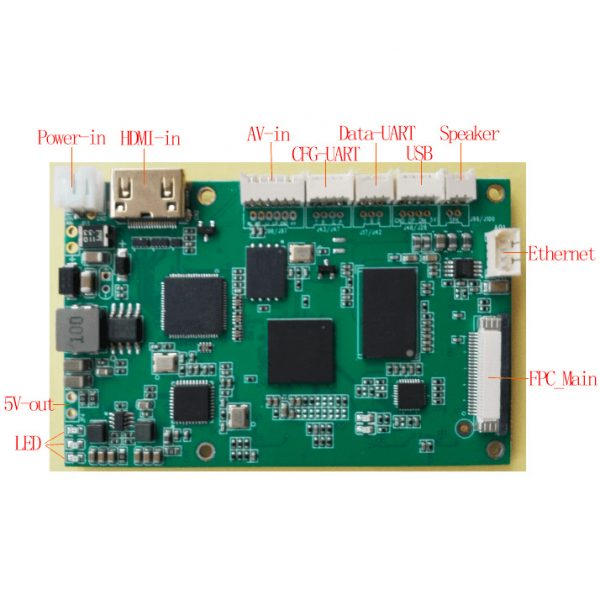
Transmissor e receptor de vídeo sem fio, COFDM-904T é recomendado.



isdb-t.com_buyer –
Este Digital Down Converter foi uma virada de jogo absoluta para minha configuração de vídeo sem fio! A qualidade de construção é excelente, e o processo de instalação foi surpreendentemente simples. Estou completamente impressionado com sua função principal: converter a frequência de 2,4 GHz para 600 MHz funciona perfeitamente. A clareza e a estabilidade do sinal melhoraram dramaticamente, com interferência significativamente reduzida e saída de vídeo muito mais limpa. Opera com notável eficiência, e o baixo consumo de energia é uma grande vantagem. Este pequeno dispositivo resolveu os problemas de alcance e penetração que eu estava enfrentando, tornando todo o meu sistema de transmissão COFDM muito mais confiável e profissional. Para qualquer pessoa que lide com desafios de sinais de alta frequência, este conversor descendente é essencial, ferramenta de alto desempenho que oferece excelente valor e desempenho. Altamente recomendado!