

Japan ISDB-T Fequrency
| Japan ISDB-T Band | Fysisk CH | Japan ISDB-T Center frekvens |
| UHF L | 13 kap | 473.142857 MHz |
| 14 kap | 479.142857 MHz | |
| 15 kap | 485.142857 MHz | |
| 16 kap | 491.142857 MHz | |
| 17 kap | 497.142857 MHz | |
| 18 kap | 503.142857 MHz | |
| 19 kap | 509.142857 MHz | |
| 20 kap | 515.142857 MHz | |
| 21 kap | 521.142857 MHz | |
| 22 kap | 527.142857 MHz | |
| 23 kap | 533.142857 MHz | |
| 24 kap | 539.142857 MHz | |
| 25 kap | 545.142857 MHz | |
| 26 kap | 551.142857 MHz | |
| 27 kap | 557.142857 MHz | |
| 28 kap | 563.142857 MHz | |
| 29 kap | 569.142857 MHz | |
| 30 kap | 575.142857 MHz | |
| UHF M | 31 kap | 581.142857 MHz |
| 44 kap | 659.142857 MHz | |
| UHF H | 45 kap | 665.142857 MHz |
| 52 kap | 707.142857 MHz | |
| 62 kap | 767.142857 MHz |
Japan ISDB-T Digital TV-mottagare
Integrerade tjänster Digital Broadcasting – Markbundna (ISDB-T) är den mest avancerade internationella standarden på Digital marksänd tv-sändning (DTTB) system som ursprungligen utvecklades i Japan. ISDB-T har introducerats i Japan sedan december 2003, och antalet länder som antar ISDB-T ökar gradvis med erkännandet av dess tekniska fördel.
Förstå Japan ISDB-T: Standarden för digital marksänd TV
Integrerade tjänster Digital Broadcasting – Marksändning (ISDB-T) är den mest avancerade internationella standarden för digital marksänd TV-sändning (DTTB) ursprungligen utvecklad i Japan. Lanserades kommersiellt i December 2003, ISDB-T har blivit ryggraden i Japans digitala TV-infrastruktur och antas alltmer över hela världen på grund av dess tekniska fördelar i flexibilitet, robusthet, och interaktiva tjänster.
Vad gör Japan ISDB-T speciellt?
Japan ISDB-T skiljer sig från andra digitala TV-standarder som DVB-T och ATSC eftersom den använder en segmenterat transmissionssystem. Detta gör att programföretag kan sända högupplöst TV, mobil-tv, och datasändning samtidigt över samma frekvens. Denna förmåga säkerställer att ISDB-T erbjuder överlägsen signaltillförlitlighet och bättre täckning även i stads- och bergsområden, vilket gör den idealisk för det geografiskt mångfaldiga landskapet i Japan.
Japan ISDB-T frekvensband
Japans ISDB-T-system fungerar tvärs över UHF frekvensband, som är noggrant fördelade för att undvika störningar och maximera täckningen. Här är en detaljerad uppdelning av Japan ISDB-T-frekvens uppdrag:
UHF L-band (Låg)
| Fysisk CH | Japan ISDB-T Center Frequency |
|---|---|
| 13 kap | 473.142857 MHz |
| 14 kap | 479.142857 MHz |
| 15 kap | 485.142857 MHz |
| 16 kap | 491.142857 MHz |
| 17 kap | 497.142857 MHz |
| 18 kap | 503.142857 MHz |
| 19 kap | 509.142857 MHz |
| 20 kap | 515.142857 MHz |
| 21 kap | 521.142857 MHz |
| 22 kap | 527.142857 MHz |
| 23 kap | 533.142857 MHz |
| 24 kap | 539.142857 MHz |
| 25 kap | 545.142857 MHz |
| 26 kap | 551.142857 MHz |
| 27 kap | 557.142857 MHz |
| 28 kap | 563.142857 MHz |
| 29 kap | 569.142857 MHz |
| 30 kap | 575.142857 MHz |
UHF M-band (Medium)
| Fysisk CH | Japan ISDB-T Center Frequency |
|---|---|
| 31 kap | 581.142857 MHz |
| 44 kap | 659.142857 MHz |
UHF H-band (Hög)
| Fysisk CH | Japan ISDB-T Center Frequency |
|---|---|
| 45 kap | 665.142857 MHz |
| 52 kap | 707.142857 MHz |
| 62 kap | 767.142857 MHz |
Denna frekvensallokering säkerställer minimal störning och optimal signalfördelning över olika regioner i Japan.
Japan ISDB-T Digital TV-mottagare
För att få tillgång till högkvalitativa sändningar som levereras via ISDB-T, tittarna behöver en Japan ISDB-T digital TV-mottagare. Moderna mottagare stöd:
- Högupplöst sändning (HDTV)
- Ensegmentssändning (1sig själva) för mobila enheter
- Interaktiva TV-tjänster
- Nödvarningssändningar
De 1seg funktion är särskilt anmärkningsvärt: det tillåter mobiltelefoner, bärbara TV-apparater, och andra handhållna enheter för att ta emot live-TV-sändningar sömlöst, vilket gör Japan ISDB-T till en pionjär inom mobil digital-tv.
Global adoption av Japan ISDB-T
Medan den ursprungligen utvecklades för Japan, ISDB-T har vunnit internationellt erkännande. Länder i Sydamerika, Asien, och Afrika har antagit ISDB-T på grund av dess effektivitet vid spektrumanvändning, robusthet mot flervägsinterferens, och mobilvänlig design. Systemets anpassningsförmåga har gjort det till ett föredraget val för nationer som uppgraderar från analog till digital marksändning.
Varför Japan ISDB-T sticker ut
- Segmenterad OFDM-överföring – Säkerställer hög tillförlitlighet och samtidiga tjänster.
- Support för mobil-tv – 1seg-sändning möjliggör sömlös TV-tittande på mobila enheter.
- Möjlighet för nödsändning – Möjliggör omedelbara varningar vid naturkatastrofer.
- Flexibel frekvensanvändning – Optimerad UHF-bandallokering minimerar störningar.
Slutsats
Förståelse Japan ISDB-T-frekvens tilldelningar och tekniken bakom ISDB-T är avgörande för programföretag, ingenjörer, och teknikentusiaster som är intresserade av digital-tv-innovation. Allt eftersom fler länder antar ISDB-T, Japans banbrytande standard fortsätter att visa framtiden för flexibel, pålitlig, och mobilvänlig digital-tv.


1 Seg ISDB-T AM FM
3 tumficka isdb-t radio Bärbar isdb LCD-TV med ett segment digital tv, mini fick -TV för Japan


ISDB-T
9 tum bärbar ISDB-T TV TDT Digital och analog mini liten bil-TV-stöd USB TF PVR MP4 H.265 AC3 DTV900

1 Seg ISDB-T AM FM


HDMI-kodare till ISDB-T RF


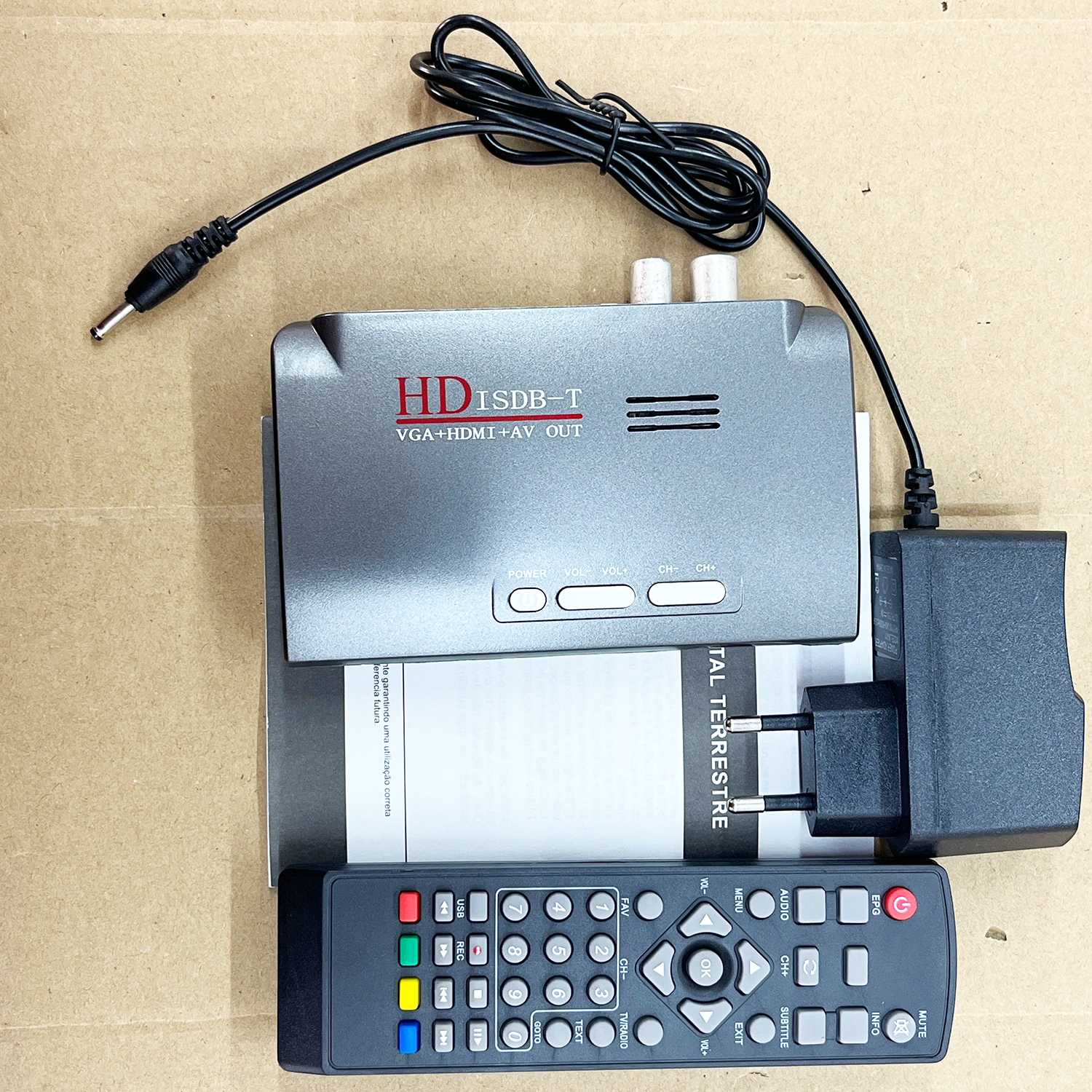
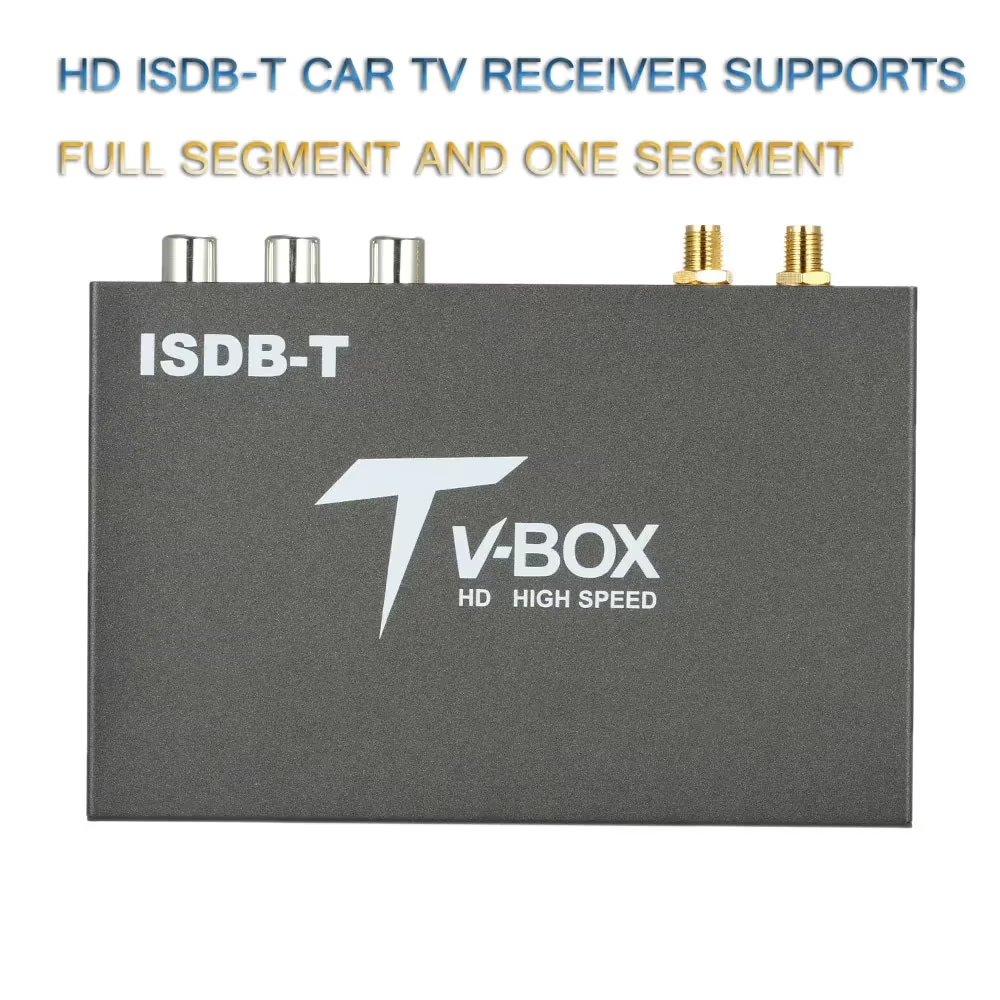


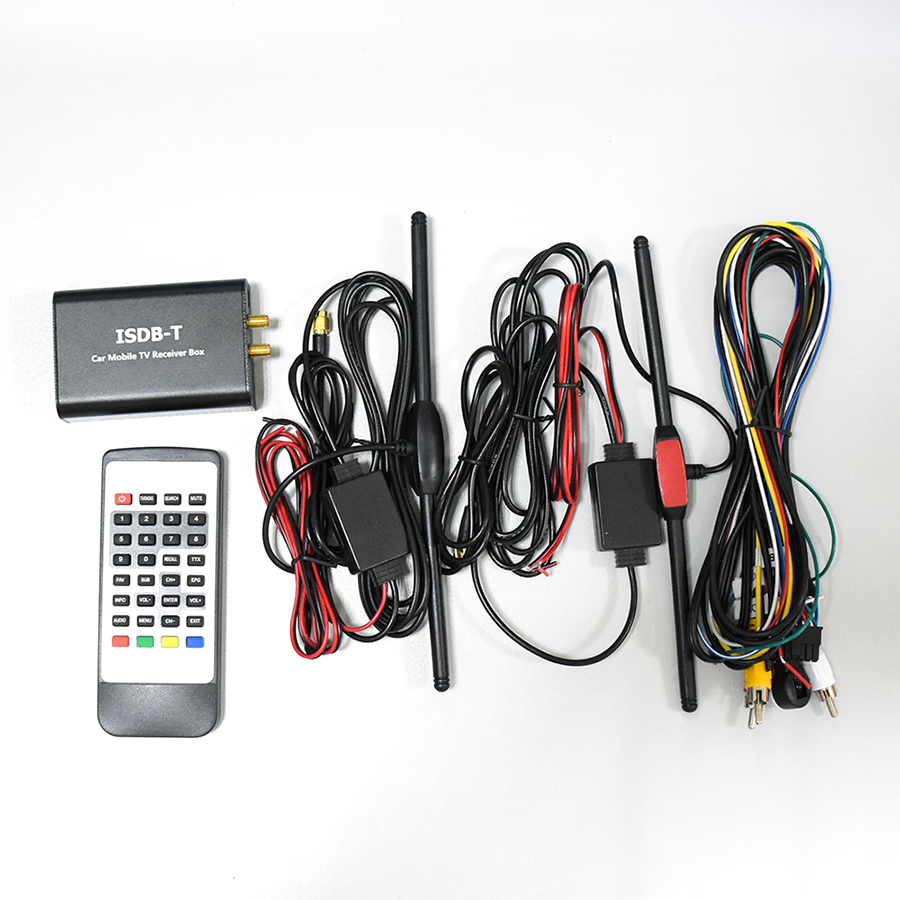


ISDB-T för hemmet
ISDB-T BS CS Japan Japansk trebands set-top box PVR TV PCB-kort

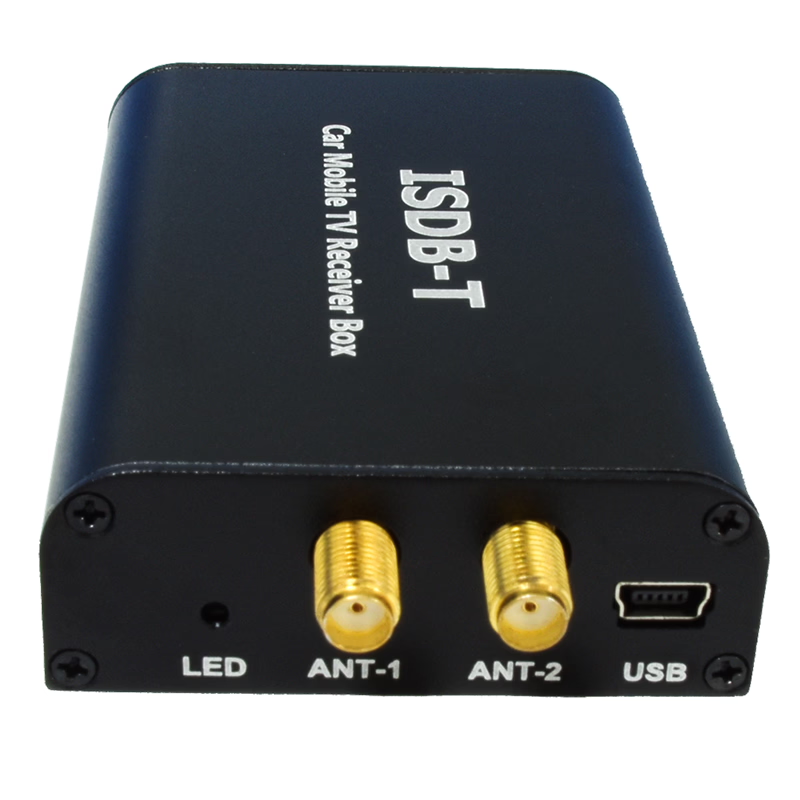
Ställa en fråga
Tack för din respons. ✨