
Πώς οι αμφίδρομες συνδέσεις TDD OFDM επιλύουν προκλήσεις υψηλής ταχύτητας τηλεμετρίας και δεδομένων αισθητήρων στην επικοινωνία με drone
Εισαγωγή
Σύγχρονα UAV (Μη επανδρωμένα εναέρια οχήματα) απαιτούν όλο και περισσότερο ταυτόχρονη μετάδοση πολλαπλών τύπων δεδομένων—τηλεμετρία, δεδομένα αισθητήρα ή βίντεο υψηλής ταχύτητας, και ανατροφοδότηση εντολών/ελέγχου. Η επίτευξη όλων αυτών μέσω μιας αξιόπιστης και χαμηλής καθυστέρησης ασύρματης σύνδεσης δεν είναι μια ασήμαντη εργασία, ειδικά όταν ασχολούμαστε με εφαρμογές σε πραγματικό χρόνο όπως η επιτήρηση, χαρτογράφηση, ή αυτόνομη πλοήγηση.
Ένας πελάτης παρουσίασε πρόσφατα τις ακόλουθες απαιτήσεις για ένα σύστημα επικοινωνίας drone:
Περίληψη Απαιτήσεων Πελάτη:
- Αποστολή δεδομένων τηλεμετρίας @40ms (40Δεδομένα KB) πάνω από ένα 100 Mbps γραμμή Ethernet. Τα δεδομένα αποστέλλονται ως πακέτα UDP.
- Αποστολή ακατέργαστων δεδομένων μεγέθους 1.7 MB @40ms πάνω από ένα 1 Γραμμή Ethernet Gbps με χρήση πρωτοκόλλου UDP.
- Εντολή/απόκριση μέσω RS422, για αλληλεπίδραση με τον ενσωματωμένο υπολογιστή του drone για λήψη δεδομένων IMU (τοποθεσία και στάση) @40 ms, και επίσης αλληλεπιδρούν με το GCS μέσω RF.
Αυτό το σύνολο απαιτήσεων υπογραμμίζει την πολυπλοκότητα των σύγχρονων αναγκών μετάδοσης δεδομένων UAV: υψηλή απόδοση, χαμηλή καθυστέρηση, και πλήρης αμφίδρομη αλληλεπίδραση μεταξύ αέρα και εδάφους.
Προκλήσεις στην αρχική εγκατάσταση
Ας αναλύσουμε τις απαιτήσεις με τεχνικούς όρους:
| Τύπος δεδομένων | Διάστημα | Μέγεθος Δεδομένων | Ισοδύναμος ρυθμός δεδομένων | Τύπος επικοινωνίας |
|---|---|---|---|---|
| Τηλεμετρία | 40 Κυρία | 40 KB | ~8 Mbps | UDP (100 Mbps Ethernet) |
| Ακατέργαστα δεδομένα | 40 Κυρία | 1.7 ΜΒ | ~340 Mbps | UDP (1 Gbps Ethernet) |
| Εντολή / IMU | 40 Κυρία | <100 KB | Αμελητέος | Σειριακός σύνδεσμος RS422 |
Βασικές προκλήσεις:
- Διακίνηση: 340 Τα Mbps των ακατέργαστων δεδομένων υπερβαίνουν τα παραδοσιακά συστήματα COFDM ή στενής ζώνης.
- Κατευθυντικότητα: Τα δεδομένα τηλεμετρίας και IMU πρέπει να ρέουν και προς τις δύο κατευθύνσεις μεταξύ του drone και του GCS.
- Συγχρονισμός: Δεδομένα, βίντεο, και οι σύνδεσμοι ελέγχου πρέπει να συγχρονιστούν στο 25 Ηζ (40 περίοδος ms) χωρίς απώλεια πακέτων ή υψηλή καθυστέρηση.
Αυτό καθιστά προφανές ότι α TDD (Time Division Duplex) Αμφίδρομη σύνδεση που βασίζεται σε OFDM είναι η ιδανική λύση.
Γιατί το TDD OFDM είναι η σωστή λύση
1. Αμφίδρομη μετάδοση σε κανάλι μονής συχνότητας
Σε αντίθεση με τους παραδοσιακούς μονοκατευθυντικούς πομπούς COFDM, ένας σύνδεσμος TDD OFDM χρησιμοποιεί την ίδια ζώνη συχνοτήτων τόσο για ανερχόμενη όσο και για κατερχόμενη ζεύξη, χρονοθυρίδες εναλλασσόμενης μετάδοσης. Αυτό επιτρέπει:
- Πλήρης αμφίδρομη επικοινωνία (εντολή, τηλεμετρία, και δεδομένα)
- Μειωμένη πολυπλοκότητα RF και απαιτήσεις κεραίας
- Τέλειος συγχρονισμός μεταξύ drone και επίγειου σταθμού
2. Αποτελεσματική χρήση φάσματος
Σε περιβάλλοντα στενής ζώνης ή συστήματα UAV με περιορισμένη συχνότητα (Π.χ., 300 MHz–6 GHz), Το TDD OFDM επιτρέπει την προσαρμοστική κατανομή των αναλογιών uplink/downlink:
- Για παράδειγμα, 80% κατερχόμενη σύνδεση για δεδομένα αισθητήρα/βίντεο και 20% ανερχόμενη ζεύξη για τηλεμετρία/εντολές.
- Η δυναμική μεταγωγή με βάση την κατάσταση ζεύξης εξασφαλίζει βέλτιστη απόδοση και ελάχιστη καθυστέρηση.
3. Συμβατότητα UDP
Δεδομένου ότι το UDP είναι ελαφρύ και φιλικό σε πραγματικό χρόνο, το σύστημα TDD OFDM μπορεί να ενσωματώσει πακέτα UDP απευθείας στη λειτουργία γέφυρας Ethernet, εξασφαλίζοντας διαφανή μετάδοση δεδομένων τόσο για δεδομένα τηλεμετρίας όσο και για δεδομένα αισθητήρων.
4. Ενσωμάτωση με RS422 / Σειριακός έλεγχος
Οι μονάδες TDD OFDM συχνά υποστηρίζουν διαφανή σειριακά δεδομένα (RS232/422/485) κανάλια παράλληλα με τη ροή Ethernet. Αυτό επιτρέπει:
- Ανταλλαγή εντολών/ελέγχου σε πραγματικό χρόνο με τον ενσωματωμένο υπολογιστή
- Συγχρονισμός δεδομένων IMU και GPS με λογισμικό ελέγχου εδάφους
- Ενοποιημένη ροή δεδομένων που συνδυάζει Ethernet και σειριακές διεπαφές
5. Χαμηλή καθυστέρηση και σταθερότητα
Με βελτιστοποιημένο πλαίσιο, Τα συστήματα TDD OFDM μπορούν να επιτύχουν λανθάνουσα κατάσταση από άκρο σε άκρο κάτω από 40–50 ms, που ανταποκρίνεται στις απαιτήσεις του πελάτη 25 Ρυθμός ενημέρωσης τηλεμετρίας Hz.
Επιπλέον, το στιβαρό FEC (Διόρθωση σφαλμάτων προώθησης) και η προσαρμοστική διαμόρφωση διατηρούν σταθερή μετάδοση ακόμη και υπό δυναμικές συνθήκες πτήσης.
Παράδειγμα υλοποίησης συστήματος
[Drone Onboard Unit]
 ├── Sensors / Camera (Raw Data 1.7 MB @40ms)
 ├── Flight Controller (Telemetry + IMU via RS422)
 ├── TDD OFDM Transceiver Module (Ethernet + Serial Input)
 └── Power & Antenna System

       ⇅  (Bidirectional RF Link, e.g., 840 MHz / 1.4 GHz / 2.4 GHz)

[Ground Control Station]
 ├── TDD OFDM Receiver (Ethernet Output + RS422)
 ├── GCS Software (UDP-based Telemetry & Control)
 └── Data Storage / Video Processing System
Αυτή η διαμόρφωση επιτρέπει α γέφυρα δεδομένων full-duplex ανάμεσα στο drone και το έδαφος — βίντεο, τηλεμετρία, και τα σήματα σειριακού ελέγχου ρέουν όλα απρόσκοπτα μέσω της ίδιας ραδιοζεύξης TDD OFDM.
Πλεονεκτήματα των αμφίδρομων συνδέσμων TDD OFDM
| χαρακτηριστικό | Οφελος |
|---|---|
| Μονής συχνότητας για TX/RX | Απλοποιεί τη ρύθμιση της κεραίας και την αδειοδότηση φάσματος |
| Ρυθμιζόμενη αναλογία χρονοθυρίδας | Προσαρμόσιμο για ισορροπία εύρους ζώνης uplink/downlink |
| Διαφανές UDP / Υποστήριξη Ethernet | Άμεσα συμβατό με υπάρχοντα συστήματα που βασίζονται σε IP |
| Ενσωματωμένη σειριακή θύρα | Ιδανικό για ανταλλαγή εντολών/ελέγχου και τηλεμετρίας |
| Χαμηλή καθυστέρηση | <50 ms καθυστέρηση από άκρο σε άκρο |
| Ισχυρή κατά των παρεμβολών | Η διαμόρφωση OFDM και το FEC εξασφαλίζουν σταθερή απόδοση |
Σύναψη
Η απαιτητική ρύθμιση του πελάτη—συνδυασμός τηλεμετρίας, ακατέργαστα δεδομένα, και έλεγχος RS422—εξηγεί γιατί Τα σύγχρονα συστήματα UAV απαιτούν προσαρμογή, λύσεις δεδομένων full-duplex.
ΕΝΑ Αμφίδρομη σύνδεση TDD OFDM παρέχει:
- Σε πραγματικό χρόνο, αμφίδρομη Ethernet και σειριακή επικοινωνία
- Κλιμακόμενη απόδοση τόσο για συμπιεσμένα όσο και για πρωτογενή δεδομένα
- Αξιόπιστος συγχρονισμός στο 40 ms διαστήματα ενημέρωσης
Με την ανάπτυξη ενός συστήματος TDD OFDM, Οι σχεδιαστές UAV μπορούν να επιτύχουν την τέλεια ισορροπία διακίνησης, αφάνεια, και αξιοπιστία, καθιστώντας το τη ραχοκοκαλιά των δικτύων επικοινωνίας με drone επόμενης γενιάς.
Συχνές ερωτήσεις
Ε1: Μπορεί ένας σύνδεσμος TDD OFDM να χειριστεί ταυτόχρονα βίντεο και τηλεμετρία?
Ναί. Το σύστημα υποστηρίζει γεφύρωση Ethernet, επιτρέποντας πολλαπλές ροές δεδομένων—βίντεο, τηλεμετρία, και έλεγχος—να πολυπλέκεται ταυτόχρονα.
Ε2: Ποια είναι η τυπική καθυστέρηση μιας σύνδεσης TDD OFDM?
Ανάλογα με τη διαμόρφωση και τη διαμόρφωση, Η καθυστέρηση του συστήματος είναι συνήθως 30– 50 ms, κατάλληλο για έλεγχο UAV σε πραγματικό χρόνο και μετάδοση βίντεο HD.
Ε3: Πώς διαφέρει από έναν παραδοσιακό πομπό COFDM?
Τα παραδοσιακά συστήματα COFDM είναι μονόδρομος (TX μόνο), ενώ το TDD OFDM είναι αμφίδρομος, υποστηρίζοντας κανάλια δεδομένων και εντολών σε μία ζώνη συχνοτήτων.
Q4: Είναι 1.7 MB @40ms εφικτό μέσω RF?
Όχι άμεσα. Ο ρυθμός ασυμπίεστων δεδομένων (340 Mbps) είναι πολύ υψηλό για τυπικούς συνδέσμους COFDM ή TDD OFDM. Η λύση είναι η συμπίεση, κάτω δείγμα, ή να μεταδώσει επιλεκτικά κρίσιμα τμήματα δεδομένων.
Ε5: Ποιες διεπαφές υποστηρίζονται?
Οι μονάδες TDD OFDM συνήθως περιλαμβάνουν:
Ethernet (10/100/1000 Mbps) για επικοινωνία UDP/TCP/IP
Σειριακή θύρα (RS232/422/485) για ανταλλαγή εντολών ή τηλεμετρίας
GPIO ή CAN (προαιρετικός) για έλεγχο εξωτερικής συσκευής


Σύνδεσμος δεδομένων βίντεο drone
VTX για σύνδεση δεδομένων βίντεο drone δέκτης πομπού μεγάλης εμβέλειας 30-50km 2X1.6WPA

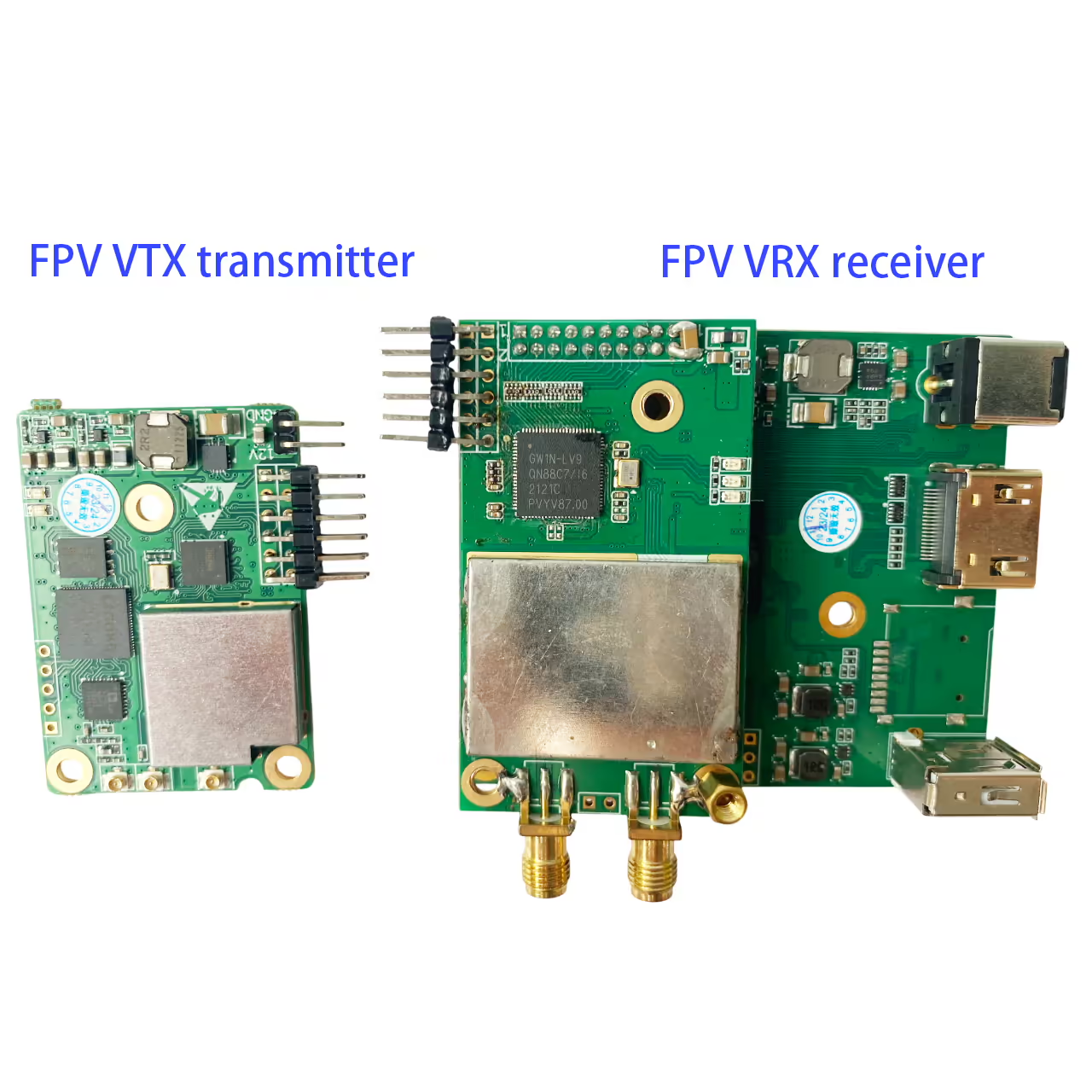

Κωδικοποιητής HDMI σε ISDB-T RF

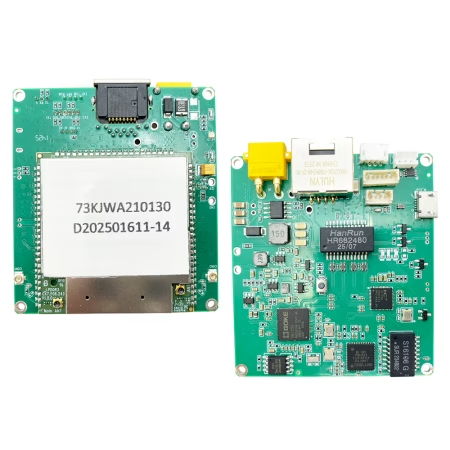
Σύνδεσμος δεδομένων βίντεο drone
DIY UAV DRONE Βίντεο Δεδομένων Δεδομένων Ραδιοφωνικού Συνδέσμου IP TTL SBUS
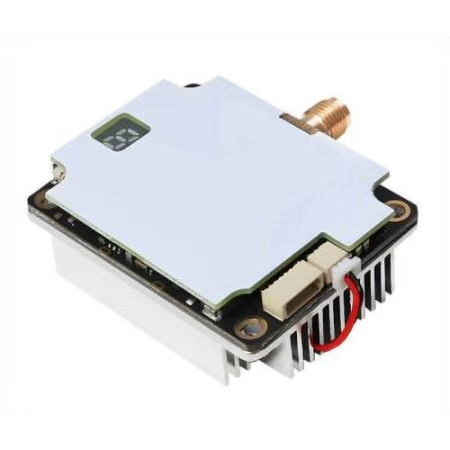
Σύνδεσμος δεδομένων βίντεο drone
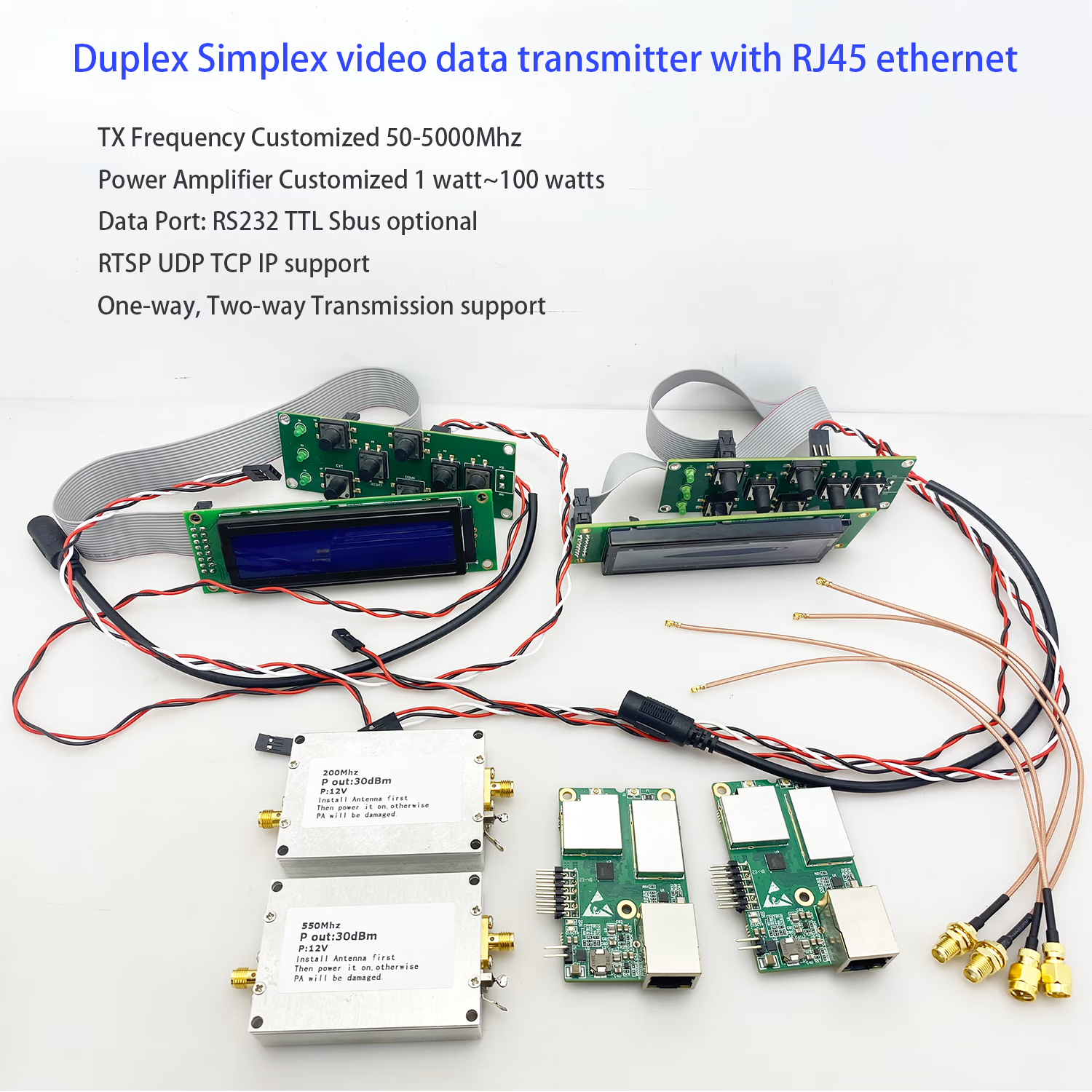
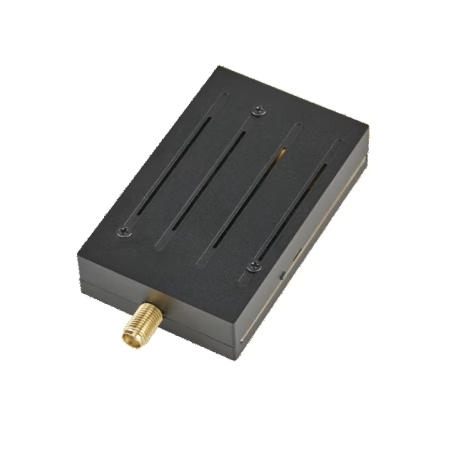
Σύνδεσμος δεδομένων βίντεο drone
Ανακαλύψτε περισσότερα από ISDB-T.com
Εγγραφείτε για να λαμβάνετε τις τελευταίες δημοσιεύσεις που αποστέλλονται στο email σας.
Κάντε μια ερώτηση
Το μήνυμά σας έχει σταλεί