
Як двухнакіраваныя спасылкі TDD OFDM вырашаюць праблемы высокахуткаснай тэлеметрыі і даных датчыкаў у сувязі беспілотнікаў
Уводзіны
Сучасныя БПЛА (Беспілотныя лятальныя апараты) усё часцей патрабуюць адначасовай перадачы некалькіх тыпаў даных — тэлеметрыі, датчык высокай хуткасці або відэададзеныя, і зваротная сувязь па камандзе/кантролі. Дасягненне ўсяго гэтага па надзейнай бесправадной сувязі з нізкай затрымкай не з'яўляецца простай задачай, асабліва пры працы з прыкладаннямі ў рэжыме рэальнага часу, такімі як назіранне, картаграфаванне, або аўтаномная навігацыя.
Нядаўна заказчык прад'явіў наступныя патрабаванні да сістэмы сувязі беспілотніка:
Рэзюмэ патрабаванняў кліента:
- Адпраўка тэлеметрычных даных @40 мс (40Дадзеныя КБ) над а 100 Лінія Ethernet Мбіт/с. Дадзеныя адпраўляюцца ў выглядзе пакетаў UDP.
- Адпраўка неапрацаваных даных памеру 1.7 Мб пры 40 мс за а 1 Лінія Ethernet Гбіт/с з выкарыстаннем пратаколу UDP.
- Каманда/адказ праз RS422, для ўзаемадзеяння з бартавым камп'ютэрам беспілотніка для атрымання даных IMU (размяшчэнне і стаўленне) @40 мс, а таксама ўзаемадзейнічаць з GCS праз RF.
Гэты набор патрабаванняў падкрэслівае складанасць перадачы даных сучасных беспілотнікаў: высокая праходнасць, нізкая затрымка, і поўнадуплекснае ўзаемадзеянне паміж паветрам і зямлёй.
Праблемы ў арыгінальнай наладзе
Let’s analyze the requirements in technical terms:
| Data Type | Interval | Data Size | Equivalent Data Rate | Тып сувязі |
|---|---|---|---|---|
| Тэлеметрыя | 40 друга | 40 КБ | ~8 Mbps | UDP (100 Mbps Ethernet) |
| Raw Data | 40 друга | 1.7 MB | ~340 Mbps | UDP (1 Gbps Ethernet) |
| Command / IMU | 40 друга | <100 КБ | Negligible | RS422 serial link |
Key challenges:
- Прапускная здольнасць: 340 Mbps of raw data exceeds what traditional COFDM or narrowband systems can handle.
- Directionality: Telemetry and IMU data must flow in both directions between the drone and GCS.
- Сінхранізацыя: даныя, відэа, and control links need to be synchronized at 25 Гц (40 ms period) without packet loss or high latency.
This makes it evident that a TDD (Time Division Duplex) OFDM-based bidirectional link is the ideal solution.
Чаму TDD OFDM з'яўляецца правільным рашэннем
1. Двунакіраваная перадача ў адначастотным канале
Unlike traditional unidirectional COFDM transmitters, a TDD OFDM link uses the same frequency band for both uplink and downlink, alternating transmission time slots. This allows:
- Full bidirectional communication (command, тэлеметрыя, and data)
- Reduced RF complexity and antenna requirements
- Perfect synchronization between drone and ground station
2. Эфектыўнае выкарыстанне спектру
In narrowband environments or frequency-constrained UAV systems (Нап., 300 MHz–6 GHz), TDD OFDM allows adaptive allocation of uplink/downlink ratios:
- Напрыклад, 80% сыходная сувязь for sensor/video data and 20% узыходзячая сувязь for telemetry/commands.
- Dynamic switching based on link condition ensures optimal throughput and minimal delay.
3. Сумяшчальнасць з UDP
Since UDP is lightweight and real-time friendly, the TDD OFDM system can encapsulate UDP packets directly in its Ethernet bridge mode, ensuring transparent data transmission for both telemetry and sensor data.
4. Інтэграцыя з RS422 / Паслядоўны кантроль
TDD OFDM modules often support transparent serial data (RS232/422/485) channels in parallel with the Ethernet stream. This allows:
- Real-time command/control exchange with the onboard computer
- IMU and GPS data synchronization with ground control software
- Unified data stream combining Ethernet and serial interfaces
5. Нізкая затрымка і стабільнасць
With optimized framing, TDD OFDM systems can achieve end-to-end latency under 40–50 ms, which meets the customer’s requirement of 25 Hz telemetry update rate.
Дадаткова, the robust FEC (Карэкцыя памылак наперад) and adaptive modulation maintain stable transmission even under dynamic flight conditions.
Прыклад укаранення сістэмы
[Drone Onboard Unit]
 ├── Sensors / Camera (Raw Data 1.7 MB @40ms)
 ├── Flight Controller (Telemetry + IMU via RS422)
 ├── TDD OFDM Transceiver Module (Ethernet + Serial Input)
 └── Power & Antenna System

       ⇅  (Bidirectional RF Link, e.g., 840 MHz / 1.4 GHz / 2.4 GHz)

[Ground Control Station]
 ├── TDD OFDM Receiver (Ethernet Output + RS422)
 ├── GCS Software (UDP-based Telemetry & Control)
 └── Data Storage / Video Processing System
This configuration enables a full-duplex data bridge between the drone and the ground—video, тэлеметрыя, and serial control signals all flow seamlessly through the same TDD OFDM radio link.
Перавагі двухнакіраваных спасылак TDD OFDM
| Асаблівасць | Benefit |
|---|---|
| Single Frequency for TX/RX | Simplifies antenna setup and spectrum licensing |
| Adjustable Time Slot Ratio | Customizable for uplink/downlink bandwidth balance |
| Transparent UDP / Ethernet Support | Directly compatible with existing IP-based systems |
| Integrated Serial Port | Ideal for command/control and telemetry exchange |
| Нізкая затрымка | <50 ms end-to-end delay |
| Strong Anti-Interference | OFDM modulation and FEC ensure stable performance |
Выснова
The customer’s demanding setup—combining telemetry, raw data, and RS422 control—illustrates why modern UAV systems require adaptive, full-duplex data solutions.
А TDD OFDM bidirectional link забяспечвае:
- Real-time, two-way Ethernet and serial communication
- Scalable throughput for both compressed and raw data
- Reliable synchronization at 40 ms update intervals
By deploying a TDD OFDM system, UAV designers can achieve the perfect balance of прапускная здольнасць, затрымка, і надзейнасць, making it the backbone of next-generation drone communication networks.
FAQ
Q1: Ці можа канал TDD OFDM апрацоўваць і відэа, і тэлеметрыю адначасова?
Так. The system supports Ethernet bridging, allowing multiple data streams—video, тэлеметрыя, and control—to be multiplexed simultaneously.
Q2: Якая звычайная затрымка спасылкі TDD OFDM?
Depending on the configuration and modulation, system latency is typically 30–50 мс, suitable for UAV real-time control and HD video transmission.
Q3: Чым ён адрозніваецца ад традыцыйнага перадатчыка COFDM?
Traditional COFDM systems are one-way (TX only), while TDD OFDM is bidirectional, supporting both data and command channels in one frequency band.
Q4: Ці 1.7 MB пры 40 мс магчыма ў радыёчастотным рэжыме?
Not directly. The uncompressed data rate (340 Мбіт / с) is too high for typical COFDM or TDD OFDM links. The solution is to compress, downsample, or selectively transmit critical data portions.
Q5: Якія інтэрфейсы падтрымліваюцца?
TDD OFDM modules usually include:
Ethernet (10/100/1000 Мбіт / с) for UDP/TCP/IP communication
Серыйны порт (RS232/422/485) for command or telemetry exchange
GPIO or CAN (неабавязкова) for external device control

COFDM-904T-COFDM-Wireless-Video-Transmitter-Receiver-Transmission.jpg
50-Відэаперадатчык Watt PA COFDM HDMI з фільтрам і ўваходным сілкаваннем 28 або 220 В

COFDM-904T-COFDM-Wireless-Video-Transmitter-Receiver-Transmission.jpg

Спасылка для перадачы дадзеных з беспілотніка
VTX для беспілотніка відэаканала перадачы, прымача далёкага радыусу дзеяння 30-50 км 2X1,6 WPA

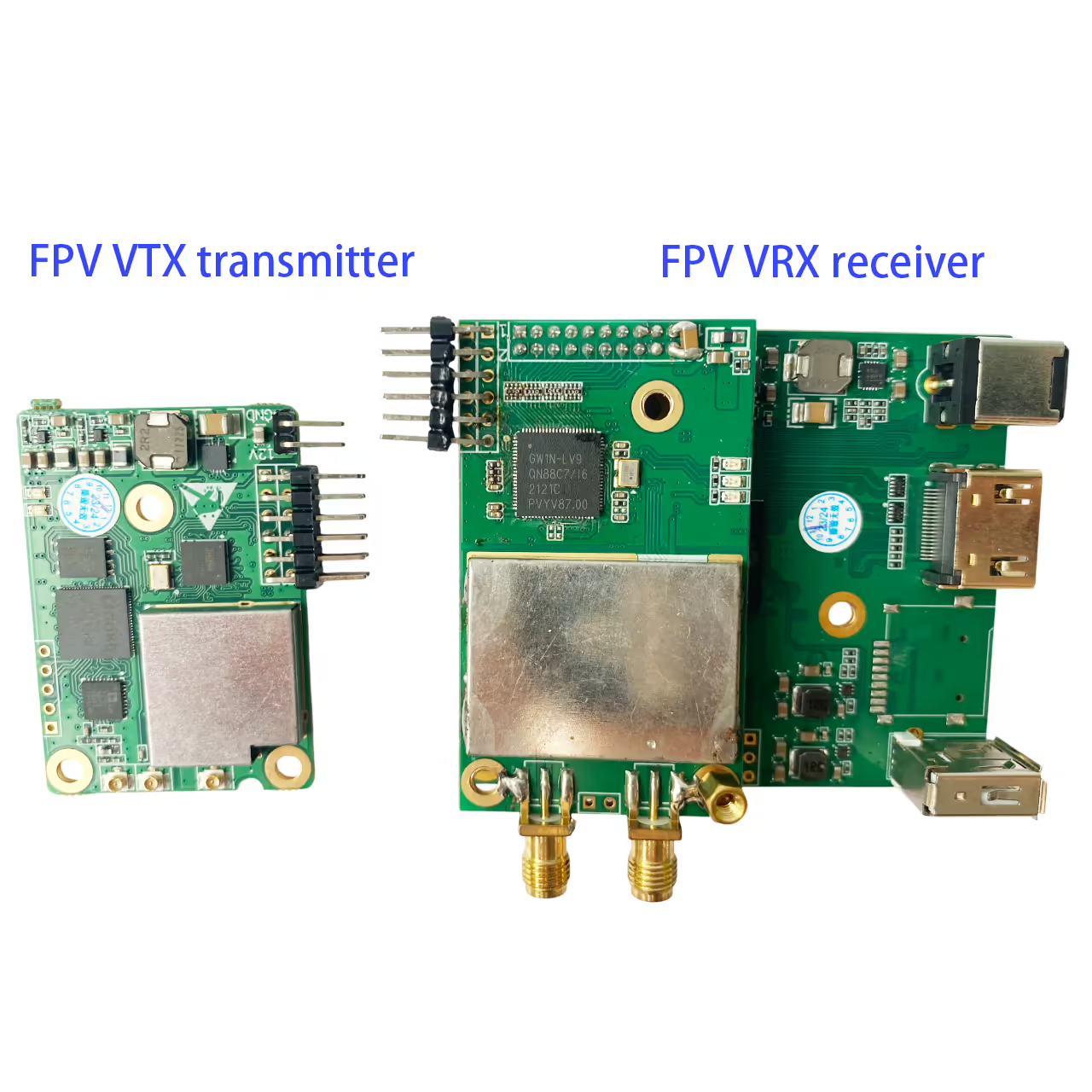
COFDM-904T-COFDM-Wireless-Video-Transmitter-Receiver-Transmission.jpg
COFDM Video Перадача COFDM HD Wireless Composite Video Dranstter Digital FPV VTX

Кадавальнік HDMI для ISDB-T RF

COFDM-904T-COFDM-Wireless-Video-Transmitter-Receiver-Transmission.jpg
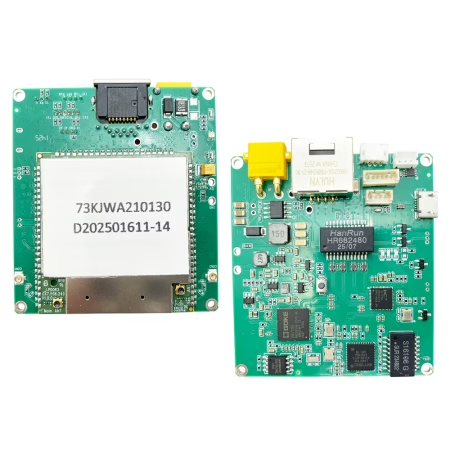
Спасылка для перадачы дадзеных з беспілотніка
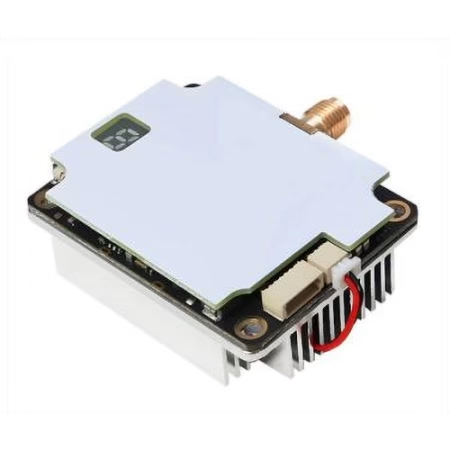
Спасылка для перадачы дадзеных з беспілотніка
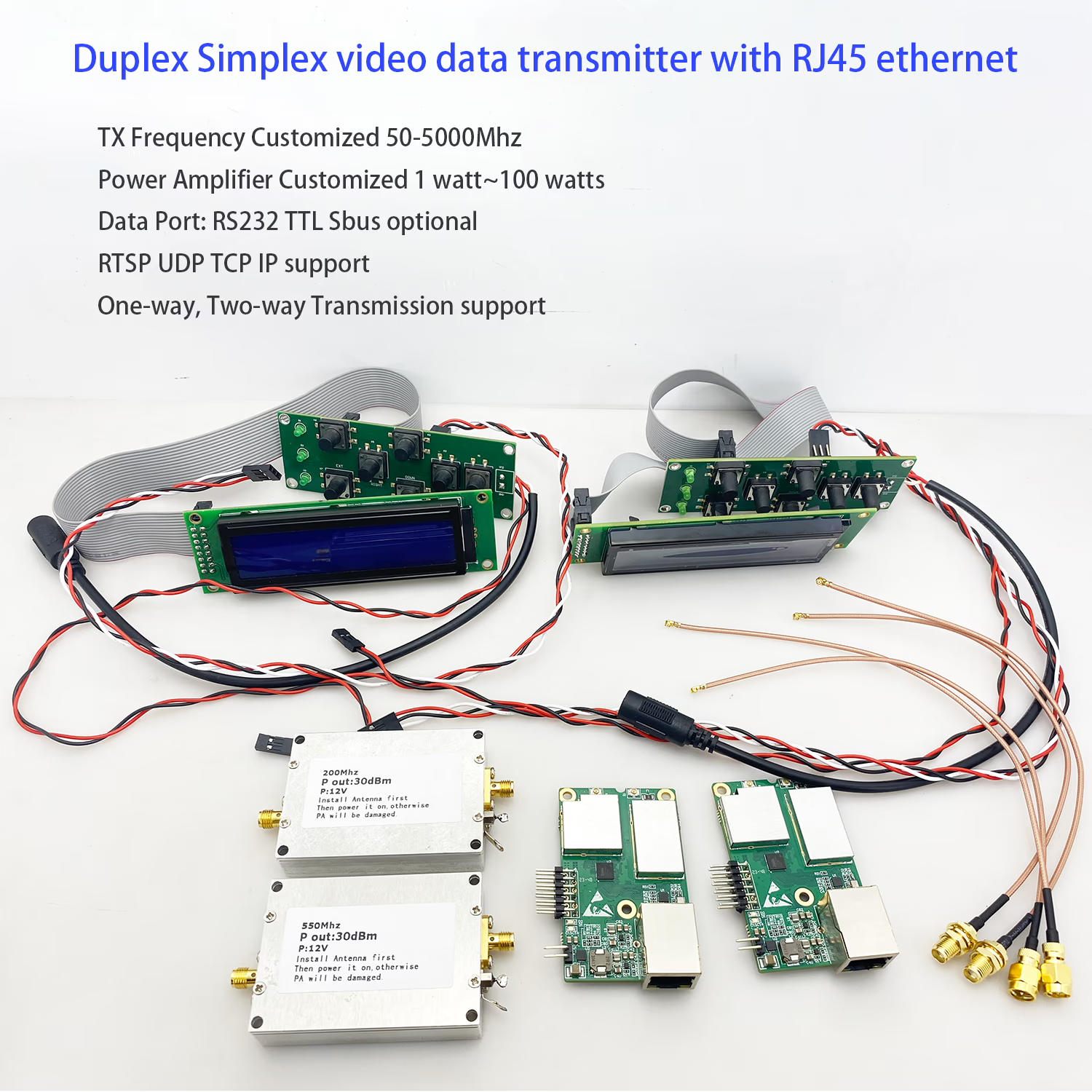
COFDM-904T-COFDM-Wireless-Video-Transmitter-Receiver-Transmission.jpg
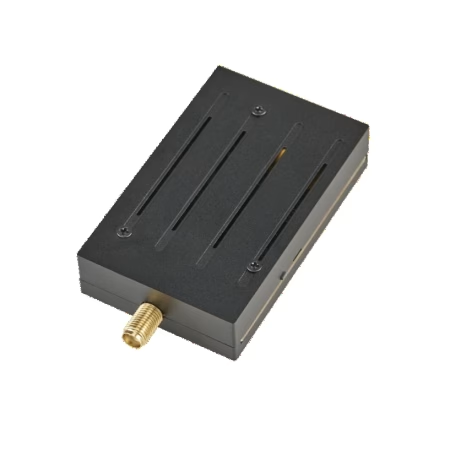
Спасылка для перадачы дадзеных з беспілотніка
Задайце пытанне
Ваша паведамленне адпраўлена