
Wéi TDD OFDM Bidirektional Links High-Rate Telemetrie a Sensordaten Erausfuerderunge bei Drone Kommunikatioun léisen
Aféierung
Modern UAVs (Onbemannt Aerial Vehicles) ëmmer méi verlaangen simultan Iwwerdroung vun MÉI Daten Zorte-Telemetrie, héich-Taux Sensor oder Video Daten, a Kommando / Kontroll Feedback. All dës iwwer eng zouverlässeg an niddereg latency Wireless Link z'erreechen ass keng trivial Aufgab, besonnesch wann Dir mat Echtzäit Uwendungen wéi Iwwerwaachung beschäftegt, Kartéierung, oder autonom Navigatioun.
E Client huet viru kuerzem déi folgend Ufuerderunge fir en Drone Kommunikatiounssystem presentéiert:
Resumé vum Client Ufuerderunge:
- Schéckt Telemetriedaten @40ms (40KB Daten) iwwer a 100 Mbps Ethernet Linn. Daten ginn als UDP Päck geschéckt.
- Matière Daten vun der Gréisst schécken 1.7 MB @40ms iwwer a 1 Gbps Ethernet Linn benotzt UDP Protokoll.
- Kommando / Äntwert iwwer RS422, fir mat dem Bordcomputer vum Drone ze interagéieren fir IMU Daten ze kréien (Standuert an Astellung) @40ms, an interagéieren och mat GCS iwwer RF.
Dëse Set vun Ufuerderunge beliicht d'Komplexitéit vun de modernen UAV Dateniwwerdroungsbedürfnisser: héich Débit, niddereg latency, a voll Duplex Interaktioun tëscht Loft a Buedem.
Erausfuerderungen am Original Setup
Let’s analyze the requirements in technical terms:
| Data Type | Interval | Data Size | Equivalent Data Rate | Kommunikatioun Typ |
|---|---|---|---|---|
| Telemetrie | 40 ms | 40 KB | ~8 Mbps | UDP (100 Mbps Ethernet) |
| Raw Data | 40 ms | 1.7 MB | ~340 Mbps | UDP (1 Gbps Ethernet) |
| Command / IMU | 40 ms | <100 KB | Negligible | RS422 serial link |
Key challenges:
- Duerchgang: 340 Mbps of raw data exceeds what traditional COFDM or narrowband systems can handle.
- Directionality: Telemetry and IMU data must flow in both directions between the drone and GCS.
- Synchroniséierung: Daten, Video, and control links need to be synchronized at 25 Hz (40 ms period) without packet loss or high latency.
This makes it evident that a TDD (Time Division Duplex) OFDM-based bidirectional link is the ideal solution.
Firwat TDD OFDM ass déi richteg Léisung
1. Bidirektional Transmissioun an engem eenzege Frequenzkanal
Unlike traditional unidirectional COFDM transmitters, a TDD OFDM link uses the same frequency band for both uplink and downlink, alternating transmission time slots. This allows:
- Full bidirectional communication (command, telemetrie, and data)
- Reduced RF complexity and antenna requirements
- Perfect synchronization between drone and ground station
2. Effikass Spektrum Notzung
In narrowband environments or frequency-constrained UAV systems (Z.B., 300 MHz–6 GHz), TDD OFDM allows adaptive allocation of uplink/downlink ratios:
- Zum Beispill, 80% downlink for sensor/video data and 20% uplink for telemetry/commands.
- Dynamic switching based on link condition ensures optimal throughput and minimal delay.
3. UDP Kompatibilitéit
Since UDP is lightweight and real-time friendly, the TDD OFDM system can encapsulate UDP packets directly in its Ethernet bridge mode, ensuring transparent data transmission for both telemetry and sensor data.
4. Integratioun mat RS422 / Serial Kontroll
TDD OFDM modules often support transparent serial data (RS232/422/485) channels in parallel with the Ethernet stream. This allows:
- Real-time command/control exchange with the onboard computer
- IMU and GPS data synchronization with ground control software
- Unified data stream combining Ethernet and serial interfaces
5. Niddereg Latenz a Stabilitéit
With optimized framing, TDD OFDM systems can achieve end-to-end latency under 40–50 ms, which meets the customer’s requirement of 25 Hz telemetry update rate.
Ganz nachelesch, the robust FEC (Forward Feeler Korrektioun) and adaptive modulation maintain stable transmission even under dynamic flight conditions.
System Ëmsetzung Beispill
[Drone Onboard Unit]
 ├── Sensors / Camera (Raw Data 1.7 MB @40ms)
 ├── Flight Controller (Telemetry + IMU via RS422)
 ├── TDD OFDM Transceiver Module (Ethernet + Serial Input)
 └── Power & Antenna System

       ⇅  (Bidirectional RF Link, e.g., 840 MHz / 1.4 GHz / 2.4 GHz)

[Ground Control Station]
 ├── TDD OFDM Receiver (Ethernet Output + RS422)
 ├── GCS Software (UDP-based Telemetry & Control)
 └── Data Storage / Video Processing System
This configuration enables a full-duplex data bridge between the drone and the ground—video, telemetrie, and serial control signals all flow seamlessly through the same TDD OFDM radio link.
Virdeeler vun TDD OFDM Bidirektionalen Linken
| Feature | Benefit |
|---|---|
| Single Frequency for TX/RX | Simplifies antenna setup and spectrum licensing |
| Adjustable Time Slot Ratio | Customizable for uplink/downlink bandwidth balance |
| Transparent UDP / Ethernet Support | Directly compatible with existing IP-based systems |
| Integrated Serial Port | Ideal for command/control and telemetry exchange |
| Niddereg latency | <50 ms end-to-end delay |
| Strong Anti-Interference | OFDM modulation and FEC ensure stable performance |
Conclusioun
The customer’s demanding setup—combining telemetry, raw data, and RS422 control—illustrates why modern UAV systems require adaptive, full-duplex data solutions.
A TDD OFDM bidirectional link bitt:
- Real-time, two-way Ethernet and serial communication
- Scalable throughput for both compressed and raw data
- Reliable synchronization at 40 ms update intervals
By deploying a TDD OFDM system, UAV designers can achieve the perfect balance of Duerchgang, latency, an Zouverlässegkeet, making it the backbone of next-generation drone communication networks.
FAQ
Q1: Kann en TDD OFDM Link souwuel Video wéi och Telemetrie zur selwechter Zäit behandelen?
jo. The system supports Ethernet bridging, allowing multiple data streams—video, telemetrie, and control—to be multiplexed simultaneously.
Q2: Wat ass déi typesch latency vun engem TDD OFDM Link?
Depending on the configuration and modulation, system latency is typically 30-50 ms, suitable for UAV real-time control and HD video transmission.
Q3: Wéi ënnerscheet et sech vun engem traditionelle COFDM Sender?
Traditional COFDM systems are one-way (TX only), while TDD OFDM is bidirectional, supporting both data and command channels in one frequency band.
Q4 BIS: Ass 1.7 MB @40ms machbar iwwer RF?
Not directly. The uncompressed data rate (340 Mbps) is too high for typical COFDM or TDD OFDM links. The solution is to compress, downsample, or selectively transmit critical data portions.
Q5: Wat fir Interfaces ginn ënnerstëtzt?
TDD OFDM modules usually include:
Ethernet (10/100/1000 Mbps) for UDP/TCP/IP communication
Serielle Hafen (RS232/422/485) for command or telemetry exchange
GPIO or CAN (fakultativ) for external device control


Drone Video Data Link
VTX fir Drone Video Datelink Wäitschoss Sender Empfänger 30-50km 2X1.6WPA

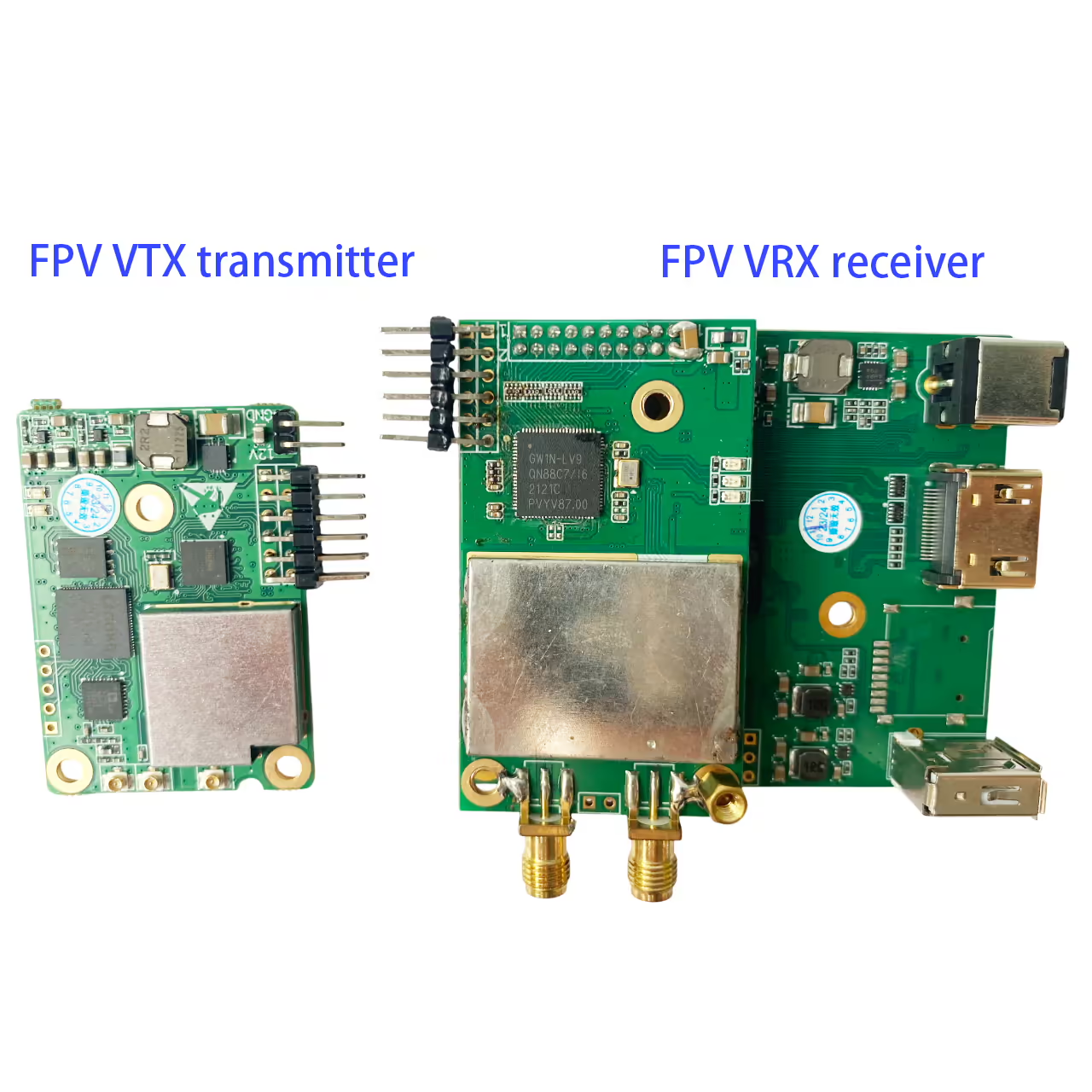
COFDM
Cofdm Video Spannungsdrécker CFDM HD Wireless Composition Video Spannungsdréck digital FPV vtx

HDMI Encoder zu ISDB-T RF

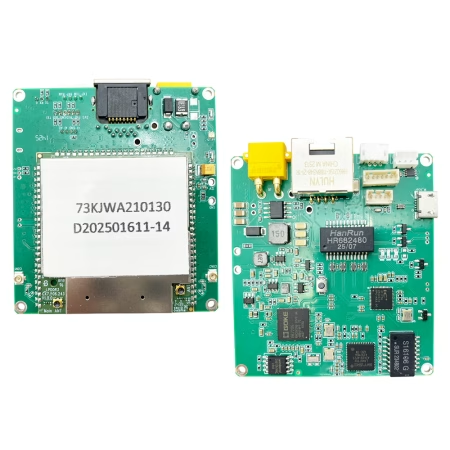
Drone Video Data Link
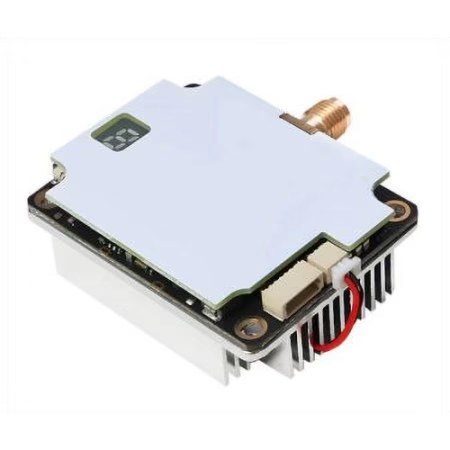
Drone Video Data Link
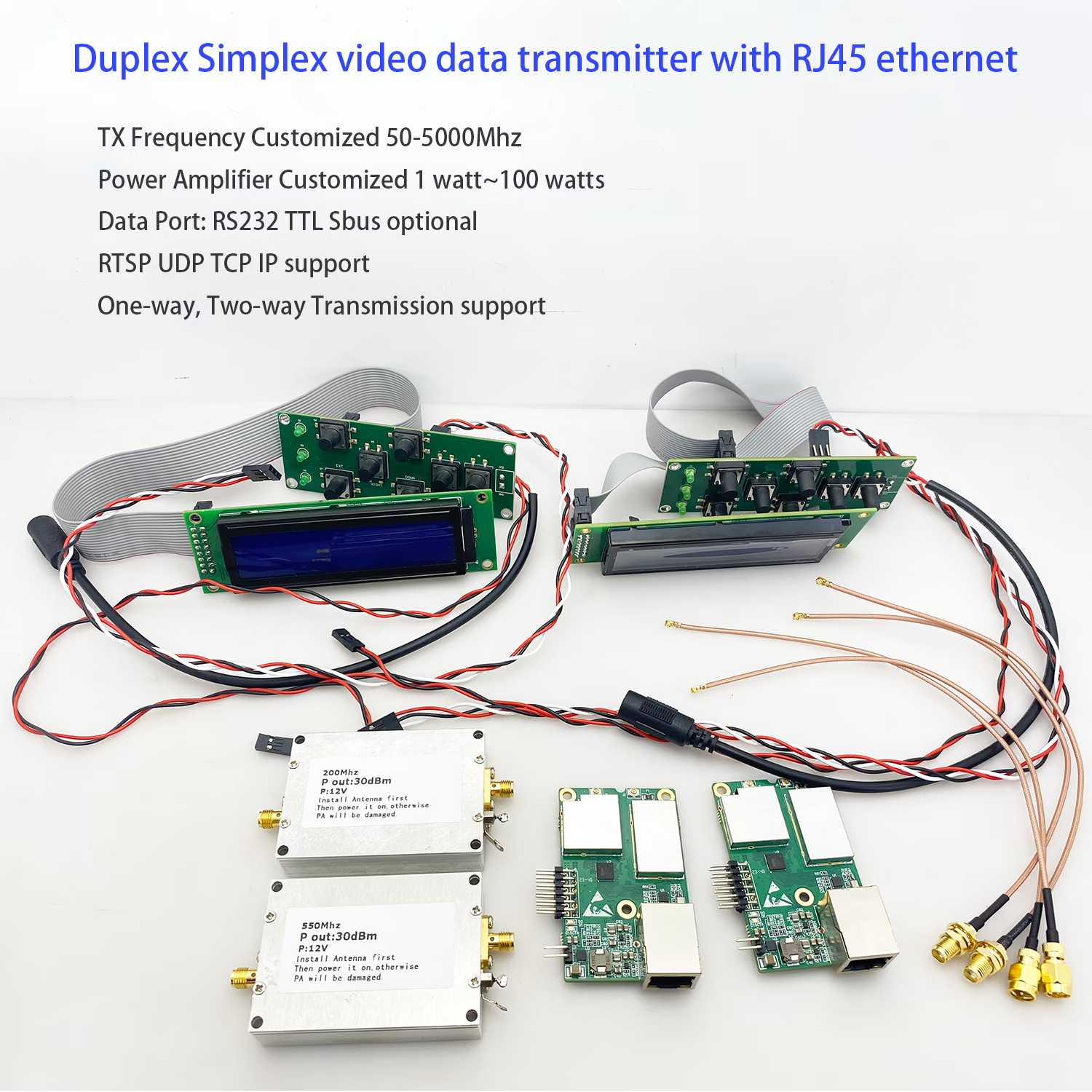
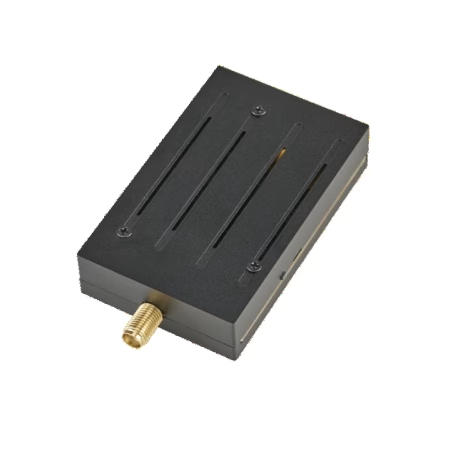
Drone Video Data Link
Eng Fro stellen
Äre Message gouf ofgeschéckt