
Chúng tôi là startup chuyên về dịch vụ thiết kế và tích hợp hệ thống. Trọng tâm của chúng tôi là cung cấp các giải pháp thiết kế cơ khí và điện tử sáng tạo cho các doanh nghiệp nhỏ. Là một phần của các dự án đang diễn ra của chúng tôi. Chúng tôi đang tìm kiếm sự hỗ trợ của bạn với một dịch vụ phù hợp với các sản phẩm và dịch vụ do công ty bạn cung cấp. Dưới, chúng tôi đã phác thảo các chi tiết cụ thể về yêu cầu của chúng tôi.
Wildfire surveying drone system description:
Gần đây, một trong những khách hàng của chúng tôi đã yêu cầu một giải pháp khả thi để thiết lập mạng lưới Drone để khảo sát cháy rừng ở ngoài tầm nhìn, bằng cách cung cấp dữ liệu và video theo thời gian thực, và hoạt động ở khoảng cách xa. Vì lý do bao phủ các khu vực rộng lớn vì chúng ta là một đất nước lớn, we have proposed this architecture:
A mother UAV capable of flying up to 6 km in altitude and covering a distance of 50 km, controlled directly via line-of-sight (LOS) from the ground control station (GCS). The mother UAV is equipped with a high-resolution inspection camera that transmits a high-quality video stream downlink to the GCS, and it exchanges command and telemetry data with the GCS through full-duplex, two-way communication.
Ngoài ra, có sáu máy bay không người lái bốn cánh con kết nối riêng với UAV mẹ thông qua dữ liệu đo từ xa hai chiều và gửi luồng video của chúng tới UAV mẹ, which acts as a relay to transmit all data to the GCS. The daughter drones can operate simultaneously, and both the mother UAV and the daughter drones can be commanded from the GCS. The maximum distance between the mother UAV and the daughter quadcopters is set to 15 km LOS cho phép bao phủ một khu vực rộng lớn và thiết lập hệ thống ngoài tầm nhìn.
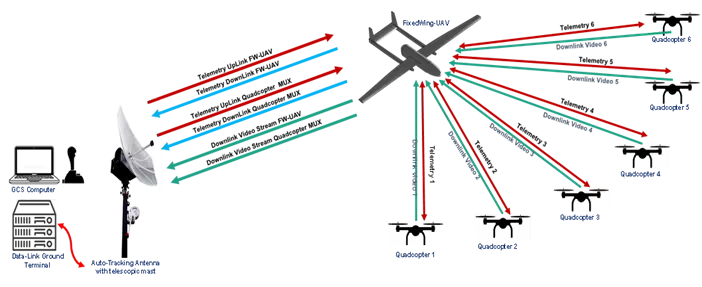
Fig. tổng quan về kịch bản làm việc với tất cả các liên kết truyền thông.
Here’s how it can be applied effectively:
1. Mother UAV as Command-and-Control Center
- High-altitude, long-range surveillance: The mother UAV, with its ability to fly up to 6 km in altitude and cover 50 km, can act as a high-altitude observation platform for the overall fire area. It can capture high-resolution images and video, có thể được truyền trực tuyến theo thời gian thực tới trạm điều khiển mặt đất (GCS).
- Coordination hub for daughter drones: The mother UAV can serve as a relay point to manage the daughter drones, coordinating their flight paths to cover specific sections of the fire.
2. Daughter Drones for Detailed Data Gathering
- Simultaneous multi-point surveillance: The daughter drones can be deployed at lower altitudes to gather detailed video and telemetry data in different sections of the fire zone. With their high-quality cameras, they can provide focused views of active fire fronts, hot spots, or areas needing attention.
- Real-time mapping and telemetry: Data from the daughter drones can be relayed through the mother UAV to the GCS for real-time fire behavior mapping. This allows ground teams to make quick decisions about containment and evacuation.
3. Real-Time Data Processing at the Ground Control Station
- Mission planning and coordination: The GCS can receive telemetry and video streams from both the mother and daughter drones, allowing operators to adjust drone flight paths and focus on critical areas.
- Fire progression analysis: The high-resolution video streams from the drones can help assess how the fire is spreading, identify hotspots, and provide insights into where resources should be deployed.
- Integration with geographic information systems (GIS): The drones’ data can be overlaid onto maps to visualize fire expansion, địa hình, and safe routes for ground personnel.
4. Benefits of the Drone Network for Wildfire Surveying
- Wide Area Coverage: With both the mother and daughter drones working together, you can cover a vast area in a short time, tracking the fire’s spread and monitoring multiple zones.
- Real-Time Intelligence: The system’s ability to provide live video and telemetry ensures that firefighters and emergency responders have up-to-the-minute information on the fire’s status.
- Safety and Efficiency: By using drones, you can reduce the risk to human lives by minimizing the need for manned aircraft or ground personnel in dangerous zones.
- Long-Distance Operation: The system’s range, with the mother UAV relaying data over large distances, allows the GCS to operate from a safe distance away from the fire while maintaining full control over the drones.
The detailed information about the communication links is shown in the following table:
| Chức năng | Sender / Mục tiêu | Phương hướng | Type of Data | Tốc độ bit | ||
| Communication between Mother UAV and Daughter UAV | Flight Control and Flight status | Autopilot | Up-link and Down-link | Lệnh từ xa và đo từ xa | ≤ 200 Kbps | |
| Liên kết video | Daughter drone onboard micro camera | Down-link | Visualization 720P resolution or less. | xung quanh 5 Mbps each | ||
| Liên lạc giữa UAV của Mẹ và CGS | Flight Control and Flight status | Autopilot | Up-link | Lệnh từ xa và đo từ xa | Low profile ≤ 200Kbps | |
| Liên kết video | Mother UAV onboard HD camera | Down-link | Visualization 1080P resolution | Around 16 Mb/giây | ||
| MUX Video link | Daughter drone mini transceiver | Down-link | MUX of 6 luồng video | Around 30 Mb/giây | ||
Our request:
Since our idea is still in the design phase, công ty khởi nghiệp của chúng tôi hiện thiếu đủ chuyên môn về công nghệ Datalink máy bay không người lái. Sau khi xem xét kỹ lưỡng kiến thức chuyên môn và hồ sơ theo dõi đã được chứng minh của công ty bạn trong lĩnh vực giải pháp Datalink máy bay không người lái, we are highly impressed by your capabilities. Given the complexity of our project and the specific technical requirements, we would like to kindly request your assistance in proposing a practical solution based on your existing product offerings. We believe your extensive knowledge and technology can greatly enhance the success of our project, và chúng tôi mong nhận được sự hướng dẫn chuyên môn của bạn trong việc phát triển hệ thống Datalink đáng tin cậy và hiệu quả cho mạng máy bay không người lái của chúng tôi.
Your insights and recommendations will be invaluable in helping us move forward with the project.
“Beyond Line of Sight” (BLOS) communication is critical for FANETs (Flying Ad-Hoc Networks) due to the decentralized nature of drone networks and their operational range. Expanding BLOS in FANETs involves techniques and technologies that enhance communication, điều khiển, and performance.
1. Công nghệ truyền thông
- Truyền thông vệ tinh (SATCOM): Using satellites for drone communication provides robust coverage over large areas, including remote and oceanic regions.
- High-Frequency (HF) Radio: HF bands enable long-distance communication, especially useful in areas without cellular networks.
- Mạng lưới: FANETs use mesh networks to relay data between drones, bypassing the need for direct line-of-sight to a base station.
- LoRa WAN and LPWANs: Low-power wide-area networks are beneficial for energy-efficient long-range communication.
2. Hệ thống chuyển tiếp
- Intermediate Drones: Máy bay không người lái có thể đóng vai trò là điểm chuyển tiếp cho người khác, hình thành mạng đa bước nhảy.
- Rơle mặt đất: Triển khai trạm mặt đất ở những địa điểm xa giúp mở rộng phạm vi liên lạc.
- Nền tảng trên không: Nền tảng độ cao (ví dụ., bóng bay, UAV lớn hơn) đóng vai trò là rơle để tăng cường phạm vi phủ sóng.
3. Hệ thống ăng-ten tiên tiến
- Anten định hướng và mảng pha: Cải thiện phạm vi và giảm nhiễu bằng cách tập trung tín hiệu.
- MIMO (Nhiều đầu vào Nhiều đầu ra): Tăng cường thông lượng và độ tin cậy trong điều kiện không có tầm nhìn.
- Định dạng tia: Tự động điều khiển tín hiệu về phía máy bay không người lái để duy trì kết nối.
4. AI và học máy
- Tối ưu hóa định tuyến: Các thuật toán do AI điều khiển chọn đường dẫn tốt nhất để liên lạc một cách linh hoạt.
- Bảo trì dự đoán: Phân tích các mẫu để ngăn chặn lỗi liên kết trước khi chúng xảy ra.
- Phân bổ tần số động: AI xác định các dải tần tốt nhất để giảm thiểu nhiễu và tối đa hóa phạm vi.
5. Giao thức và tiêu chuẩn
- Chia sẻ phổ động: Phân bổ phổ tần hiệu quả giữa các FANET và những người dùng khác.
- Giao thức thích ứng: Các giao thức như AODV (Vector khoảng cách đặc biệt theo yêu cầu) có thể được điều chỉnh cho FANET để đảm bảo hiệu suất tối ưu trong các tình huống BLOS.
- 5G và hơn thế nữa: Tích hợp với 5G NR (Đài phát thanh mới) để liên lạc với độ trễ thấp cực kỳ đáng tin cậy (URLLC).
6. Hiệu quả năng lượng
- Định tuyến nhận biết năng lượng: Giảm thiểu mức tiêu thụ điện năng trong rơle.
- Thu hoạch năng lượng: Sử dụng máy bay không người lái chạy bằng năng lượng mặt trời hoặc chùm năng lượng để nạp năng lượng cho UAV.
7. Bảo vệ
- Mã hóa đầu cuối: Đảm bảo an toàn dữ liệu trên toàn mạng.
- Hệ thống phát hiện xâm nhập (ID): Giám sát và xác định các hoạt động độc hại.
- Chuỗi khối: Chắc chắn, quản lý truyền thông phi tập trung trong FANET.
Đặt một câu hỏi
Tin nhắn của bạn đã được gửi