
我們是一家專注於系統設計和整合服務的新創公司. Our focus lies in providing innovative electronic and mechanical design solutions for small businesses. As part of our ongoing projects. We are seeking your assistance with a service that aligns with the products and offerings provided by your company. Below, we have outlined the specific details of our requirements.
野火勘測無人機系統說明:
Lately one of our costumers asked for a feasible solution to set up a Drone network for wildfire surveying a beyond line of sight, by providing real-time data and video, and operate over long distances. For the reason to cover large areas since we are such a big country, 我們提出了這種架構:
母無人機能夠飛到 6 公里的高度和覆蓋的距離 50 公里, 透過視線直接控制 (視距) 從地面控制站 (地面站). 母機無人機配備高解析度檢查攝像頭,可將高品質視訊流下行傳輸至GCS, 透過全雙工與GCS交換命令和遙測數據, 雙向通訊.
另外, there are six daughter quadcopter drones that connect exclusively to the mother UAV via two-way telemetry data and send their video streams to the mother UAV, 充當中繼將所有資料傳輸到 GCS. 子無人機可以同時操作, 母無人機和子無人機都可以透過 GCS 進行指揮. 母無人機和子四軸飛行器之間的最大距離設定為 15 km LOS which make it possible to cover a large area and establish beyond line-of-sight system.
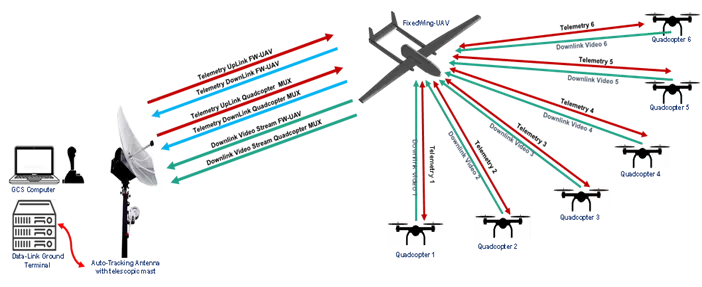
圖. overview of the working scenario with all the communication links.
以下是如何有效應用它:
1. 母無人機作為指揮控制中心
- 高海拔, 遠端監視: 母無人機, 憑藉其飛翔能力 6 海拔高度和覆蓋範圍公里 50 公里, 可作為整體火區的高空觀測平台. 它可以捕獲高分辨率圖像和視頻, which can be streamed in real time to the ground control station (地面站).
- 子無人機協調中心: 母無人機可以作為管理子無人機的中繼點, 協調飛行路徑以覆蓋火災的特定區域.
2. 用於詳細數據收集的子無人機
- 多點同時監控: 子無人機可以部署在較低高度,以收集火區不同部分的詳細影片和遙測數據. 憑藉他們的高品質相機, 他們可以提供活躍火鋒的集中視圖, 熱點, 或需要注意的地方.
- 即時測繪與遙測: 子無人機的數據可以透過母無人機轉發到 GCS,以進行即時火災行為測繪. 這使得地面團隊能夠快速做出有關遏制和疏散的決定.
3. 地面控制站的即時資料處理
- 任務規劃和協調: GCS 可以接收母無人機和子無人機的遙測和視訊串流, 允許操作員調整無人機飛行路徑並專注於關鍵區域.
- 火災進展分析: 無人機的高解析度視訊串流可以幫助評估火勢的蔓延情況, 識別熱點, 並提供有關資源應部署在何處的見解.
- 與地理資訊系統集成 (地理資訊系統): 無人機’ 數據可以疊加到地圖上以可視化火災擴展, 地形, 以及地面人員的安全路線.
4. 無人機網路對野火測量的好處
- 廣域覆蓋: 母無人機和女兒無人機一起工作, 你可以在短時間內覆蓋廣闊的區域, 追蹤火勢蔓延並監控多個區域.
- 即時情報: 該系統提供即時視訊和遙測的能力可確保消防員和緊急應變人員獲得有關火災狀態的最新信息.
- 安全高效: 透過使用無人機, 您可以透過最大限度地減少危險區域對有人駕駛飛機或地勤人員的需求來降低人類生命風險.
- 遠距離操作: 系統範圍, 與母無人機遠距離中繼數據, 允許 GCS 在遠離火場的安全距離內操作,同時保持對無人機的完全控制.
通訊鏈路的詳細資訊如下表所示:
| 功能 | 寄件人 / 目標 | 方向 | 資料類型 | 位元率 | ||
| 母無人機與子無人機通信 | 飛行控制和飛行狀態 | 自動駕駛儀 | 上行鏈路和下行鏈路 | Tele command and Telemetry | ≤ 200 千位元組每秒 | |
| 影片連結 | 子無人機機載微型相機 | 下行鏈路 | 可視化 720P 解析度或更低. | 大約 5 每個 Mbps | ||
| Communication between Mother’s UAV and CGS | 飛行控制和飛行狀態 | 自動駕駛儀 | 上行鏈路 | Tele command and Telemetry | 低調 ≤200Kbps | |
| 影片連結 | 母無人機機載高畫質攝影機 | 下行鏈路 | 可視化1080P分辨率 | 大約 16 Mbps | ||
| MUX 影片連結 | 子無人機迷你收發器 | 下行鏈路 | 多路復用器 6 視訊串流 | 大約 30 Mbps | ||
我們的要求:
由於我們的想法還處於設計階段, our startup company currently lacks sufficient expertise in drone Datalink technology. After thoroughly reviewing your company’s expertise and proven track record in the field of drone Datalink solutions, 您的能力給我們留下了深刻的印象. 鑑於我們項目的複雜性和具體的技術要求, 我們懇請您協助根據您現有的產品提出實用的解決方案. 我們相信您豐富的知識和技術可以大大促進我們專案的成功, and we look forward to your expert guidance in developing a reliable and efficient Datalink system for our drone network.
Your insights and recommendations will be invaluable in helping us move forward with the project.
“Beyond Line of Sight” (BLOS) communication is critical for FANETs (Flying Ad-Hoc Networks) due to the decentralized nature of drone networks and their operational range. Expanding BLOS in FANETs involves techniques and technologies that enhance communication, 控制, and performance.
1. Communication Technologies
- 衛星通訊 (SATCOM): Using satellites for drone communication provides robust coverage over large areas, including remote and oceanic regions.
- High-Frequency (HF) 收音機: HF bands enable long-distance communication, especially useful in areas without cellular networks.
- 網狀網路: FANETs use mesh networks to relay data between drones, bypassing the need for direct line-of-sight to a base station.
- LoRa WAN and LPWANs: Low-power wide-area networks are beneficial for energy-efficient long-range communication.
2. Relay Systems
- Intermediate Drones: Drones can act as relay points for others, forming multi-hop networks.
- Ground Relays: Deploying ground stations in remote locations extends the communication range.
- Airborne Platforms: High-altitude platforms (例如, balloons, larger UAVs) serve as relays to enhance coverage.
3. Advanced Antenna Systems
- Directional and Phased-Array Antennas: Improve range and reduce interference by focusing signals.
- 多輸入多輸出 (Multiple-Input Multiple-Output): Enhances throughput and reliability in non-line-of-sight conditions.
- 波束成形: Dynamically steers signals toward drones to maintain connectivity.
4. AI and Machine Learning
- Routing Optimization: AI-driven algorithms select the best paths for communication dynamically.
- Predictive Maintenance: Analyzes patterns to prevent link failures before they occur.
- Dynamic Frequency Allocation: AI identifies the best frequency bands to minimize interference and maximize range.
5. Protocols and Standards
- Dynamic Spectrum Sharing: Efficiently allocates spectrum among FANETs and other users.
- Adaptive Protocols: AODV 等協議 (Ad-hoc On-Demand Distance Vector) can be tailored for FANETs to ensure optimal performance in BLOS scenarios.
- 5G and Beyond: Integration with 5G NR (New Radio) for ultra-reliable low-latency communication (URLLC).
6. 能源效率
- Energy-Aware Routing: Minimizes power consumption in relays.
- Harvesting Energy: Utilizing solar-powered drones or energy beams to recharge UAVs.
7. 安全
- End-to-End Encryption: Ensures data security across the network.
- Intrusion Detection Systems (IDS): Monitors and identifies malicious activities.
- Blockchain: Secure, decentralized communication management in FANETs.
問一個問題
感謝你的回應。 ✨