
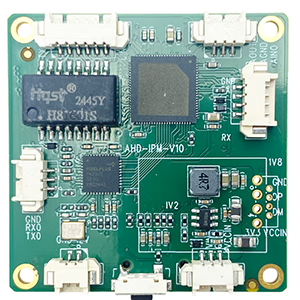
Encoder-Modulplatinen
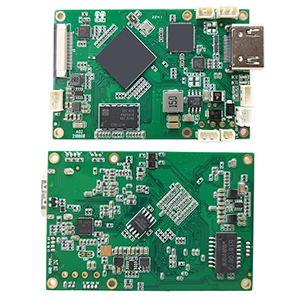

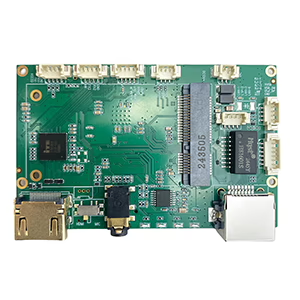
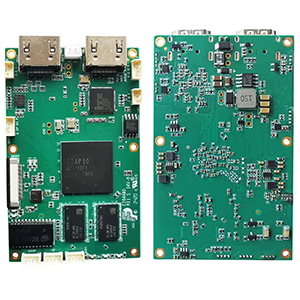
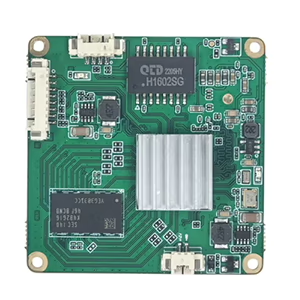
Decoder-Modulplatinen
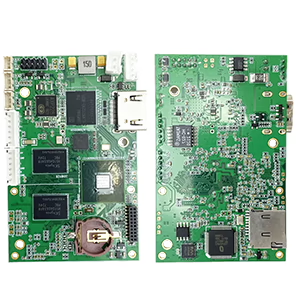

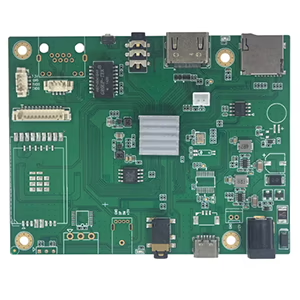
Zur individuellen Anpassung verfügbar
Ich bin gerade dabei, eine Lösung zu finden, mit der ich analoge Videosignale von CVBS- und AHD-Kameras konvertieren kann, mit Schwerpunkt auf AHD, in ein IP-basiertes Format zur Netzwerkübertragung und digitalen Aufzeichnung. Können auch Sie ähnliche Unterstützung leisten??
Eingang
- Zu den Videoqualitätsoptionen gehören AHD 720p und AHD 1080p 30 Bilder pro Sekunde.
- CVBS (NTSC)
Ausgabe
Die IP-Kamera unterstützt RTSP-Streaming mit MJPEG- und H264-Komprimierungsfunktionen.
Antwort:
Vielen Dank für Ihre Anfrage zum AHD-zu-IP-Konverter. Wir haben zwei Arten von Produkten, die Ihren Anforderungen entsprechen. Der Unterschied liegt in der Latenz.
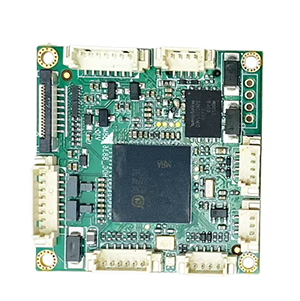
Modell 2090
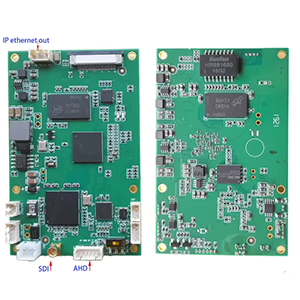
Modell 1731 (Geringere Latenz und Unterstützung von zwei Videostreams, CVBS + AHD)
In einigen Fällen, Drohnen und Roboter erfordern eine extrem niedrige Latenz, während andere Anwendungen von Verzögerungen von 100 ms nicht betroffen sind.
Ein Video-Encoder, der CVBS konvertiert (Composite-Video-Basisbandsignal) und AHD (Analoge High Definition) zu IP (Internetprotokoll) ist ein Gerät zur Überbrückung analoger und digitaler Videosysteme durch Umwandlung analoger Signale in netzwerkübertragbare digitale Streams. Hier ist eine strukturierte Aufschlüsselung:
Schlüsselkomponenten & Funktionalität
- Eingabeverarbeitung:
- CVBS: Unterstützt analoge Standard-Definition-Signale (z.B., 480i/576i) über RCA- oder BNC-Anschlüsse.
- AHD: Verarbeitet hochauflösende Analogsignale (z.B., 720P, 1080P) über Koaxialkabel, Beibehaltung der HD-Qualität während der Konvertierung.
- Konvertierungsprozess:
- Digitalisierung: Verwendet einen Analog-Digital-Wandler (ADC) analoge Signale in digitale Daten umzuwandeln.
- Kompression: Wendet Codecs wie H.264/H.265 an, um die Dateigröße zu reduzieren und gleichzeitig die Qualität beizubehalten, Optimierung der Bandbreitennutzung.
- Verpackung: Kapselt Daten in IP-freundliche Formate (z.B., RTSP, RTP) zur Netzwerkübertragung.
- Ausgabe:
- Überträgt über Ethernet, ermöglicht die Integration in IP-Netzwerke. Unterstützt möglicherweise Power over Ethernet (PoE) für eine vereinfachte Strom- und Datenbereitstellung.
Anwendungen
- Modernisierung von Altsystemen: Integriert ältere analoge CCTV-Kameras (CVBS/AHD) in IP-basierte Überwachungssysteme integrieren, ohne die bestehende Infrastruktur zu ersetzen.
- Hybride Überwachung: Ermöglicht die gleichzeitige Nutzung von analogen und IP-Kameras, Ideal für schrittweise Upgrades.
- Fernzugriff: Ermöglicht Cloud-Speicherung, Live-Streaming, und Fernüberwachung über vernetzte Geräte.
Merkmale
- Multi-Channel-Unterstützung: Einige Encoder verarbeiten mehrere Eingaben (z.B., 4-Kanalmodelle) für Skalierbarkeit.
- Konfigurationsflexibilität: Webbasierte Schnittstellen zur Anpassung der Auflösung, Bitrate, und Bildrate.
- Kompatibilität: Unterstützt oft ONVIF-Standards, um die Interoperabilität mit Netzwerk-Videorecordern sicherzustellen (NVRs) und Software.
Überlegungen
- Latenz: Durch die Kodierung kann es zu leichten Verzögerungen kommen, entscheidend für Echtzeitanwendungen.
- Bandbreitenmanagement: Einstellbare Komprimierungseinstellungen gleichen Videoqualität und Netzwerklast aus.
- Hardwareanforderungen: Stellen Sie die Netzwerkinfrastruktur sicher (z.B., Schalter, Router) kann erhöhten IP-Verkehr bewältigen.
Beispielanwendungsfall
Ein Sicherheitssystem mit vorhandenen AHD-Kameras (1080P) und CVBS-Kameras können einen Encoder verwenden, um Filmmaterial über ein Netzwerk zu streamen. Der Encoder digitalisiert und komprimiert die Signale, Ermöglicht die Integration mit einem NVR für die zentrale Verwaltung und den Zugriff über Smartphones oder PCs.
Über MJPEG
MJPEG (Motion JPEG) ist ein Videokomprimierungsformat, bei dem jedes einzelne Bild als eigenständiges JPEG-Bild komprimiert wird. Im Gegensatz zu modernen Codecs (z.B., H.264, MPEG), es nutzt nichtInterframe-Komprimierung (zeitliche Kompression), Dies führt zu einzigartigen Vorteilen und Einschränkungen.
Hauptmerkmale
- Rahmenunabhängigkeit: Jeder Frame ist ein vollständiges JPEG-Bild, es machen:
- Einfach zu verarbeiten (geringer Rechenaufwand).
- Geringe Latenz (Ideal für Echtzeitanwendungen wie Überwachung oder medizinische Bildgebung).
- Einfach zu bearbeiten (Einzelne Frames können extrahiert werden, ohne benachbarte Frames zu dekodieren).
- Kompatibilität: Aufgrund der Allgegenwärtigkeit von JPEG weithin unterstützt. Funktioniert mit den meisten Geräten, Browser, und Software.
- Qualität: Behält eine konsistente Qualität pro Frame bei, nützlich für Anwendungen, die Bildgenauigkeit erfordern (z.B., Videobearbeitung, Einzelbildanalyse).
Vorteile
- Geringe Latenz: Geeignet für Live-Vorschauen oder Echtzeitsysteme.
- Hardwarefreundlich: Einfache Kodierung/Dekodierung mit minimaler Rechenleistung.
- Rahmengenauigkeit: Keine Bewegungsunschärfeartefakte durch Interframe-Komprimierung.
Nachteile
- Große Dateigrößen: Keine zeitliche Komprimierung bedeutet höhere Speicher-/Bandbreitenanforderungen.
- Ineffizient für lange Videos: Weniger optimal als moderne Codecs (z.B., H.265) zum Streamen oder Archivieren.
- Eingeschränkte Funktionen: Keine Unterstützung für moderne Funktionen wie dynamische Bitratenanpassung oder HDR.
Häufige Anwendungsfälle
- Überwachungssysteme: Geringe Latenz und Frame-Genauigkeit für Echtzeitüberwachung.
- Medizinische Bildgebung: Die Frame-Unabhängigkeit stellt sicher, dass zwischen kritischen Frames kein Datenverlust auftritt.
- Ältere Geräte/Kameras: Digitalkameras, Webcams, oder Drohnen, bei denen es auf Einfachheit ankommt.
- Videobearbeitung: Der Zugriff auf Bildebene vereinfacht die Arbeitsabläufe in der Postproduktion.
Technische Hinweise
- Farbunterabtastung: Verwendet normalerweise JPEGs 4:2:0 Chroma-Unterabtastung.
- Varianten: MJPEG2000 (verwendet Wavelet-Komprimierung) bietet eine bessere Qualität, aber es mangelt an umfassender Kompatibilität.
- Containerformate: Oft in AVI verpackt, MOV, oder Multimedia-Transportströme.
Vergleich mit modernen Codecs
| Besonderheit | MJPEG | MPEG/H.264/H.265 |
|---|---|---|
| Kompressionseffizienz | Niedrig (Nur Intra-Frame) | Hoch (Zwischenrahmen + intra) |
| Latenz | Sehr niedrig | Mäßig bis hoch |
| Bearbeitungsflexibilität | Hoch (Rahmenunabhängigkeit) | Untere (GOP-Abhängigkeiten) |
| Bandbreitennutzung | Hoch | Optimiert |
Wann sollte MJPEG verwendet werden??
- Priorisierengeringe Latenz über Dateigröße.
- ErfordernFrame-für-Frame-Zugriff zur Bearbeitung/Analyse.
- Arbeiten Sie mit Legacy-Systemen oder Hardware mit begrenzter Rechenleistung.
Für Streaming- oder Speichereffizienz, moderne Codecs (z.B., H.265, VP9) sind normalerweise die bessere Wahl.
Eine Frage stellen
Vielen Dank für deine Antwort. ✨