
Вы знаете ISDB-T?
ВИнтегрированные услуги цифрового вещания (ISDB) (Японский: Интегрированная служба цифрового вещания, Дикарь) это японский стандарт цифрового телевидения.(DTV) и цифровое радио(ДАБ) используется радио- и телесетями страны. ISDB заменил ранее использовавшийсяMUSE Hi-vision аналоговая система HDTV. Производная ISDB, ISDB-T Международный, был разработан правительством Бразилии и широко принят в Южной Америке..

ISDB-T.com предлагает односегментный, полный, MPEG2, и цифровые ТВ-ресиверы MPEG4, которые соответствуют технологическим требованиям ISDB. Вся продукция тестируется в Японии., Филиппины, и Южная Америка.
An Introduction to ISDB-T: Japan’s Digital Terrestrial Broadcasting Standard
ISDB (Интегрированные услуги цифрового вещания) это японский стандарт цифрового телевидения. (DTV) and digital radio broadcasting developed for terrestrial, спутниковое, and cable networks. The system was designed to support high-quality broadcasting while also enabling mobile reception and data services.
ISDB replaced the earlier analog high-definition television system known as MUSE Hi-Vision, which had been used in Japan for experimental HDTV broadcasting. With the transition to digital broadcasting, ISDB became the backbone of Japan’s modern television infrastructure.
Among the different variants of ISDB, ISDB-T (Цифровое вещание с интеграцией услуг – наземное) is the most widely known, as it is used for terrestrial digital television broadcasting.
Development of the ISDB System
The ISDB standard was primarily developed in Japan through cooperation between the Japanese government and the national public broadcaster NHK. The goal was to create a broadcasting system capable of delivering multiple services over a single transmission channel.
The ISDB family includes several standards:
- ISDB-T – Terrestrial digital television broadcasting
- ISDB-S – Satellite digital broadcasting
- ISDB-C – Cable digital broadcasting
- ISDB-Tsb – Terrestrial digital sound broadcasting
Among these, ISDB-T became particularly influential due to its flexibility and ability to support both fixed and mobile reception.
Key Technologies Behind ISDB-T
One of the main strengths of ISDB-T is its advanced transmission technology, which allows reliable broadcasting even in complex urban environments.
Segmented Transmission
ISDB-T divides a single 6 MHz channel into 13 сегменты.
- 12 сегменты are typically used for standard or high-definition television broadcasting (Полный сегмент).
- 1 сегмент is dedicated to mobile devices (Односегментный).
This design allows the system to broadcast both high-quality television programs and mobile video services simultaneously.
OFDM Modulation
ISDB-T uses Мультиплексирование ортогонального частотного деления мультиплексирование (OFDM) for signal transmission. This modulation technique provides several advantages:
- Высокая устойчивость к многолучевым помехам
- Reliable signal reception in urban environments
- Support for single-frequency networks (SFN)
These capabilities make ISDB-T particularly suitable for densely populated cities.
Flexible Video Compression
Early Japanese ISDB-T broadcasts used MPEG-2, video compression. Однако, newer implementations and international versions have adopted MPEG-4, / H.264, which offers much better compression efficiency and improved picture quality at lower bitrates.
One-Seg and Full-Seg Broadcasting
A unique feature of ISDB-T is its ability to support both fixed and mobile television services.
Односегментный
Односегментный refers to the mobile broadcasting service that uses one of the 13 segments in the ISDB-T transmission channel.
Ключевые функции включают:
- Low bitrate video
- Optimized for mobile devices
- Low power consumption
В Японии, One-Seg became widely used in smartphones, portable TVs, and vehicle entertainment systems.
Полный сегмент
Полный сегмент refers to the main television broadcast using the remaining segments of the channel. This mode delivers higher resolution and higher bitrate video suitable for HDTV broadcasting on traditional television sets.
ISDB-T Международный
Although ISDB-T was originally developed for Japan, the technology was later adapted for international use.
A modified version called ISDB-T Международный (ISDB-Tb) was developed with major contributions from Бразилия. The Brazilian government enhanced the system by introducing improvements such as:
- H.264 video compression
- Enhanced middleware
- Improved mobile broadcasting capabilities
Because of Brazil’s contributions, the system is sometimes referred to as the Brazilian Digital TV System (SBTVD).
Global Adoption
ISDB-T International has been adopted by many countries, especially in South America and parts of Asia.
Countries that use the standard include:
- Япония
- Бразилия
- Аргентина
- Чили
- Перу
- Филиппины
Many of these countries selected ISDB-T because of its superior mobile reception capabilities and flexible service architecture.
Comparison with Other Digital TV Standards
Globally, three major terrestrial digital television standards dominate the market:
| Стандарт | Primary Regions |
|---|---|
| ISDB-T | Япония, Южная Америка, parts of Asia |
| DVB-T | Европа, Африке, parts of Asia |
| ATSC | Северная Америка |
Each standard has its strengths:
- ATSC was widely adopted in North America but initially had weaker mobile reception support.
- DVB-T became popular due to its early adoption across Europe and many other regions.
- ISDB-T stands out for its segmented transmission design and strong mobile broadcasting capabilities.
ISDB-T Receivers and Devices
A wide range of hardware products support ISDB-T reception, включая:
- Digital televisions
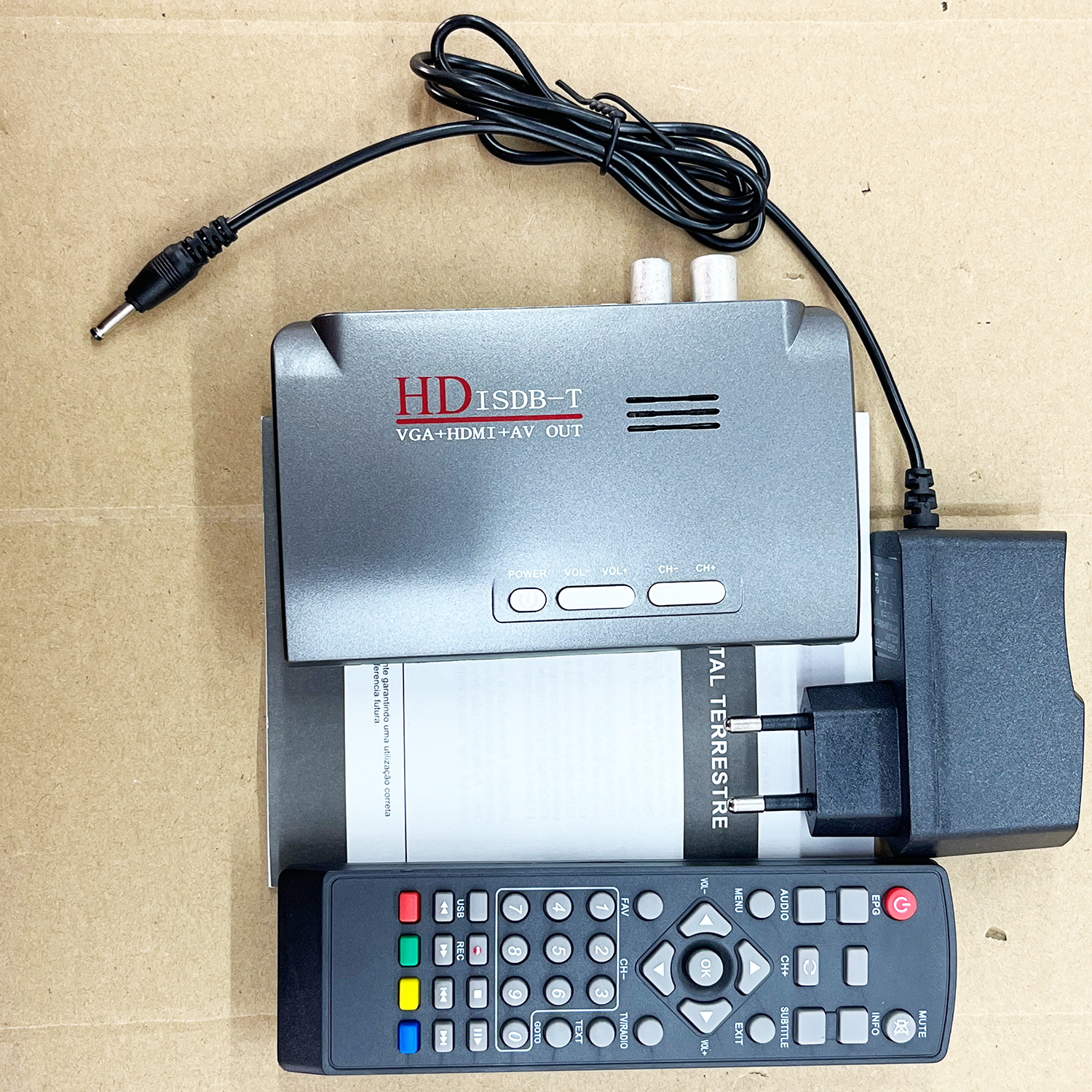
- Set-top boxes
- USB TV tuners
- Mobile TV receivers
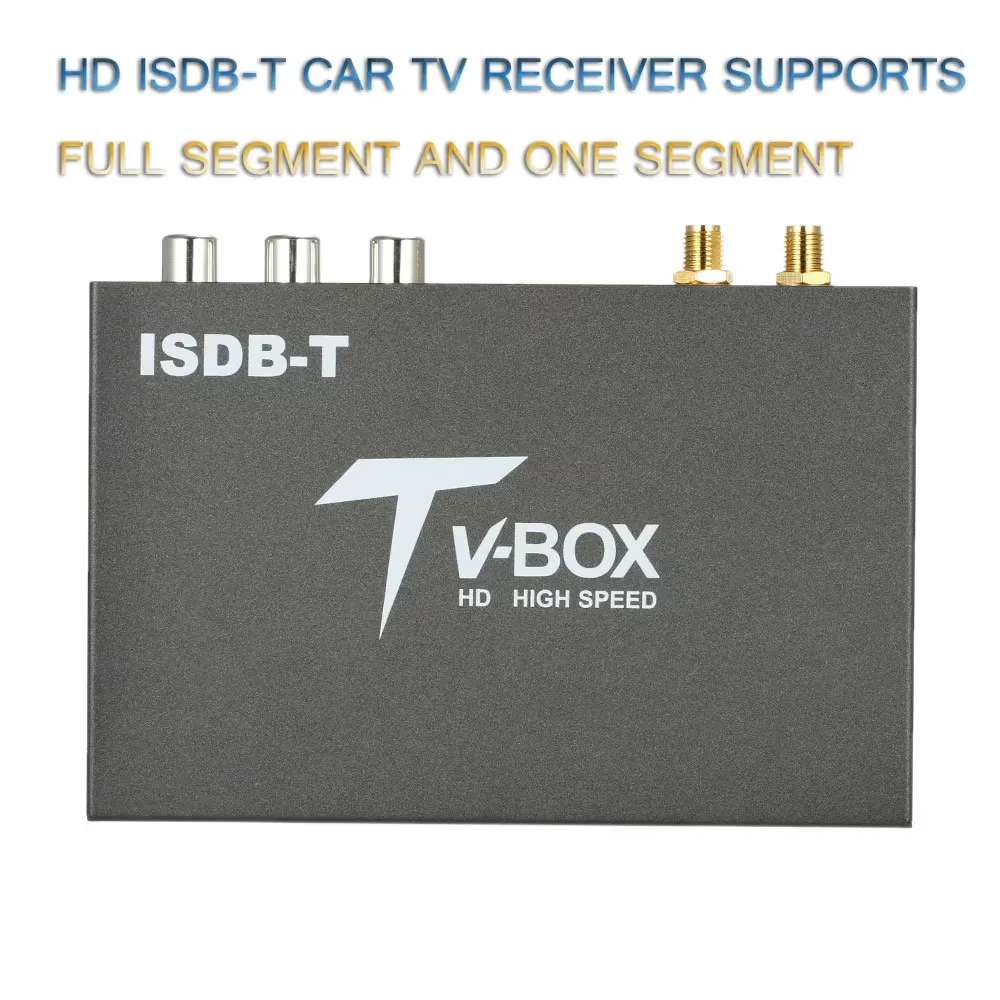
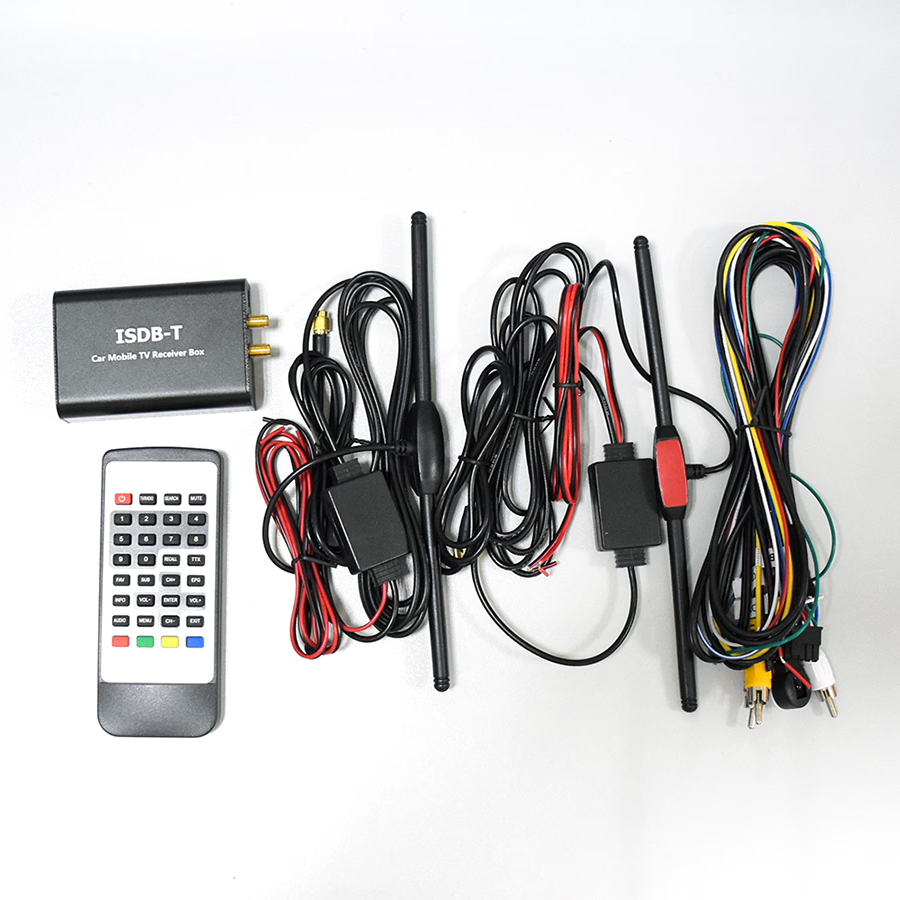
- Automotive digital TV systems
Companies such as ISDB-T.com offer digital TV receivers supporting technologies like:
- Односегментный
- Полный сегмент
- MPEG-2 decoding
- MPEG-4, / H.264 Декодирование
These products are typically tested for compatibility in regions where ISDB-T is deployed, including Japan, Филиппины, и Южная Америка.
The Future of ISDB Broadcasting
Broadcasting technology continues to evolve, and newer generations of ISDB standards are being developed to support ultra-high-definition television.
Например, Japan has introduced advanced systems such as ISDB-S3, which supports 4K and 8K ultra-high-definition broadcasting.
These technologies were showcased during events such as the Tokyo 2020 Olympics, demonstrating the future potential of the ISDB broadcasting ecosystem.
Заключение
ISDB-T represents one of the most advanced digital terrestrial broadcasting standards in the world. Its segmented transmission architecture, robust modulation techniques, and support for both fixed and mobile devices make it highly versatile.
Thanks to these advantages, ISDB-T has expanded far beyond Japan and become an important digital television standard across South America and parts of Asia. As broadcasting technology continues to evolve toward 4K and 8K ultra-high-definition content, the ISDB ecosystem remains an important player in the global broadcasting landscape.


1 Seg ISDB-T AM FM
AM FM-радио 1 сегментный ISDB-T TV звука с динамиком батареи


Кодировщик HDMI для ISDB-T RF





ISDB-T
HD CAR ISDB-T Digital TV 2 Антенна декодер. Высокоскоростная двойная антенна с двойной антенной



ISDB-T

ISDB-T для дома
ISDB-T BS CS Япония Японская трехдиапазонная телевизионная приставка PVR TV PCB board
Задайте вопрос
Спасибо за ответ! ✨