
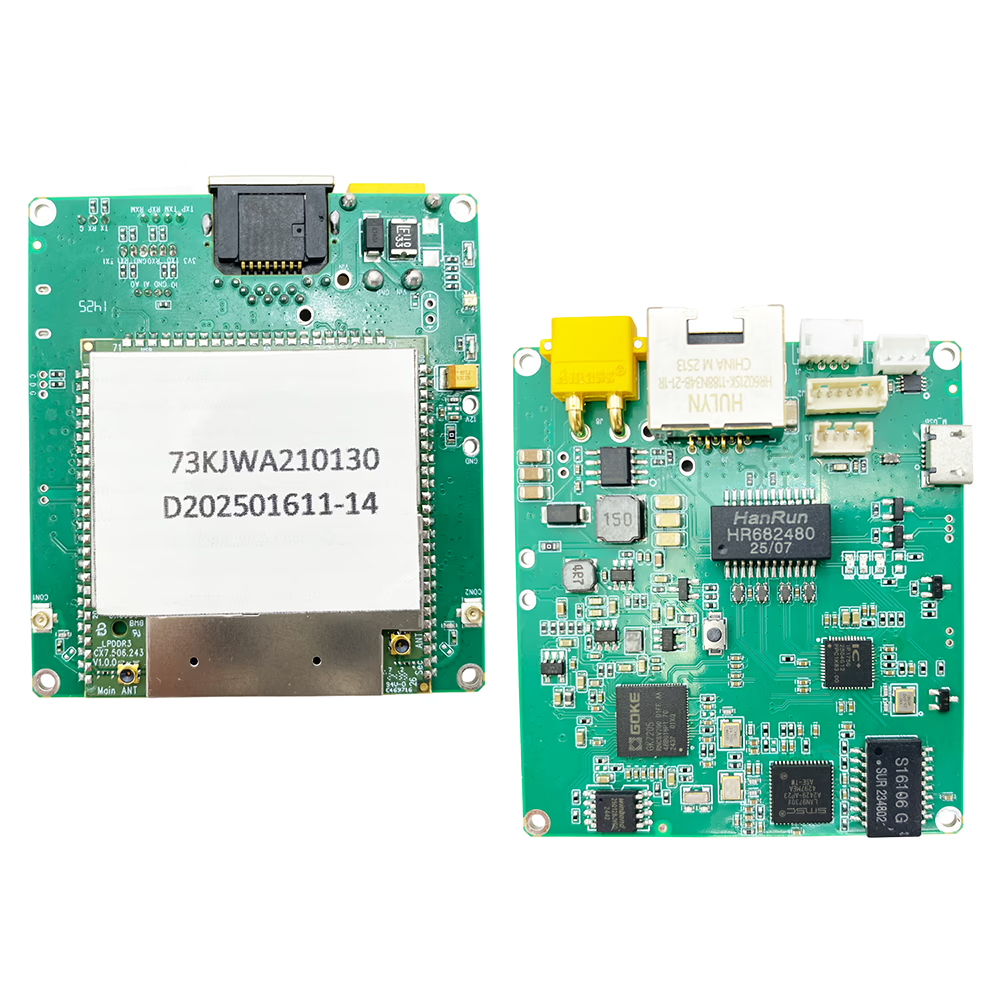
DIY UAV Drone Video Data Radio Link Module IP TTL SBUS
Pangkalahatang -ideya
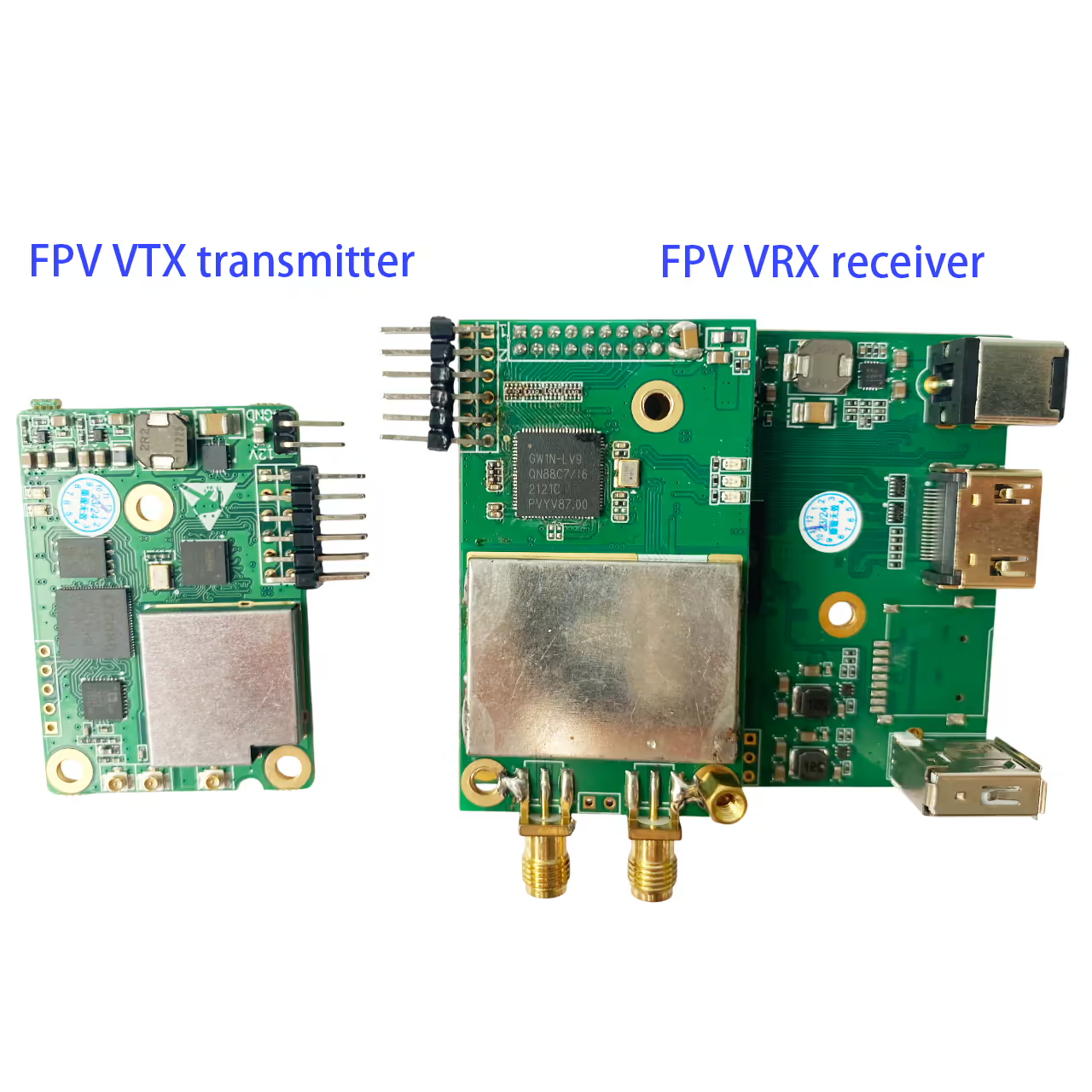
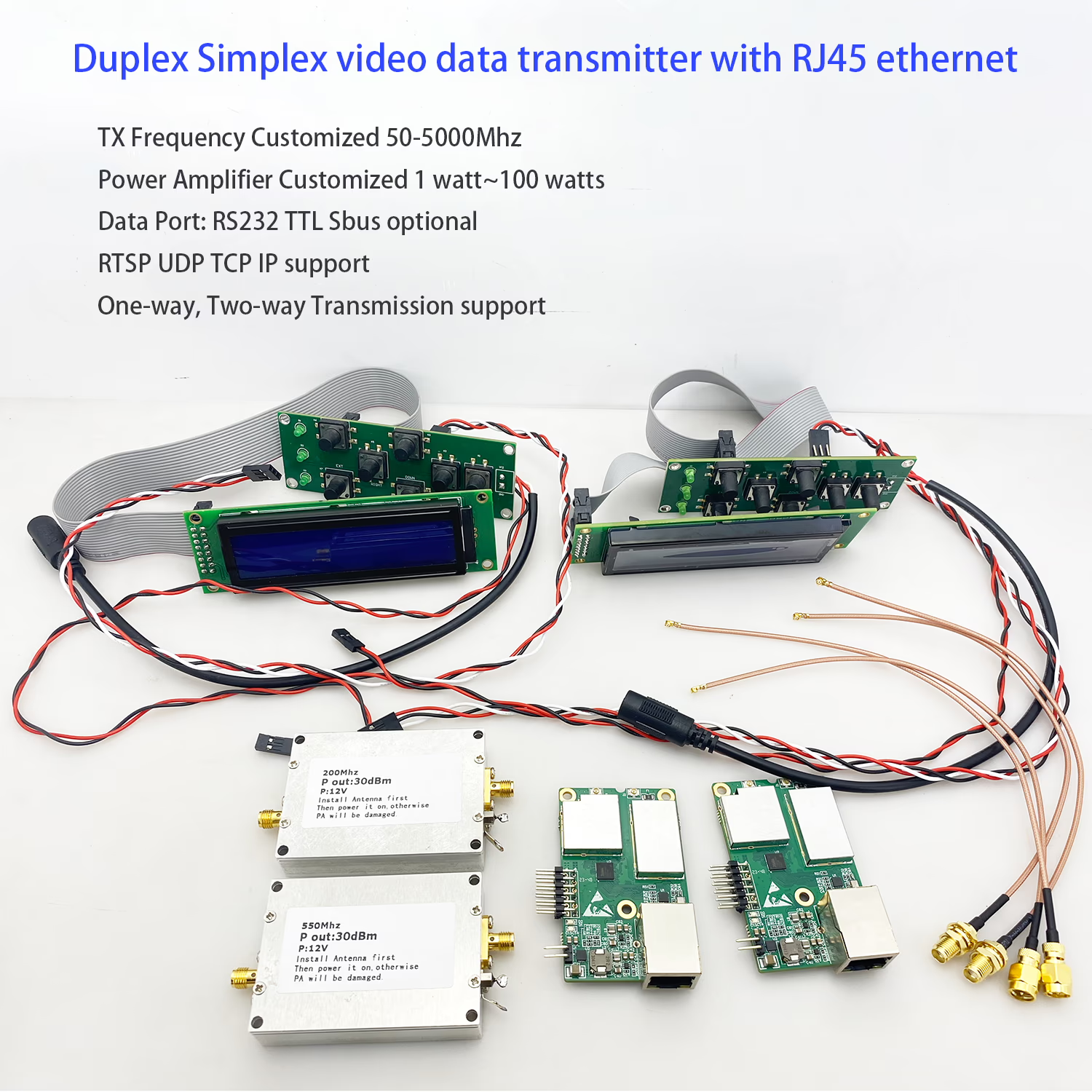
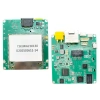
Introducing the DIY UAV drone video data radio link module support IP TTL Sbus — a high-performance, bidirectional transceiver module combining video transmission, data telemetry, and radio control for UAVs, drone, or any aerial/ground robotics platform. Engineered for long-range use, this module delivers robust communication links, offering flexibility, reliability, and scalability in demanding environments. Whether you’re doing FPV video, remote sensor telemetry, or controlling multiple nodes in a mesh network, the IS1681 is designed to be a powerful all-in-one communications solution.
Mga Tampok
-
Full-Duplex / Bidirectional Link
The IS1681 supports two-way communication, meaning it can simultaneously handle downlink (video + data from UAV to ground station) and uplink (kontrolin, telemetry, utos) streams. This ensures low latency remote control as well as real-time feedback. -
Flexible Frequency Bands
Supports operation on multiple RF bands: ~800 MHz (806-826 MHz), ~1.4 GHz (1428-1448 MHz), and ~2.4 GHz (2402-2482 MHz). This flexibility allows system integration in crowded RF environments, and options to optimize for longer propagation (lower frequency) or higher bandwidth (higher frequency) depending on mission needs. -
Selectable Bandwidth & Modulasyon
Multiple channel bandwidth options are available: 3 MHz, 5 MHz, 10 MHz, at 20 MHz, permitting trade-offs between range, data throughput, and robustness. Modulation schemes include QPSK, 16-QAM, at 64-QAM, automatically adapting to channel conditions. -
Long-Range Transmission Capability
In line-of-sight (Los) mga kondisyon, the module delivers ranges up to ~17 km without an additional external power amplifier. With added PA/amp modules, ranges extend significantly, depending on power and antenna configuration. The module’s max RF power is 25 ± 2 dBm by default. -
High Sensitivity Receiving
The module exhibits excellent receiving sensitivity across all supported bands. Halimbawa na lang, sa 1 Mbps data rate, sensitivity hovers around –106 dBm to –108 dBm depending on the band. This helps in maintaining communication integrity over longer distances and in noisy environments. -
Multiple Interfaces & Transparent Transmission
-
Dual Ethernet ports (one 4-pin ZH connector, one RJ45) for IP networking / transparent Ethernet bridging.
-
Multiple UART / TTL serial ports (3 x UART/TTL, including one dedicated control/data channel).
-
Audio input and output (line/mic in, earphones/speaker out) with on-board codec for two-way audio communication.
This assortment of I/O allows seamless integration with onboard flight controllers, video encoders, remote user interfaces, atbp.
-
-
Network Modes & Scalability
The IS1681 supports multiple networking topologies: point-to-point, point-to-multipoint, star network, relay/repeater/extender, and mesh network (IP mesh). Up to 16 access nodes can connect to a central node in some configurations, sharing bandwidth as per link capacity. This is useful for distributed systems, large surveillance setups, mapping swarms, atbp. -
Seguridad & Pamamahala
-
AES-128 encryption ensures data privacy and resistance to eavesdropping.
-
Management can be performed via Web UI or UART commands.
-
Uplink/downlink stream ratios are configurable, allowing control of how much bandwidth is assigned to video vs telemetry vs control signals.
-
-
Physical Specs, Kapangyarihan & Robustness
-
Operating temperatura: –20 °C to +65 °C; storage temperature: –40 °C to +80 °C.
-
Wide input power range: typically 7-30 Sa DC, consuming < ~4.5 W in normal operation.
-
Compact form factor (≈ 58×64×13 mm), weight ≈ 32 g. Mga dual antenna (main & aux) supporting MIMO type reception.
-
Mga interface & Mga Konektor
Here’s what you’ll find on the module, and how you can hook it up:
-
Power input: XT30PW-M connector, accepting 7-30 Sa DC.
-
Ethernet ports:
One port via 4-pin ZH1.5 mm connector;
One RJ45 port (also supports transparent IP traffic). -
Serial / UART / TTL ports: Multiple ports at TTL 3.3 V, including one that can serve control or data role.
-
Audio I/O: 4-pin PH1.25 mm connector, with line/mic in, line/speaker out, for two-way audio use.
-
Antennas: Main TX/RX port (IPEX), secondary reception-only antenna (IPEX) for diversity.
-
USB (Micro USB): for firmware upgrades.
-
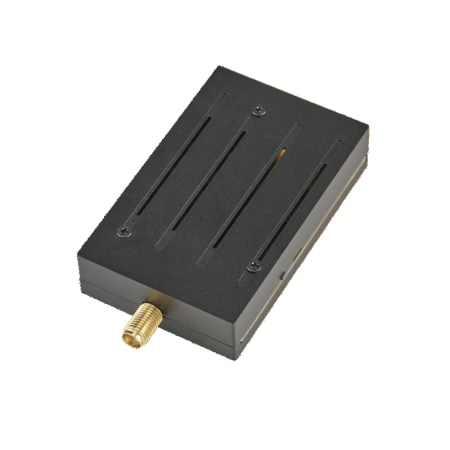
Control switches / signals: For external Power Amplifier (PA) enabling/disabling etc. Status LEDs for power, node-mode, link strength.
Gumamit ng mga kaso & Mga Aplikasyon
This module is highly versatile. Some example applications include:
-
FPV & Live Video Streaming: Real-time transmission of video feeds from UAVs for piloting, cinematography, inspection, atbp. Thanks to high throughput and low latency, usable even under demanding aerial scenarios.
-
Teleoperation / Malayuang Kontrol: Not just video, but two-way data link supports remote flight control, parameter updates, telemetry feedback, atbp.
-
Mesh & Multi-Node Installations: For large areas or swarms of UAVs, ground robots or sensor networks, the mesh networking capability means nodes can relay through each other, extending coverage or providing redundancy.
-
Disaster Response / Paghahanap & Rescue: The capability to transmit over 15-30 km (or further with PA), combined with audio communications, makes this module suitable for scenarios when teams are spread over large distances and need reliable live comms + video.
-
Industrial / Agricultural Monitoring: Long-range monitoring of fields, pipelines, power lines, or remote infrastructure. Real-time video plus sensor data over robust links.
-
Seguridad & Surveillance: Ground based or aerial surveillance systems that demand encryption, robust signal under interference, and flexible deployment of multiple receiver nodes.
Performance & Saklaw ng mga inaasahan
-
Without external power amplification, users can expect reliable LOS ranges up to 15-17 km (air-to-ground). With suitable antennas, line of sight, and favorable conditions.
-
Adding a power amplifier (2W, 5W, 10W) can extend range significantly, depending on antenna gain, terrain, and regulatory limits on radiated power.
-
Signal quality, Bandwidth, and modulation adapt automatically to environmental conditions to maintain link performance; worse conditions reduce modulation order or bandwidth, but preserve the link rather than dropping.
Kumpigurasyon & Kontrolin
-
Web UI: via the Ethernet or IP network, you can access configuration menus: select frequency band, modulasyon, Bandwidth, frame modes, streaming ratios (video/control), encryption settings, atbp.
-
UART / Serial control: For integration with autopilots / flight controllers, remote firmware updates, in-field adjustments of settings.
-
Switch for external PA: Some models include a mechanism for controlling an external power amplifier (on/off), for instance to save power when full power isn’t needed.
Comparisons / Kalamangan
What distinguishes the IS1681 from simpler, one-way video transmitters or basic RC control links:
-
Bidirectional data & video rather than just one-way video/telemetry.
-
Support for full network topologies (mesh, relay networks) rather than simple point-to-point only.
-
Multiple frequency options allow adaptation to regulatory and environmental constraints.
-
Transparent IP networking means it can carry arbitrary IP traffic (hal.g. video, telemetry, kontrolin) rather than being limited to specialized proprietary protocols.
-
Integrated serial/TTL interfaces make it easier to hook up flight controllers, camera, data loggers without needing many converters.
Technical Specification Summary
| Parameter | Pagtutukoy |
|---|---|
| Mga bandang dalas | 800 MHz (806-826 MHz), 1.4 GHz (1428-1448 MHz), 2.4 GHz (2402-2482 MHz) |
| Bandwidth Options | 3 / 5 / 10 / 20 MHz |
| Modulasyon | QPSK / 16QAM / 64QAM (adaptive) |
| RF Output Power | ~25 ± 2 dBM (default) |
| Sensitivity | ~–106 to –108 dBm for 1 Mbps in supported bands |
| Maximum Data Rate | ~30 Mbps @ 20 MHz bandwidth (shared among nodes) |
| Networking Modes | Point-to-Point, Point-to-Multipoint, Star, Relay/Repeater, Mesh / IP Mesh |
| Mga interface | Dual Ethernet, 3 UART/TTL, Audio I/O, USB for firmware |
| Antennas | Mga dual antenna: main (TX/RX) + auxiliary (RX only) |
| Kapangyarihan supply | 7-30 Sa DC, < ~4.5 W typical |
| Pisikal na Sukat / Timbang | ~58 × 64 × 13 mm; ~32 g |
| Pagpapatakbo ng Tukso. | –20 °C to +65 °C; Imbakan: –40 °C to +80 °C |
Considerations & Tips
-
Regulatory compliance: When using higher transmit powers or certain frequency bands, ensure that operations are permitted in your area. Licensing, power limits, and band usage differ by country.
-
Antenna setup: To get the advertised range, high-gain antennas, proper mounting (elevated, clear LOS), and matching connectors are essential. Diversity via the auxiliary antenna helps in multipath or blocked signal scenarios.
-
Powering & heat dissipation: Even though module power consumption is modest (~4–5 W), including any PA will add heat. Good airflow / heatsinking is needed especially if enclosed. Use the onboard LED indicators to monitor link quality.
-
Firmware & updates: Keep firmware updated for best performance and bug fixes. Use USB or Web UI as provided.
-
Bandwidth allocation: If using mesh or multiple nodes, bandwidth is shared—so ensure the system design accounts for video + telemetry + control demands, and allocate uplink/downlink ratios as needed.
Konklusyon
Ang UAV Wireless Video Data RC Control Link Module is a versatile, powerful, and robust solution for those wanting more than just simple video: it gives you full two-way communications, networking modes, flexible interfaces, and high performance over long ranges. Whether you’re a developer building custom UAV platforms, a FPV pilot needing reliable long-distance video, or a systems integrator deploying swarm or distributed sensor solutions, this module offers an excellent balance of capability, flexibility, and integration ease.





Mga review
Walang mga review pa.