
Il sistema comprende sedici unità aeree Datalink in volo (uno per uccello), una singola unità terrestre Datalink, e una stazione di controllo a terra (GCS). Lo scopo è specificare le interfacce, lunghezze dei cavi, conta il porto, e test di accettazione in modo che le unità consegnate dai fornitori interagiscano con la FCC esistente (computer di controllo del volo), telecamere (cercatori), e il GCS.
È necessaria una soluzione completa per stabilire un collegamento dati tra a stazione di terra E 4 Unità aeree UAV. Il sistema dovrebbe consentire una comunicazione affidabile, controllare, e monitoraggio di tutti gli UAV simultaneamente. I requisiti tecnici dettagliati sono forniti di seguito.
Panoramica:
∙ Configurazione: 1 × Unità di controllo a terra (GCU) comunicare con 4 × Unità aeree (Fuori) ∙ Tipo di comunicazione: Collegamento bidirezionale punto-multipunto (Ethernet + UART) ∙ Allineare: ≥ 80 km di linea di vista (LOS)
∙ Banda operativa: 1.4GHz(Banda L)
∙ Schema di modulazione: TDD-OFDM / QPSK / 16-QAM
∙ Requisiti di alimentazione: tensione operativa (12V), Soglia attuale (≤2A) ∙ Intervallo di temperatura: -20da °C a 75 °C
Velocità di trasmissione dei dati e larghezza di banda:
| Parametro | Requisito | Note |
| Velocità dati video (per cercatore) | 5 – 9 Mbit/s | 1080P @ 30 Compressione H.264/265 fps |
| Telemetria + Controllare (secondo la FCC) | 200 – 300 kbps | Dati di controllo bidirezionale basati su UART |
| Throughput video aggregato (4 Fuori) | 24 – 36 Mbit/s | Uplink video combinato |
| Telemetria/controllo aggregato | 1 Mbit/s | Trascurabile rispetto al video |
| Larghezza di banda totale richiesta per il collegamento in uplink | ≥ 36 Mbit/s | Con 20% FEC + sopraelevato ≈ 42 Mbit/s |
Requisiti di latenza e qualità:
| Parametro | Requisito | Note |
| Tasso di errore bit | < 8×10⁻⁸ | Alla portata massima |
| Ritardo dati | < 1SM | Necessario per il funzionamento del cercatore in tempo reale e la trasmissione dei dati |
| Perdita di pacchetti | < 1% | Con FEC + Meccanismi ARQ |
| Correzione degli errori | FEC + CRC+ARQ | Obbligatorio per l'affidabilità della telemetria |
Collega bilancio & Parametri RF:
| Parametro | Valore obiettivo | Note |
| Trasmettere potenza (Unità aerea) | 4 – 5 W | – |
| Trasmettere potenza (Unità di Terra) | 4 – 5 W | – |
| Guadagno dell'antenna (Unità aerea) | >3dB | Schema dell'antenna: Isotropico |
| Guadagno dell'antenna (Unità di Terra) | 12 – 18 dB | Antenna direzionale |
| Sensibilità del ricevitore | –103 dBm a 10 MHz | Per 10⁻⁵ BER |
| Collegamento Margine @ 80 km | > 10 dB | Garantisce video robusti + collegamento dati |
NOTA:
⮚ Per una perfetta integrazione tra il controllore di volo CUAV V5+ e le periferiche esterne, è essenziale che il telaio UART mantenga a struttura di cablaggio diretta e semplice. Nello specifico, il telaio dalla porta UART dovrebbe essere progettato come a collegamento in linea retta unica senza introdurre ulteriori convertitori o schede intermedie. Ciò riduce al minimo i potenziali punti di guasto, riduce la latenza, e garantisce un'architettura di cablaggio leggera e affidabile.
⮚ Inoltre, il telaio deve funzionare secondo la logica transistor-transistor (TTL) livelli di tensione, poiché il controllore di volo V5+ comunica tramite TTL UART. Qualsiasi deviazione dal TTL (come i livelli RS-232 o RS-485) richiederebbe traslatori o convertitori di livello esterni, il che contraddice l'esigenza di un telaio diretto. Aderendo agli standard TTL, la compatibilità del segnale viene mantenuta, garantendo:
o Comunicazione diretta tra V5+ e moduli collegati.
o Ridotta complessità dell'hardware eliminando convertitori o traduttori. o Peso ridotto e maggiore affidabilità, poiché nel percorso del segnale sono coinvolti meno componenti.
o Integrità del segnale migliorata, poiché ulteriori stadi di conversione possono introdurre disturbi o disadattamenti temporali.
Insomma, il design del telaio dovrebbe fornire rigorosamente un cablaggio UART diretto funzionante a tensioni TTL, allineandosi con le specifiche elettriche del CUAV V5+ e garantendo prestazioni ottimali nelle applicazioni aeree.
Panoramica del sistema:
Descrizione del sistema di alto livello:
1. Quattro UAV, ciascuno dotato di:
o 1 × Unità aerea di collegamento dati
o 1 × F.C.C (Computer di controllo del volo, per esempio., FALSO V5+)
o 1 × Cercatore / Telecamera
2. 1 × Unità di terra Datalink collegata alla stazione di controllo di terra (GCS).
Flusso di dati (panoramica): I dati video e dei sensori di ciascuna telecamera vengono forniti all'unità Datalink Air associata tramite la porta Ethernet della telecamera. I dati di telemetria e controllo tra la FCC e l'unità aerea vengono trasportati tramite un collegamento UART. L'unità aerea Datalink trasmette questi flussi tramite il collegamento dati all'unità di terra; la Ground Unit demultiplexa i flussi e li presenta al GCS come un unico flusso Ethernet (video e dati della telecamera) e un unico seriale (UART/USB) flusso di telemetria.
Requisiti delle unità aeree:
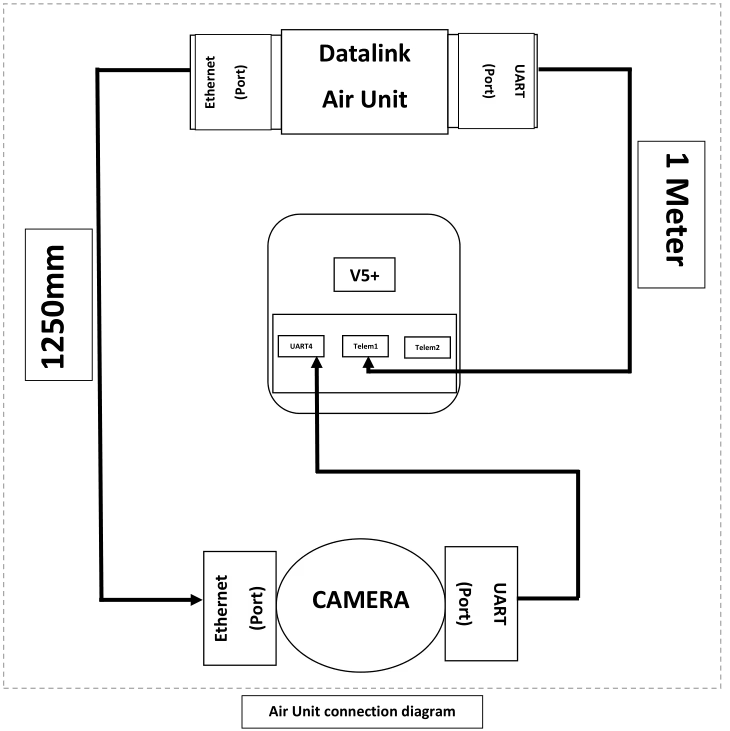
Ciascuna unità aerea di collegamento dati (uno per UAV) dovranno soddisfare i seguenti requisiti obbligatori:
1. Interfacce & Porti (minimo):
o 1 × porta UART (minimo). Questa porta sarà utilizzata per la connettività di telemetria/controllo all'FCC (porte di telemetria Telem1 / Telem2 sulla FCC).
o 1 × porta Ethernet (minimo). Questa porta sarà utilizzata per ricevere i dati Ethernet della telecamera/cercatore.
2. Connettività via cavo (consegnato con l'unità aerea):
o 1 × cavo UART (primario) - lunghezza: 1.0 M (±5%). Il cavo dovrà trasportare TX, RX, GND e VCC. Il cavo deve essere terminato in modo che corrisponda al connettore UART Datalink su un'estremità e al connettore di telemetria FCC sull'altra.
o 1 × cavo Ethernet (primario) - lunghezza: 1.0 M (±5%). Il cavo dovrà essere un cavo patch Cat5e o Cat6 schermato standard con connettori RJ45.
o 2 × set di ricambio (per unità aerea) — i.e., con ciascuna unità aerea verranno forniti due cavi UART aggiuntivi e due cavi Ethernet aggiuntivi (totale fornito per unità = 3 cavi UART, 3 Cavi Ethernet).
3. Meccanico & Fisico:
o I cavi devono essere codificati a colori (raccomandato) e avere indicazioni chiare sulla direzionalità se le piedinature non sono simmetriche.
4. Elettrico/Protocollo:
o UART: Supporta velocità di trasmissione comuni almeno fino a 921600 bps. Fornire parametri UART configurabili dall'utente.
o Ethernet: Supporta almeno 100 Operazione a Mbps (Preferibile Gigabit). Supporta protocolli di trasporto comuni (UDP, RTSP per video e UDP per il controllo) — la selezione del protocollo specifico deve essere configurabile.
Requisiti delle unità di terra:
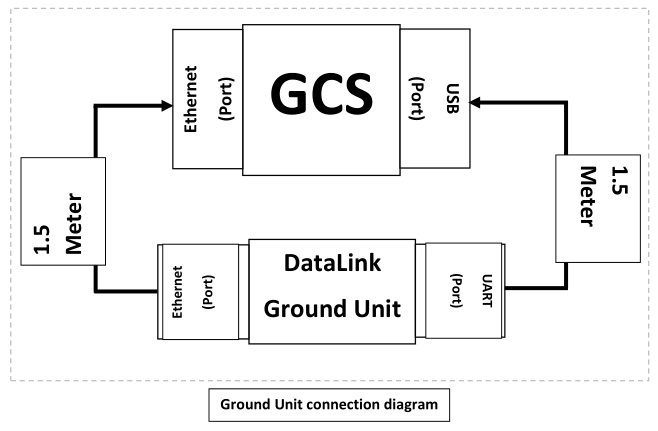
L'Unità di Terra esegue il demultiplexing dei dati provenienti da tutte e quattro le Unità Aeree e presenta un'interfaccia unificata al GCS. I requisiti obbligatori sono:
1. Interfacce & Porti (minimo):
o 1 × porta UART (presentato al GCS). L'unità di terra aggregherà i flussi di telemetria da tutte e quattro le unità aeree e li presenterà al GCS come un'unica interfaccia UART/USB (per esempio., l'UART dell'unità di terra collegata a un'interfaccia USB sul GCS).
o 1 × porta Ethernet (presentato al GCS). L'unità di terra aggregherà i flussi di telecamere/video e dati dalle quattro unità aeree e li presenterà come un'unica interfaccia Ethernet al GCS.
2. Comportamento di aggregazione:
o L'Unità di Terra accetterà quattro flussi di dati in entrata indipendenti (uno per ciascuna Unità Aerea) e demultiplexarli in un flusso Ethernet combinato e in un flusso seriale combinato. Dal GCS’ prospettiva ci sarà solo un collegamento Ethernet e un collegamento UART da configurare e monitorare.
o L'aggregazione deve preservare l'indirizzamento della fonte, in modo che il GCS possa identificare quale flusso proviene da quale Bird. L'Unità di Terra non dovrà perdere le informazioni di identificazione di ciascun uccello.
3. Connettività via cavo (consegnato con l'Unità di Terra):
o 1 × cavo UART (primario) - lunghezza: 400 mm (0.4 M). Il cavo consentirà la connessione dalla porta UART dell'unità di terra alla porta USB del GCS (se l'UART dell'Unità di Terra è un UART diretto, fornire un cavo adattatore USB-UART). Il cavo deve portare TX, RX, GND e VCC.
o 1 × cavo Ethernet (primario) - lunghezza: 400 mm (0.4 M). Il cavo dovrà essere un cavo patch Cat5e/Cat6 schermato con connettori RJ45.
o 2 × set di ricambio: due UART aggiuntivi e due cavi Ethernet aggiuntivi forniti come ricambi con l'unità di terra.
4. Elettrico/Protocollo:
o L'aggregazione deve essere trasparente rispetto ai frame Ethernet per il video; dove necessario, l'Unità di Terra può riconfezionare i flussi in un unico flusso di trasporto, ma deve preservare le informazioni sulla tempistica e l'identificazione della fonte per uccello.
o Multiplexing di telemetria: L'unità di terra eseguirà il multiplexing temporale o la pacchettizzazione dei flussi di telemetria in un unico flusso UART con framing chiaro e tag opzionali per distinguere i messaggi in base all'ID dell'uccello. Il protocollo utilizzato per il multiplexing deve essere documentato e supportato dal software GCS.
Connettività & Specifiche del cavo
Questa sezione elenca le specifiche consigliate di cavi e connettori per garantire prestazioni affidabili in ambienti aerei e terrestri.
1. Cavi Ethernet (Unità aerea -> Telecamera e unità di terra -> GCS): Cavi patch standard schermati Cat5e o Cat6 con terminazioni RJ45. Utilizzare completamente schermato (STP) cavo se l'installazione presenta un'elevata EMI.
2. Lunghezza Ethernet (Unità aerea): 1.0 m±5%.
3. Lunghezza Ethernet (Unità di Terra): 400 mm±5%.
4. Cavi UART (Unità aerea -> Telemetria FCC): 4-cavo conduttore (Texas, RX, GND, RTS/CTS opzionale). Lunghezza: 1.0 m±5%.
5. Cavo UART (Unità di Terra -> GCS USB/UART): 400 mm±5% (includere l'adattatore USB-UART se richiesto dal GCS).
6. Schermatura e messa a terra dei cavi: Fornire una terra comune e garantire che la schermatura sia terminata a un'estremità secondo le migliori pratiche per evitare loop di terra. Utilizzare connettori RJ45 bloccabili o ad aggancio se si prevedono vibrazioni.
7. Fornire cavi adattatori per interfacciare Datalink UART con connettori di telemetria CUAV V5+ (se l'unità Datalink non espone nativamente un connettore compatibile).
8. Dove la fotocamera supporta Power-over-Ethernet (PoE) ma l'unità aerea Datalink non fornisce PoE, fornire un iniettore PoE.
Funzionale & Requisiti del protocollo
Requisiti funzionali chiave e raccomandazioni:
1. Identificazione per uccello: Ogni flusso di dati (video o telemetria) DEVE essere contrassegnato con un ID uccello univoco in modo che il GCS possa mappare i flussi sui veicoli.
2. Schema di multiplexing: L'Unità di Terra implementerà uno schema di multiplexing deterministico per la telemetria (UART) consentendo a GCS di analizzare e instradare i messaggi in base al Bird ID. 3. Latenza e throughput: Il sistema dovrà ridurre al minimo la latenza di aggregazione aggiuntiva. 4. Affidabilità: L'unità di terra deve gestire con garbo la perdita temporanea di una o più unità aeree e continuare a presentare i flussi rimanenti al GCS.
5. Interfaccia di configurazione: Fornire un metodo di configurazione (un documento dettagliato) per impostare gli ID degli uccelli, Velocità di trasmissione UART, e priorità per flusso.
Fai una domanda
Grazie per la risposta. ✨